---
title: A Complete Guide to Business Automation Software | Rayven
description: Discover how Business Automation Software streamlines workflows, enhances decision-making, and boosts efficiency across organisations - in real-time.
image: https://www.rayven.io/hubfs/AI-Generated%20Media/Images/business-automation-software-leader.jpeg
---
[ ](https://www.rayven.io/)
- [ Partner with Rayven ](https://www.rayven.io/partners)
Solutions
[ Platform ](https://www.rayven.io/platform)
[ Industries + Roles ](https://www.rayven.io/industries-and-roles)
[ Services ](https://www.rayven.io/services)
[ Partner ](https://www.rayven.io/partners)
[ Resources ](https://www.rayven.io/blog)
[ Talk to expert ](https://www.rayven.io/free-assessment)
[ Instant Solution Plan → ](https://www.rayven.io/tools/readiness-assessment)
[
**Custom AI + Agents**
Train and deploy AI trained on your files, systems + data.
](https://www.rayven.io/solutions/custom-ai-solutions)
[
**Custom Applications**
We build tools, apps + software over the top of your existing stack.
](https://www.rayven.io/solutions/custom-software)
[
**Integrations**
Integrate and move data across all your systems, assets + files.
](https://www.rayven.io/solutions/data-integration-platform)
[
**Unified Data Platforms**
Complete platforms, pipelines, hybrid storage + real-time orchestration.
](https://www.rayven.io/solutions/unified-data-platform)
[
**Automations**
Design and run real-time automation across systems, data + workflows.
](https://www.rayven.io/solutions/automation-software)
[
**IoT Solutions**
IoT platform for building custom IoT solutions that work with any device.
](https://www.rayven.io/iot-platform)
[
Rayven MCP
](https://www.rayven.io/solutions/custom-ai-solutions/rayven-mcp)
[
AI Data Fabric
](https://www.rayven.io/solutions/custom-ai-solutions/ai-data-fabric)
[
AI Agents
](https://www.rayven.io/solutions/custom-ai-solutions/agentic-ai)
[
Private LLM
](https://www.rayven.io/solutions/custom-ai-solutions/private-llm)
[
Field Applications
](https://www.rayven.io/solutions/data-collection-software)
[ ](https://www.rayven.io/hs/cta/wi/redirect?encryptedPayload=AVxigLIZH%2BS%2BVJlnNnL1aY5rbEoPJiqXnh9m%2BFs4JoSyXYcCj1D3kPvYrDVl35PbgUEGm8jmI9Gnvou6JDFdXQuYPotqG0Da%2BJb2EhnVZMBmT34UEN2LCjyYiI08HcOQgdhhdjszhg%3D%3D&webInteractiveContentId=183790017847&portalId=8302174)
[
**Platform Overview**
A unified platform to integrate, automate, and build custom AI + apps.
](https://www.rayven.io/platform)
[
**Integration Layer**
Connects IT, OT, SaaS, IoT, APIs, files + more into one pipeline.
](https://www.rayven.io/platform/integration)
[
**Data Layer**
Transforms + contextualises your data into an AI-ready source of truth.
](https://www.rayven.io/platform/data)
[
**Execution Layer**
Automate workflows, trigger actions using real-time data + AI.
](https://www.rayven.io/platform/execution)
[
**Presentation / UI Layer**
Turns your data into real-time dashboards, reports + custom UIs.
](https://www.rayven.io/platform/presentation)
[
**Security, Governance + Hosting**
Protects the platform with access control, encryption + audit logging.
](https://www.rayven.io/platform/security)
[
File Uploads
](https://www.rayven.io/platform/integration/file-uploads)
[
AI Connectors
](https://www.rayven.io/platform/integration/ai-connectors)
[
IT / OT Connectors
](https://www.rayven.io/platform/integration/prebuilt-connectors)
[
Custom Integrations
](https://www.rayven.io/platform/integration/custom-integrations)
[
API Endpoints
](https://www.rayven.io/platform/integration/api-endpoints)
[
IoT Devices + Protocols
](https://www.rayven.io/platform/integration/iot-devices-protocols)
[
Forms + Manual Input
](https://www.rayven.io/platform/integration/forms-manual-input)
[
Streaming Data
](https://www.rayven.io/platform/integration/streaming-data-connectors)
[
Real-Time Data Processing
](https://www.rayven.io/platform/data/real-time-data-processing)
[
Unified Data Tables
](https://www.rayven.io/platform/data/unified-data-tables)
[
Data Management
](https://www.rayven.io/platform/data/data-management)
[
Data Transformation
](https://www.rayven.io/platform/data/data-transformation)
[
File Parsing
](https://www.rayven.io/platform/data/file-parsing)
[
Calculation + Aggregation
](https://www.rayven.io/platform/data/calculation-aggregation)
[
AI Models + Training
](https://www.rayven.io/platform/data/ai-models-training)
[
Data Storage
](https://www.rayven.io/platform/data/sql-cassandra-storage)
[
Workflows + Triggers
](https://www.rayven.io/platform/execution/workflows-triggers)
[
Control + Automation
](https://www.rayven.io/platform/execution/control-automation)
[
Predictive AI / ML
](https://www.rayven.io/platform/execution/predictive-ai-machine-learning)
[
Gen AI + AI Agents
](https://www.rayven.io/platform/execution/gen-ai-agents)
[
Approvals + Exceptions
](https://www.rayven.io/platform/execution/approvals-exceptions)
[
Rayven MCP
](https://www.rayven.io/platform/execution/rayven-mcp)
[
Dashboards + Visualizations
](https://www.rayven.io/platform/presentation/dashboards-visualizations)
[
Widgets + UI Components
](https://www.rayven.io/platform/presentation/widgets-ui-components)
[
Notifications + Alerts
](https://www.rayven.io/platform/presentation/notifications-alerts)
[
Dynamic Reports
](https://www.rayven.io/platform/presentation/dynamic-reports)
[
Custom Form Builder
](https://www.rayven.io/platform/presentation/custom-form-builder)
[
Screen Flows + Hierarchies
](https://www.rayven.io/platform/presentation/screen-flows-hierarchies)
[
HTML + JavaScript
](https://www.rayven.io/platform/presentation/html-javascript)
[
QR Code Generator
](https://www.rayven.io/platform/presentation/qr-code-generator)
[
Conversational Analytics
](https://www.rayven.io/platform/presentation/conversational-analytics)
[
Hosting + Management
](https://www.rayven.io/platform/security/hosting-management)
[
White Labelling
](https://www.rayven.io/platform/security/white-labelling)
[
Deployment + Architecture
](https://www.rayven.io/platform/security/deployment-architecture)
[
Users, Roles + Access
](https://www.rayven.io/platform/security/users-roles-access)
[
Usage + Metrics
](https://www.rayven.io/platform/security/usage-metrics)
[
Enterprise Security
](https://www.rayven.io/platform/security/enterprise-security)
[
Governance + Controls
](https://www.rayven.io/platform/security/governance-controls)
[
Audit Trails + Logs
](https://www.rayven.io/platform/security/audit-trails-logs)
[ ](https://www.rayven.io/hs/cta/wi/redirect?encryptedPayload=AVxigLIZH%2BS%2BVJlnNnL1aY5rbEoPJiqXnh9m%2BFs4JoSyXYcCj1D3kPvYrDVl35PbgUEGm8jmI9Gnvou6JDFdXQuYPotqG0Da%2BJb2EhnVZMBmT34UEN2LCjyYiI08HcOQgdhhdjszhg%3D%3D&webInteractiveContentId=183790017847&portalId=8302174)
Sectors
[ Accountancy ](https://www.rayven.io/industries-and-roles/accounting-ai-automation-custom-software)
[ Agribusiness ](https://www.rayven.io/industries-and-roles/agribusiness-software)
[ Construction ](https://www.rayven.io/industries-and-roles/construction-software)
[ Education ](https://www.rayven.io/industries-and-roles/custom-education-software-ai)
[ Energy + Utilities ](https://www.rayven.io/industries-and-roles/energy-utilities-software)
[ Engineering ](https://www.rayven.io/industries-and-roles/custom-engineering-software-ai)
[ Environmental Services ](https://www.rayven.io/industries-and-roles/environmental-services-software)
[ Facility + Site Management ](https://www.rayven.io/industries-and-roles/facility-management-software)
[ Financial Services ](https://www.rayven.io/industries-and-roles/financial-services-software)
[ Government + Public Sector ](https://www.rayven.io/industries-and-roles/ai-for-government-services-software-solutions)
[ Healthcare ](https://www.rayven.io/industries-and-roles/custom-software-ai-healthcare)
[ Hospitality ](https://www.rayven.io/industries-and-roles/custom-hospitality-software-ai)
[ Infrastructure Management ](https://www.rayven.io/industries-and-roles/infrastructure-management-software)
[ Insurance ](https://www.rayven.io/industries-and-roles/custom-insurance-software-ai)
[ Manufacturing ](https://www.rayven.io/industries-and-roles/manufacturing-software)
[ Mining + Quarrying ](https://www.rayven.io/industries-and-roles/mining-software)
[ Oil + Gas ](https://www.rayven.io/industries-and-roles/oil-and-gas-software)
[ Ports + Terminals ](https://www.rayven.io/industries-and-roles/port-management-software)
[ Real Estate + Property Services ](https://www.rayven.io/industries-and-roles/real-estate-software-automation-ai)
[ Retail ](https://www.rayven.io/industries-and-roles/retail-process-automation-ai-software)
[ Smart Communities + Local Government ](https://www.rayven.io/industries-and-roles/smart-communities-local-government-software)
[ Supply Chain + Logistics ](https://www.rayven.io/industries-and-roles/supply-chain-software)
[ Water + Wastewater ](https://www.rayven.io/industries-and-roles/water-management-software)
[ → All Industries ](https://www.rayven.io/industries-and-roles)
Job Roles
[ Digital Teams ](https://www.rayven.io/industries-and-roles/ai-for-digital-teams)
[ CIOs + IT Teams ](https://www.rayven.io/industries-and-roles/cios)
[ Ops Teams ](https://www.rayven.io/industries-and-roles/ai-for-operations)
[ Data Teams ](https://www.rayven.io/industries-and-roles/for-data-engineering-platform)
[ Senior Management ](https://www.rayven.io/industries-and-roles/senior-management)
[ ](https://www.rayven.io/hs/cta/wi/redirect?encryptedPayload=AVxigLLlvoFJSBos6lo%2B41AKm0fwS%2BpzHKMW3BlFWkGXtv%2Fm8E5H7bL4l6lQCf2d98lPwWYuHsP%2BpgJGX4mLGUPfqn0NBo8%2FGpRMq2VCR%2BbfJ2N5aZYVfu9p%2B2MA3LnyGCfA4RkxJAoAIMTdhvhu013yjToripvC4jQQ%2FklEPkKWzVJNYu9gAuTiUwd5AkW%2FYFZBosQSTzTlwDdm%2BHXJ%2FgbyHQ%3D%3D&webInteractiveContentId=212189506726&portalId=8302174)
[ ](https://www.rayven.io/hs/cta/wi/redirect?encryptedPayload=AVxigLIWSFE80BaU5G50AnPuKTyc3RkgXMFl%2Fs2fLnR3PHj35qgIrOrWaHvU6zKSyy9pUAPSUHft0sL5EgFcR8EF9UA5B5gh%2BDKu5QWZprqMZwzFdapgu7r7HBSVCYdphxfDGbOp%2BTlnvsVgzT5qbe1yN%2F8suyRajmoL6Cpy6q41yb86FHxTD5K0Aq0WrQJdPdmjLhWbh6TSo3ye%2Fg%3D%3D&webInteractiveContentId=212411106062&portalId=8302174)
[ ](https://www.rayven.io/hs/cta/wi/redirect?encryptedPayload=AVxigLIsnBCB%2B3HjU%2FByuu0clsDtLKUb2pAYXhDqs8GS%2FOUeq8MbDYuy3LQjaIugR5yghC8jFdS1jCsxVlSpd5knQHh0Bltc191NHTzqZ6gpmr6JK1oImB6f9C7BLVEe%2FQCId5gOJorcNKpBUxxwfv%2BMt90n6QxnOF5Zx8V%2Bm4KLrBal1ConhzGb67%2BZwzVUtzZHO290pBoP8MhYqQ%3D%3D&webInteractiveContentId=188704717191&portalId=8302174)
[ ](https://www.rayven.io/hs/cta/wi/redirect?encryptedPayload=AVxigLIZf73nBTQsqoGHcT8%2BRmuc%2FDJIc22Y1FkN58YXr4yBnTftqkSRW52KfdrovWKeYU1BGhREIRaUeXO1zCDAMPFS3rO8NY7A68cFrBtSEZldDPHynbb6IAmbqD3FCfbOHR6MNdDBQ3BtT8FwsMx0MuFUhYyMnFH40D%2B78QIG6cGrY0vW3RslvKXX2ZfDY6YPOsOaPG8zvVq2loB2w3iz4YU%3D&webInteractiveContentId=212194125581&portalId=8302174)
[ ](https://www.rayven.io/hs/cta/wi/redirect?encryptedPayload=AVxigLLZOMMoVo0idxIWtNXfGpVJuj62xGAv%2BcsCbnhD0JevOlAEp1%2Bs%2BteC6ig1hHHfP%2BQYdpqA6CaEqoeMiSOMlGbZfFVyaw1wpI67e%2FZlNcpyX2ShCCec6UKBaWOyHoIcofL5%2BeA6d3Mhio3X7FZ81tZUdc94FvPhVSoKhk1S5UuXhBaETYl3L%2Buu5WEGtuek1MEb4ldDN0t%2F59D68JI%3D&webInteractiveContentId=185830583147&portalId=8302174)
[ ](https://www.rayven.io/hs/cta/wi/redirect?encryptedPayload=AVxigLKXV7ZnqfHljhm5C6LIEnXY7T6glCPPhxsh%2FuMZx3F3hpZ66x%2Boil4ondRRDPxF1LWwwbPKVWboz1FhCkKjUi613%2FLxRCz4Th9XdDuT2GiBbl5oA%2BMVnslLING2VaLsbNbj%2BQBphm7HvS%2FEROTfgL1kV4Sem7Gu49RB9XUID1CcsznzXqGgNSEPrtjQtB667pvXV7iSQ603ISlP7VWdMGpH%2Bw%3D%3D&webInteractiveContentId=212252970116&portalId=8302174)
[ ](https://www.rayven.io/hs/cta/wi/redirect?encryptedPayload=AVxigLLOMH2JOOFlzR%2FuCtOqK7dCyYKw07S8vEstaPlQj21CVCBFzXLJmrYGs0Njv6ssYBXWh5KKznakkY45trNvMRfG6Dtz86k4Ch9CAJBYQn65lrCUtd%2B7lAJUPrz7%2BXo25%2FNJya3AKLcRJ3NaYbMMfZUU4u96ojDMteeDsPvdXMCIXaZfU%2FRRtMrIcwrQ92waEUtnMxSlUmDlv0oMCKEUovvd5iE%3D&webInteractiveContentId=185830583197&portalId=8302174)
[ ](https://www.rayven.io/hs/cta/wi/redirect?encryptedPayload=AVxigLLsD9U17OEdctxfSKaemKOQk59s98pXCgf0AzV6AAJ2Hwb22XnM8XT7Ce5zKcK7mErtjQc8T8Z1SBNPUkTZ3Rh7GryKbe%2BzdSQCe6qXOFlZ9f%2FOiA%2BYTH1SSgE2w5w90KtTVvqgciQVszBGUMIxbjCJfmpMEKJdoy51y8qNs4jFH6Sp2VyiDN9hwFWFCvR1W9fFcDHQgxsZKTfJkG7fjXQ%3D&webInteractiveContentId=185830583348&portalId=8302174)
[ ](https://www.rayven.io/hs/cta/wi/redirect?encryptedPayload=AVxigLK4eefIVNtvc1f7jsLU5qd738RNCMb3GY0cCRLh8Wb%2Bsv%2FxfeXv3ctiXqByrsNYQWXgiwBIwqnu8VKytre%2BCXi3FEXYavPlhpC9lVa%2B0dgU%2Bb%2FqbOgDCb0i4%2Fw0nvdL8mbp9wBufnXZOHERmNUPzzEjfR%2FzdWHfohEzUO2%2FMiWQXAWlNTXgnI21D5hbFkdNcSni7SysStp2QE3KtFhpMg%3D%3D&webInteractiveContentId=212048335709&portalId=8302174)
[ ](https://www.rayven.io/hs/cta/wi/redirect?encryptedPayload=AVxigLK01CUYOANmatpURfSubOdIJBnCNai3Jsb8LZjXu7%2BAdBQo4RNoKeKT%2Fawvl2Jzn%2BooWborsB%2BxpsWA%2F%2BzsFHuEkW70RgBl3jnGsgqFqqhqW8gyZMQ2Qjn7yiX9f5uvapADHNnpCQa3ukcFUvUjn0pIQBsR%2FAzZYEhxVf8wF5wwi3sWodo2bnn356gJMnKk2TUWcbABGDU%2F5f2nYnnP3F%2B%2Bi29qKWGrcrPed3sAUWu02Q%3D%3D&webInteractiveContentId=212198824049&portalId=8302174)
[ ](https://www.rayven.io/hs/cta/wi/redirect?encryptedPayload=AVxigLJFV4KYd7y%2Fnv%2BJP2P%2BQXGZpPPasQ5tOBrB5ey177TGlidw5zzHKTS9TikngO7TFX88oCZBfIWLkKpmOE8aLPXMH5GeY%2Bxh7eakTQuhO2G6ibmkkkBt8zzwyX0u4GAzat%2FYpNBXEtGU43a5LeJkDI7h%2Bg4Q%2BRkHrw%2BvNCEtjQIp8ZNDUKiQiH8p1zotpvNjo%2BEhTqf8drbPro%2BrlqdajMdp&webInteractiveContentId=212252970021&portalId=8302174)
[ ](https://www.rayven.io/hs/cta/wi/redirect?encryptedPayload=AVxigLIeORn5FjJAR9iEBuuAXk96zESd0DDrV5OS3Z%2BvBwKcTAwkbdkjvwd%2FoM2DYxiebSffZXXHsxCZEbr8i3NnYNBWYewu%2FgiQfKagW3O9kL6w2%2Bncn%2FZR2k02yaagCFbic9STvTc1uJu9aaT7RAxYx6cfRJ9cPZbbiV2aVarZsmOyrnvabBWr8ZRHP%2BvO7NDXFAP7yAu%2BStsEQ1oel7%2Bx4QlBRg%3D%3D&webInteractiveContentId=212252992323&portalId=8302174)
[ ](https://www.rayven.io/hs/cta/wi/redirect?encryptedPayload=AVxigLKuQ1IzNdirC9e%2FVSikzo2FzaBIjf7zeAAe1xUyxQzvLvOPpzdOjcXAle5xarVu428C1bt7SLgXBrqVMlzuoebFiCWLi8pi%2FGPTp0BowQE2WsZncqjJtX%2FP7Dhsg9EzsW%2B6IguU7yy8a2%2B8ECIw8VSw8OGqUVAe1D59rEC5TYPC2VDnngqxAylCsNti8Ay6BfNVguotmmDYoO%2F36UspPLHZBLDXLY8%3D&webInteractiveContentId=209889313868&portalId=8302174)
[ ](https://www.rayven.io/hs/cta/wi/redirect?encryptedPayload=AVxigLLprVNMIeYUWmep9NGabipUhSMfxjioPhtl66%2B%2BOloHNf9zfTIpcUcym5hyUzYCNsgcVkwAmD1%2BCf1ZYRkBopnfI3WPWC5vrFlE8HDHN9s4NZ3HojEhTpventVkE7DTRsPviETF7T%2FLtphR%2FRQ9%2B2d10UO18OkUcpAiN6T%2BFD3ql2GpYeUg%2BpXRql6daFmo6iV9ciNpkzR1C2gsC331ohQ%3D&webInteractiveContentId=212252992321&portalId=8302174)
[ ](https://www.rayven.io/hs/cta/wi/redirect?encryptedPayload=AVxigLImdd%2BCD8LbMc12ZGvDnquMzwz4eJ1sv%2B%2FNVVBgBtj9TzGOExowy1R%2BgWR9mV76iZrpywIyW6Mn5eZfa4tFj%2FTwtx28WADRTb%2B4MFy2XgmuPRhwkCQemqghXSMDVAlQNO%2BLTHlkkwQCJujMRWuKeGHODORQAkyG9EqJSWFog2O2Ogj5NisWMNtbdK8p90eFG299sCa7uEPOReA%3D&webInteractiveContentId=185830583392&portalId=8302174)
[ ](https://www.rayven.io/hs/cta/wi/redirect?encryptedPayload=AVxigLKCD6BoM0xwOOArqfZju6pAgtbwbfyS2EZXmHayZX%2BqSzPOC4lp3Z3%2FGu%2FSqVyLAf4Yd3VVOAb9yAQt%2BGWo%2B1tIQNY3bV3Nc5eo3uFNxWRUu08EHJmSr%2Fr9Jy9VZdqlo3GZ1a5LM08kEkAojJC877p626ay2UMednPJfUWgPI5f9xJUvnOOvXTzKw8Zh7echznNZw%3D%3D&webInteractiveContentId=185830583441&portalId=8302174)
[ ](https://www.rayven.io/hs/cta/wi/redirect?encryptedPayload=AVxigLIahFrshLrccmmdWoA6dwXkCCb5Igu2deBuzsJ3cBJ20zdB6wUYLzmfHLw2mD9Ajj0WhouDVfxiHRfy4Z8xaQ171NVE0eUNJH0ygQNDe1tsu8uAEiaubOnqN5gID0ScOryrFklXsxOwvvdDd5eAClUMeikOpHNvBCRGw6v7EqFUqU8uB1R8tdshb60AS%2BhZmy%2By&webInteractiveContentId=212411106068&portalId=8302174)
[ ](https://www.rayven.io/hs/cta/wi/redirect?encryptedPayload=AVxigLIVLRWCodXTnNuBFDvdl5VQxIkivMqwn8iFcJofb%2BcSsJsh1B6pB%2FdKkI7SPS54LGmHz5zdypThDBHs9FZ8vE6UzVuLdUwMxb5mAL5Q6ryYQOVYH4oZ92sT5l%2BQk6yT9JckeIH2ff3y14TCgTVD2BKESWkzEsqk5sA0MnsOTL5WJMbrxk0ah6sZTgdL5Um%2FNKINaZls2IjYnQ%3D%3D&webInteractiveContentId=185825394810&portalId=8302174)
[ ](https://www.rayven.io/hs/cta/wi/redirect?encryptedPayload=AVxigLJnR0tLnZ%2BMqbQkNyzlJP3bupE2SyCSnKkZpGWZ6yg3Hrfx%2Bjl%2Be1%2Bu%2BUnpdtLT41EZ3EcYpmkIX2J8syZBkRR1T1gGjpAiAQB6p%2BOcyfeFBm7stN%2BFPzbZ0ueWqLH7lroJWrAeF0OL0D8WtsmEfDyYmuFDc58PNgv2Hh8vxLBGsPA4vpP3y1KGobtPo6ZWE%2F14DcunNfqaPdjwHuviAmSx9xRXlaQ%3D&webInteractiveContentId=212252923295&portalId=8302174)
[ ](https://www.rayven.io/hs/cta/wi/redirect?encryptedPayload=AVxigLKt5Esxv%2BrrkBC%2BHtQw45Syg47fvixOrTtKj46QKbzb6LkWUEbOOYkKk%2B3KdPMfWXHRuJ34PzzjWKOpeDaFADS%2F9up4GRPD5mdqVbnwUtke9g6oG%2FNdYQYEM7%2FIFVbMHRZrbCpZWPWX%2B1ccwKg3DVH%2BGY2tePi78ESHBSX6R0xlQdb5k1HBCsI03fHcWTqrY8uiw1VmkX0Is5CT0couleDMERzcu0GwpBc%3D&webInteractiveContentId=212198816260&portalId=8302174)
[ ](https://www.rayven.io/hs/cta/wi/redirect?encryptedPayload=AVxigLI8yHc%2F1Ob1TuwTbT%2F%2BN0v%2FxD0Ex9YrR3jtQPuTEvFxTY%2FgxWvQi2rdl%2FIOg%2Blc08uNbSHibTJgcs6ZQpbR1dap1Z66TLtwG3ukWEsgCWDB1mFGCcZle9lmdwfOWTHomCsdZEpT0qC6YEbaugVxZ7Y1cODzLT7bhfOFHGEl%2B4wCTPtVnaMa9m0bPHf2oY3VwywiwY3ovthaOWgXqyE9Pee7M3VxOQ8%3D&webInteractiveContentId=185825394774&portalId=8302174)
[ ](https://www.rayven.io/hs/cta/wi/redirect?encryptedPayload=AVxigLIVLRWCodXTnNuBFDvdl5VQxIkivMqwn8iFcJofb%2BcSsJsh1B6pB%2FdKkI7SPS54LGmHz5zdypThDBHs9FZ8vE6UzVuLdUwMxb5mAL5Q6ryYQOVYH4oZ92sT5l%2BQk6yT9JckeIH2ff3y14TCgTVD2BKESWkzEsqk5sA0MnsOTL5WJMbrxk0ah6sZTgdL5Um%2FNKINaZls2IjYnQ%3D%3D&webInteractiveContentId=185825394810&portalId=8302174)
[ ](https://www.rayven.io/hs/cta/wi/redirect?encryptedPayload=AVxigLLigqdaD9ROjBs5Y8ljz09yRJHxE97ShdALWgOgOMmmPEFFNuhv7SifocFCkZL%2FwrtPpgRRGhKMje4S1xClX69ZnGyF2B1b10W8GpVQGYG4v0VDKfnf4%2FEagQxHVNvxW5yIwZpVmyAw4YWePZHQroUFUqtnJNzqA1yDRRMtIT0fIp2BHzBllX88cY14%2FhbMZifrK1ho3y15aqcUuSE%3D&webInteractiveContentId=210017685433&portalId=8302174)
[ ](https://www.rayven.io/hs/cta/wi/redirect?encryptedPayload=AVxigLJV6qUldDC9cLHgOHh0R%2B68YbiiJu1E9b5eoT7vqzgF9AW4ZqoRwGxfRfUv%2FX2fxnq4yHhtUOLgT2vnnrczjrn%2BFJUO5k7E%2B9%2F9slzV5%2FJE%2Fl69Q6L9GWi8WOP7v%2FKYAn%2BBcuTYraWBor8iMbv9K%2FWfrG%2FoFIm2ibtzUtjdbOVxqQ%3D%3D&webInteractiveContentId=183790018105&portalId=8302174)
[ ](https://www.rayven.io/hs/cta/wi/redirect?encryptedPayload=AVxigLKpjsoJ015Mn7OuiZcq6kgWnFpozgUKcQrWzOUjNF5GEs5TE9tPlyKpP07w6CzVs%2BeI4As6Ez7HLI0%2BEjAzKYZ2SrYqKHZXkEW7hyQ%2FmV1fFGdRtsMcMaZzH2HBsJzXzDiv689Vu351dMZ4XVwVq25XTReiUY62pQHXuK8WoNVUT5qo20uk7XZ0xH9Hwg%3D%3D&webInteractiveContentId=185785618741&portalId=8302174)
[ ](https://www.rayven.io/hs/cta/wi/redirect?encryptedPayload=AVxigLImKgQBJaDhCrmyAOqU86ZZit1svh%2Fk3ID34UckcZAoLwiamn3r3n0slydFWri37Nn6X8cQuZ2%2FGBhl8BRWoSjO88y8S%2FwPHDuokyomnbbCTGuWgTWShSkgvfjkMqBpt9p0D0qlx2wpum0%2F52ARIgAqVwDodeEO8%2FOqOQhO&webInteractiveContentId=185786401415&portalId=8302174)
[ ](https://www.rayven.io/hs/cta/wi/redirect?encryptedPayload=AVxigLKWqpyS9RfRqFVjDm8LcHnI78yb3MJTh2FM0HynZKzwFqq9uLoyLyWoSbqaclraE0mtgiFkQqyV6LKC%2BOD6uKXqklrVJpF9KRm3kQ%2FjsS5wWrM51Gi2RubKxL1zGHk1dRw7tleBAgXPvxpOFeTU1lIOI8x3Wdt2QmRoUpVH7bDCfkc2Cg5OHHdSpg%3D%3D&webInteractiveContentId=185785618782&portalId=8302174)
[ ](https://www.rayven.io/hs/cta/wi/redirect?encryptedPayload=AVxigLJotGUJSqQb7mNZNwU%2BDixo6xhLLK9xnDjbmh4DAo0ofw3D0ZX87xscqnrJ3KoVTpAeG1turNKkP3YBlkZ7mxA5%2BFHBKrLOgLy8WdTBV4WFuQoFqeKPFZ5F9kfZb03zC6hMiUCnutzdXxlOEPepYLyjuR6FW0ciNMhRAC1GjO%2BGjt9vEuVIzGjAXop5%2FUM%2B6aRYeq7QNA%3D%3D&webInteractiveContentId=194116561808&portalId=8302174)
[ ](https://www.rayven.io/hs/cta/wi/redirect?encryptedPayload=AVxigLIUgKSaOFkoHpNnTpSrDxj1bAe4%2B1%2F46pPIZtV5CTN%2B%2F%2B17PSE3oaCaY9ZwucJeYuXXYXBx2ca4ZOogYW9922Pl1UaNk1UWG1tc28yFWrJhYgKBzO2ocd6Nn2hkrOkHzv%2BLP%2BBWz2oOQu7rt3MJv0aKfZ50RxAyzM70A%2FPBtGd1yKhqUj3LvJeVzw%3D%3D&webInteractiveContentId=185785618812&portalId=8302174)
Overview
[ Services Overview ](https://www.rayven.io/services)
[ Enterprise Services ](https://www.rayven.io/services/enterprise-application-development)
Set Engagements
[ Agentic AI ](https://www.rayven.io/services/agentic-ai)
[ AI for Accountancy ](https://www.rayven.io/services/ai-accounting-engagement)
[ AI for Financial Services ](https://www.rayven.io/services/ai-financial-services-engagement)
[ AI for Government + Agencies ](https://www.rayven.io/services/ai-government-engagement)
[ Asset Management ](https://www.rayven.io/services/asset-management-engagement)
[ Custom Software for Industrial Services ](https://www.rayven.io/custom-software-industrial-services-engagement)
[ Execution Gap ](https://www.rayven.io/services/execution-gap)
[ Industrial IIoT ](https://www.rayven.io/services/industrial-iiot)
[ ](https://www.rayven.io/hs/cta/wi/redirect?encryptedPayload=AVxigLKzB4HDXqk80uO8ebiNgnteALTaq%2BDt9AuruE5KKngtjPEvNnrOA7rZTRMKuhcgA%2Fh3%2FprzT3b11vgEfn42ThYyF1GQC6qBpUx6MpoJZdT5HpAhEmBvBhglJbkmiNciFWLGktpOSRG60TWwTddNe0k2VxAaxHRvRSry5Wvl4%2Bn1&webInteractiveContentId=185823046841&portalId=8302174)
[ ](https://www.rayven.io/hs/cta/wi/redirect?encryptedPayload=AVxigLKzB4HDXqk80uO8ebiNgnteALTaq%2BDt9AuruE5KKngtjPEvNnrOA7rZTRMKuhcgA%2Fh3%2FprzT3b11vgEfn42ThYyF1GQC6qBpUx6MpoJZdT5HpAhEmBvBhglJbkmiNciFWLGktpOSRG60TWwTddNe0k2VxAaxHRvRSry5Wvl4%2Bn1&webInteractiveContentId=185823046841&portalId=8302174)
[ ](https://www.rayven.io/hs/cta/wi/redirect?encryptedPayload=AVxigLKzB4HDXqk80uO8ebiNgnteALTaq%2BDt9AuruE5KKngtjPEvNnrOA7rZTRMKuhcgA%2Fh3%2FprzT3b11vgEfn42ThYyF1GQC6qBpUx6MpoJZdT5HpAhEmBvBhglJbkmiNciFWLGktpOSRG60TWwTddNe0k2VxAaxHRvRSry5Wvl4%2Bn1&webInteractiveContentId=185823046841&portalId=8302174)
[ ](https://www.rayven.io/hs/cta/wi/redirect?encryptedPayload=AVxigLKzB4HDXqk80uO8ebiNgnteALTaq%2BDt9AuruE5KKngtjPEvNnrOA7rZTRMKuhcgA%2Fh3%2FprzT3b11vgEfn42ThYyF1GQC6qBpUx6MpoJZdT5HpAhEmBvBhglJbkmiNciFWLGktpOSRG60TWwTddNe0k2VxAaxHRvRSry5Wvl4%2Bn1&webInteractiveContentId=185823046841&portalId=8302174)
[ ](https://www.rayven.io/hs/cta/wi/redirect?encryptedPayload=AVxigLKzB4HDXqk80uO8ebiNgnteALTaq%2BDt9AuruE5KKngtjPEvNnrOA7rZTRMKuhcgA%2Fh3%2FprzT3b11vgEfn42ThYyF1GQC6qBpUx6MpoJZdT5HpAhEmBvBhglJbkmiNciFWLGktpOSRG60TWwTddNe0k2VxAaxHRvRSry5Wvl4%2Bn1&webInteractiveContentId=185823046841&portalId=8302174)
[ ](https://www.rayven.io/hs/cta/wi/redirect?encryptedPayload=AVxigLKzB4HDXqk80uO8ebiNgnteALTaq%2BDt9AuruE5KKngtjPEvNnrOA7rZTRMKuhcgA%2Fh3%2FprzT3b11vgEfn42ThYyF1GQC6qBpUx6MpoJZdT5HpAhEmBvBhglJbkmiNciFWLGktpOSRG60TWwTddNe0k2VxAaxHRvRSry5Wvl4%2Bn1&webInteractiveContentId=185823046841&portalId=8302174)
[ ](https://www.rayven.io/hs/cta/wi/redirect?encryptedPayload=AVxigLKzB4HDXqk80uO8ebiNgnteALTaq%2BDt9AuruE5KKngtjPEvNnrOA7rZTRMKuhcgA%2Fh3%2FprzT3b11vgEfn42ThYyF1GQC6qBpUx6MpoJZdT5HpAhEmBvBhglJbkmiNciFWLGktpOSRG60TWwTddNe0k2VxAaxHRvRSry5Wvl4%2Bn1&webInteractiveContentId=185823046841&portalId=8302174)
[ ](https://www.rayven.io/hs/cta/wi/redirect?encryptedPayload=AVxigLKzB4HDXqk80uO8ebiNgnteALTaq%2BDt9AuruE5KKngtjPEvNnrOA7rZTRMKuhcgA%2Fh3%2FprzT3b11vgEfn42ThYyF1GQC6qBpUx6MpoJZdT5HpAhEmBvBhglJbkmiNciFWLGktpOSRG60TWwTddNe0k2VxAaxHRvRSry5Wvl4%2Bn1&webInteractiveContentId=185823046841&portalId=8302174)
[ ](https://www.rayven.io/hs/cta/wi/redirect?encryptedPayload=AVxigLKzB4HDXqk80uO8ebiNgnteALTaq%2BDt9AuruE5KKngtjPEvNnrOA7rZTRMKuhcgA%2Fh3%2FprzT3b11vgEfn42ThYyF1GQC6qBpUx6MpoJZdT5HpAhEmBvBhglJbkmiNciFWLGktpOSRG60TWwTddNe0k2VxAaxHRvRSry5Wvl4%2Bn1&webInteractiveContentId=185823046841&portalId=8302174)
[ ](https://www.rayven.io/hs/cta/wi/redirect?encryptedPayload=AVxigLKzB4HDXqk80uO8ebiNgnteALTaq%2BDt9AuruE5KKngtjPEvNnrOA7rZTRMKuhcgA%2Fh3%2FprzT3b11vgEfn42ThYyF1GQC6qBpUx6MpoJZdT5HpAhEmBvBhglJbkmiNciFWLGktpOSRG60TWwTddNe0k2VxAaxHRvRSry5Wvl4%2Bn1&webInteractiveContentId=185823046841&portalId=8302174)
Overview
[ Partner Home ](https://www.rayven.io/partners)
[ Become a Partner ](https://www.rayven.io/partners/become-a-partner)
[ White Label Applications ](https://www.rayven.io/partners/white-label-solutions)
[ Partner Directory ](https://www.rayven.io/partners/directory)
We Partner With
[ MSPs ](https://www.rayven.io/partners/msps)
[ IoT Devices + Hardware ](https://www.rayven.io/partners/iot-hardware-vendors)
[ Consultancies ](https://www.rayven.io/partners/specialist-consultancies)
[ Industrial Automation ](https://www.rayven.io/partners/industrial-automation-scada)
[ OEMs ](https://www.rayven.io/partners/industrial-oems)
[ Environmental / ESG ](https://www.rayven.io/partners/environmental-esg-monitoring)
[ Integrators ](https://www.rayven.io/partners/systems-integrators)
[ Connectivity + Telcos ](https://www.rayven.io/partners/connectivity-providers)
[ Inspection / NDT ](https://www.rayven.io/partners/inspection-asset-integrity)
[ ](https://www.rayven.io/hs/cta/wi/redirect?encryptedPayload=AVxigLKzB4HDXqk80uO8ebiNgnteALTaq%2BDt9AuruE5KKngtjPEvNnrOA7rZTRMKuhcgA%2Fh3%2FprzT3b11vgEfn42ThYyF1GQC6qBpUx6MpoJZdT5HpAhEmBvBhglJbkmiNciFWLGktpOSRG60TWwTddNe0k2VxAaxHRvRSry5Wvl4%2Bn1&webInteractiveContentId=185823046841&portalId=8302174)
[ ](https://www.rayven.io/hs/cta/wi/redirect?encryptedPayload=AVxigLKzB4HDXqk80uO8ebiNgnteALTaq%2BDt9AuruE5KKngtjPEvNnrOA7rZTRMKuhcgA%2Fh3%2FprzT3b11vgEfn42ThYyF1GQC6qBpUx6MpoJZdT5HpAhEmBvBhglJbkmiNciFWLGktpOSRG60TWwTddNe0k2VxAaxHRvRSry5Wvl4%2Bn1&webInteractiveContentId=185823046841&portalId=8302174)
[ ](https://www.rayven.io/hs/cta/wi/redirect?encryptedPayload=AVxigLKzB4HDXqk80uO8ebiNgnteALTaq%2BDt9AuruE5KKngtjPEvNnrOA7rZTRMKuhcgA%2Fh3%2FprzT3b11vgEfn42ThYyF1GQC6qBpUx6MpoJZdT5HpAhEmBvBhglJbkmiNciFWLGktpOSRG60TWwTddNe0k2VxAaxHRvRSry5Wvl4%2Bn1&webInteractiveContentId=185823046841&portalId=8302174)
[ ](https://www.rayven.io/hs/cta/wi/redirect?encryptedPayload=AVxigLKzB4HDXqk80uO8ebiNgnteALTaq%2BDt9AuruE5KKngtjPEvNnrOA7rZTRMKuhcgA%2Fh3%2FprzT3b11vgEfn42ThYyF1GQC6qBpUx6MpoJZdT5HpAhEmBvBhglJbkmiNciFWLGktpOSRG60TWwTddNe0k2VxAaxHRvRSry5Wvl4%2Bn1&webInteractiveContentId=185823046841&portalId=8302174)
[ ](https://www.rayven.io/hs/cta/wi/redirect?encryptedPayload=AVxigLKzB4HDXqk80uO8ebiNgnteALTaq%2BDt9AuruE5KKngtjPEvNnrOA7rZTRMKuhcgA%2Fh3%2FprzT3b11vgEfn42ThYyF1GQC6qBpUx6MpoJZdT5HpAhEmBvBhglJbkmiNciFWLGktpOSRG60TWwTddNe0k2VxAaxHRvRSry5Wvl4%2Bn1&webInteractiveContentId=185823046841&portalId=8302174)
[ ](https://www.rayven.io/hs/cta/wi/redirect?encryptedPayload=AVxigLKzB4HDXqk80uO8ebiNgnteALTaq%2BDt9AuruE5KKngtjPEvNnrOA7rZTRMKuhcgA%2Fh3%2FprzT3b11vgEfn42ThYyF1GQC6qBpUx6MpoJZdT5HpAhEmBvBhglJbkmiNciFWLGktpOSRG60TWwTddNe0k2VxAaxHRvRSry5Wvl4%2Bn1&webInteractiveContentId=185823046841&portalId=8302174)
[ ](https://www.rayven.io/hs/cta/wi/redirect?encryptedPayload=AVxigLKzB4HDXqk80uO8ebiNgnteALTaq%2BDt9AuruE5KKngtjPEvNnrOA7rZTRMKuhcgA%2Fh3%2FprzT3b11vgEfn42ThYyF1GQC6qBpUx6MpoJZdT5HpAhEmBvBhglJbkmiNciFWLGktpOSRG60TWwTddNe0k2VxAaxHRvRSry5Wvl4%2Bn1&webInteractiveContentId=185823046841&portalId=8302174)
[ ](https://www.rayven.io/hs/cta/wi/redirect?encryptedPayload=AVxigLKzB4HDXqk80uO8ebiNgnteALTaq%2BDt9AuruE5KKngtjPEvNnrOA7rZTRMKuhcgA%2Fh3%2FprzT3b11vgEfn42ThYyF1GQC6qBpUx6MpoJZdT5HpAhEmBvBhglJbkmiNciFWLGktpOSRG60TWwTddNe0k2VxAaxHRvRSry5Wvl4%2Bn1&webInteractiveContentId=185823046841&portalId=8302174)
[ ](https://www.rayven.io/hs/cta/wi/redirect?encryptedPayload=AVxigLKzB4HDXqk80uO8ebiNgnteALTaq%2BDt9AuruE5KKngtjPEvNnrOA7rZTRMKuhcgA%2Fh3%2FprzT3b11vgEfn42ThYyF1GQC6qBpUx6MpoJZdT5HpAhEmBvBhglJbkmiNciFWLGktpOSRG60TWwTddNe0k2VxAaxHRvRSry5Wvl4%2Bn1&webInteractiveContentId=185823046841&portalId=8302174)
[ ](https://www.rayven.io/hs/cta/wi/redirect?encryptedPayload=AVxigLKzB4HDXqk80uO8ebiNgnteALTaq%2BDt9AuruE5KKngtjPEvNnrOA7rZTRMKuhcgA%2Fh3%2FprzT3b11vgEfn42ThYyF1GQC6qBpUx6MpoJZdT5HpAhEmBvBhglJbkmiNciFWLGktpOSRG60TWwTddNe0k2VxAaxHRvRSry5Wvl4%2Bn1&webInteractiveContentId=185823046841&portalId=8302174)
[ ](https://www.rayven.io/hs/cta/wi/redirect?encryptedPayload=AVxigLKzB4HDXqk80uO8ebiNgnteALTaq%2BDt9AuruE5KKngtjPEvNnrOA7rZTRMKuhcgA%2Fh3%2FprzT3b11vgEfn42ThYyF1GQC6qBpUx6MpoJZdT5HpAhEmBvBhglJbkmiNciFWLGktpOSRG60TWwTddNe0k2VxAaxHRvRSry5Wvl4%2Bn1&webInteractiveContentId=185823046841&portalId=8302174)
[ ](https://www.rayven.io/hs/cta/wi/redirect?encryptedPayload=AVxigLKzB4HDXqk80uO8ebiNgnteALTaq%2BDt9AuruE5KKngtjPEvNnrOA7rZTRMKuhcgA%2Fh3%2FprzT3b11vgEfn42ThYyF1GQC6qBpUx6MpoJZdT5HpAhEmBvBhglJbkmiNciFWLGktpOSRG60TWwTddNe0k2VxAaxHRvRSry5Wvl4%2Bn1&webInteractiveContentId=185823046841&portalId=8302174)
[ ](https://www.rayven.io/hs/cta/wi/redirect?encryptedPayload=AVxigLKzB4HDXqk80uO8ebiNgnteALTaq%2BDt9AuruE5KKngtjPEvNnrOA7rZTRMKuhcgA%2Fh3%2FprzT3b11vgEfn42ThYyF1GQC6qBpUx6MpoJZdT5HpAhEmBvBhglJbkmiNciFWLGktpOSRG60TWwTddNe0k2VxAaxHRvRSry5Wvl4%2Bn1&webInteractiveContentId=185823046841&portalId=8302174)
Library
[ ALL ](https://www.rayven.io/blog)
[ Articles + Blogs ](https://www.rayven.io/blog/tag/blogs)
[ Brochures + eBooks ](https://www.rayven.io/blog/tag/brochures-ebooks)
[ Case Studies ](https://www.rayven.io/case-study)
[ Readiness Assessment ](https://www.rayven.io/tools/readiness-assessment)
[ Webinars ](https://www.rayven.io/blog/tag/webinars)
Our Company
[ About Rayven ](https://www.rayven.io/about)
[ Contact Us ](https://www.rayven.io/contact)
[ Knowledge Base ](https://insights.rayven.io/knowledge)
[ Media Coverage ](https://www.rayven.io/blog/tag/media-coverage)
[ ](https://www.rayven.io/hs/cta/wi/redirect?encryptedPayload=AVxigLKzB4HDXqk80uO8ebiNgnteALTaq%2BDt9AuruE5KKngtjPEvNnrOA7rZTRMKuhcgA%2Fh3%2FprzT3b11vgEfn42ThYyF1GQC6qBpUx6MpoJZdT5HpAhEmBvBhglJbkmiNciFWLGktpOSRG60TWwTddNe0k2VxAaxHRvRSry5Wvl4%2Bn1&webInteractiveContentId=185823046841&portalId=8302174)
[ ](https://www.rayven.io/hs/cta/wi/redirect?encryptedPayload=AVxigLKzB4HDXqk80uO8ebiNgnteALTaq%2BDt9AuruE5KKngtjPEvNnrOA7rZTRMKuhcgA%2Fh3%2FprzT3b11vgEfn42ThYyF1GQC6qBpUx6MpoJZdT5HpAhEmBvBhglJbkmiNciFWLGktpOSRG60TWwTddNe0k2VxAaxHRvRSry5Wvl4%2Bn1&webInteractiveContentId=185823046841&portalId=8302174)
[ ](https://www.rayven.io/hs/cta/wi/redirect?encryptedPayload=AVxigLKzB4HDXqk80uO8ebiNgnteALTaq%2BDt9AuruE5KKngtjPEvNnrOA7rZTRMKuhcgA%2Fh3%2FprzT3b11vgEfn42ThYyF1GQC6qBpUx6MpoJZdT5HpAhEmBvBhglJbkmiNciFWLGktpOSRG60TWwTddNe0k2VxAaxHRvRSry5Wvl4%2Bn1&webInteractiveContentId=185823046841&portalId=8302174)
[ ](https://www.rayven.io/hs/cta/wi/redirect?encryptedPayload=AVxigLKzB4HDXqk80uO8ebiNgnteALTaq%2BDt9AuruE5KKngtjPEvNnrOA7rZTRMKuhcgA%2Fh3%2FprzT3b11vgEfn42ThYyF1GQC6qBpUx6MpoJZdT5HpAhEmBvBhglJbkmiNciFWLGktpOSRG60TWwTddNe0k2VxAaxHRvRSry5Wvl4%2Bn1&webInteractiveContentId=185823046841&portalId=8302174)
[ ](https://www.rayven.io/hs/cta/wi/redirect?encryptedPayload=AVxigLKzB4HDXqk80uO8ebiNgnteALTaq%2BDt9AuruE5KKngtjPEvNnrOA7rZTRMKuhcgA%2Fh3%2FprzT3b11vgEfn42ThYyF1GQC6qBpUx6MpoJZdT5HpAhEmBvBhglJbkmiNciFWLGktpOSRG60TWwTddNe0k2VxAaxHRvRSry5Wvl4%2Bn1&webInteractiveContentId=185823046841&portalId=8302174)
[ ](https://www.rayven.io/hs/cta/wi/redirect?encryptedPayload=AVxigLKzB4HDXqk80uO8ebiNgnteALTaq%2BDt9AuruE5KKngtjPEvNnrOA7rZTRMKuhcgA%2Fh3%2FprzT3b11vgEfn42ThYyF1GQC6qBpUx6MpoJZdT5HpAhEmBvBhglJbkmiNciFWLGktpOSRG60TWwTddNe0k2VxAaxHRvRSry5Wvl4%2Bn1&webInteractiveContentId=185823046841&portalId=8302174)
[ ](https://www.rayven.io/hs/cta/wi/redirect?encryptedPayload=AVxigLKy91%2FE5lwu%2F%2FklTekQ98tguv1sqH5km%2BxoD%2BIsnptx6a1brWZ8h9dTDZoHVXPuy1B%2FAyiKQWTi3YXij6HGMA8%2BSOoFfLpRHgQRX4HlI3UlyqDzYXorUt1BeENXTx0x5c8m7o4eDExgsva1GWOn7dA3NpGFGp4duvwORQiteJ7UBw%3D%3D&webInteractiveContentId=183792126777&portalId=8302174)
[ ](https://www.rayven.io/hs/cta/wi/redirect?encryptedPayload=AVxigLKzB4HDXqk80uO8ebiNgnteALTaq%2BDt9AuruE5KKngtjPEvNnrOA7rZTRMKuhcgA%2Fh3%2FprzT3b11vgEfn42ThYyF1GQC6qBpUx6MpoJZdT5HpAhEmBvBhglJbkmiNciFWLGktpOSRG60TWwTddNe0k2VxAaxHRvRSry5Wvl4%2Bn1&webInteractiveContentId=185823046841&portalId=8302174)
[ ](https://www.rayven.io/hs/cta/wi/redirect?encryptedPayload=AVxigLKzB4HDXqk80uO8ebiNgnteALTaq%2BDt9AuruE5KKngtjPEvNnrOA7rZTRMKuhcgA%2Fh3%2FprzT3b11vgEfn42ThYyF1GQC6qBpUx6MpoJZdT5HpAhEmBvBhglJbkmiNciFWLGktpOSRG60TWwTddNe0k2VxAaxHRvRSry5Wvl4%2Bn1&webInteractiveContentId=185823046841&portalId=8302174)
[ ](https://www.rayven.io/hs/cta/wi/redirect?encryptedPayload=AVxigLI4D1qDR6HRpqsZbEkUzaVacACTiPNx2seZaDp8jNRUHJ0VrbtxM%2Br1Mmd80%2Fu1vlmyTzkXhaicKHryGj37ciIxYGKHBNwqywKTxQUZqr4AY8%2BGI3DMTFKrFEIDjg2wldXJi67%2BJYEgdCBIn578eqDSWWwRl32pwQ7fIOD8EsnQAfNYtAVbCyc9dOUvtJsnhQ%3D%3D&webInteractiveContentId=185823046770&portalId=8302174)
[ ](https://www.rayven.io/)
[ ](https://www.rayven.io/)
**
[ Partner with Rayven ](https://www.rayven.io/partners)
Solutions
**
[
**Custom AI + Agents**
Train and deploy AI trained on your files, systems + data.
](https://www.rayven.io/solutions/custom-ai-solutions)
**
[
Rayven MCP
](https://www.rayven.io/solutions/custom-ai-solutions/rayven-mcp)
[
AI Data Fabric
](https://www.rayven.io/solutions/custom-ai-solutions/ai-data-fabric)
[
AI Agents
](https://www.rayven.io/solutions/custom-ai-solutions/agentic-ai)
[
Private LLM
](https://www.rayven.io/solutions/custom-ai-solutions/private-llm)
[
**Custom Applications**
We build tools, apps + software over the top of your existing stack.
](https://www.rayven.io/solutions/custom-software)
**
[
Field Applications
](https://www.rayven.io/solutions/data-collection-software)
[
**Integrations**
Integrate and move data across all your systems, assets + files.
](https://www.rayven.io/solutions/data-integration-platform)
**
[
**Unified Data Platforms**
Complete platforms, pipelines, hybrid storage + real-time orchestration.
](https://www.rayven.io/solutions/unified-data-platform)
**
[
**Automations**
Design and run real-time automation across systems, data + workflows.
](https://www.rayven.io/solutions/automation-software)
**
[
**IoT Solutions**
IoT platform for building custom IoT solutions that work with any device.
](https://www.rayven.io/iot-platform)
**
[ ](https://www.rayven.io/hs/cta/wi/redirect?encryptedPayload=AVxigLIZH%2BS%2BVJlnNnL1aY5rbEoPJiqXnh9m%2BFs4JoSyXYcCj1D3kPvYrDVl35PbgUEGm8jmI9Gnvou6JDFdXQuYPotqG0Da%2BJb2EhnVZMBmT34UEN2LCjyYiI08HcOQgdhhdjszhg%3D%3D&webInteractiveContentId=183790017847&portalId=8302174)
[ Platform ](https://www.rayven.io/platform)
**
[
**Platform Overview**
A unified platform to integrate, automate, and build custom AI + apps.
](https://www.rayven.io/platform)
**
[
**Integration Layer**
Connects IT, OT, SaaS, IoT, APIs, files + more into one pipeline.
](https://www.rayven.io/platform/integration)
**
[
File Uploads
](https://www.rayven.io/platform/integration/file-uploads)
[
AI Connectors
](https://www.rayven.io/platform/integration/ai-connectors)
[
IT / OT Connectors
](https://www.rayven.io/platform/integration/prebuilt-connectors)
[
Custom Integrations
](https://www.rayven.io/platform/integration/custom-integrations)
[
API Endpoints
](https://www.rayven.io/platform/integration/api-endpoints)
[
IoT Devices + Protocols
](https://www.rayven.io/platform/integration/iot-devices-protocols)
[
Forms + Manual Input
](https://www.rayven.io/platform/integration/forms-manual-input)
[
Streaming Data
](https://www.rayven.io/platform/integration/streaming-data-connectors)
[
**Data Layer**
Transforms + contextualises your data into an AI-ready source of truth.
](https://www.rayven.io/platform/data)
**
[
Real-Time Data Processing
](https://www.rayven.io/platform/data/real-time-data-processing)
[
Unified Data Tables
](https://www.rayven.io/platform/data/unified-data-tables)
[
Data Management
](https://www.rayven.io/platform/data/data-management)
[
Data Transformation
](https://www.rayven.io/platform/data/data-transformation)
[
File Parsing
](https://www.rayven.io/platform/data/file-parsing)
[
Calculation + Aggregation
](https://www.rayven.io/platform/data/calculation-aggregation)
[
AI Models + Training
](https://www.rayven.io/platform/data/ai-models-training)
[
Data Storage
](https://www.rayven.io/platform/data/sql-cassandra-storage)
[
**Execution Layer**
Automate workflows, trigger actions using real-time data + AI.
](https://www.rayven.io/platform/execution)
**
[
Workflows + Triggers
](https://www.rayven.io/platform/execution/workflows-triggers)
[
Control + Automation
](https://www.rayven.io/platform/execution/control-automation)
[
Predictive AI / ML
](https://www.rayven.io/platform/execution/predictive-ai-machine-learning)
[
Gen AI + AI Agents
](https://www.rayven.io/platform/execution/gen-ai-agents)
[
Approvals + Exceptions
](https://www.rayven.io/platform/execution/approvals-exceptions)
[
Rayven MCP
](https://www.rayven.io/platform/execution/rayven-mcp)
[
**Presentation / UI Layer**
Turns your data into real-time dashboards, reports + custom UIs.
](https://www.rayven.io/platform/presentation)
**
[
Dashboards + Visualizations
](https://www.rayven.io/platform/presentation/dashboards-visualizations)
[
Widgets + UI Components
](https://www.rayven.io/platform/presentation/widgets-ui-components)
[
Notifications + Alerts
](https://www.rayven.io/platform/presentation/notifications-alerts)
[
Dynamic Reports
](https://www.rayven.io/platform/presentation/dynamic-reports)
[
Custom Form Builder
](https://www.rayven.io/platform/presentation/custom-form-builder)
[
Screen Flows + Hierarchies
](https://www.rayven.io/platform/presentation/screen-flows-hierarchies)
[
HTML + JavaScript
](https://www.rayven.io/platform/presentation/html-javascript)
[
QR Code Generator
](https://www.rayven.io/platform/presentation/qr-code-generator)
[
Conversational Analytics
](https://www.rayven.io/platform/presentation/conversational-analytics)
[
**Security, Governance + Hosting**
Protects the platform with access control, encryption + audit logging.
](https://www.rayven.io/platform/security)
**
[
Hosting + Management
](https://www.rayven.io/platform/security/hosting-management)
[
White Labelling
](https://www.rayven.io/platform/security/white-labelling)
[
Deployment + Architecture
](https://www.rayven.io/platform/security/deployment-architecture)
[
Users, Roles + Access
](https://www.rayven.io/platform/security/users-roles-access)
[
Usage + Metrics
](https://www.rayven.io/platform/security/usage-metrics)
[
Enterprise Security
](https://www.rayven.io/platform/security/enterprise-security)
[
Governance + Controls
](https://www.rayven.io/platform/security/governance-controls)
[
Audit Trails + Logs
](https://www.rayven.io/platform/security/audit-trails-logs)
[ ](https://www.rayven.io/hs/cta/wi/redirect?encryptedPayload=AVxigLIZH%2BS%2BVJlnNnL1aY5rbEoPJiqXnh9m%2BFs4JoSyXYcCj1D3kPvYrDVl35PbgUEGm8jmI9Gnvou6JDFdXQuYPotqG0Da%2BJb2EhnVZMBmT34UEN2LCjyYiI08HcOQgdhhdjszhg%3D%3D&webInteractiveContentId=183790017847&portalId=8302174)
[ Industries + Roles ](https://www.rayven.io/industries-and-roles)
**
### Sectors
[ Accountancy ](https://www.rayven.io/industries-and-roles/accounting-ai-automation-custom-software)
**
[ ](https://www.rayven.io/hs/cta/wi/redirect?encryptedPayload=AVxigLLlvoFJSBos6lo%2B41AKm0fwS%2BpzHKMW3BlFWkGXtv%2Fm8E5H7bL4l6lQCf2d98lPwWYuHsP%2BpgJGX4mLGUPfqn0NBo8%2FGpRMq2VCR%2BbfJ2N5aZYVfu9p%2B2MA3LnyGCfA4RkxJAoAIMTdhvhu013yjToripvC4jQQ%2FklEPkKWzVJNYu9gAuTiUwd5AkW%2FYFZBosQSTzTlwDdm%2BHXJ%2FgbyHQ%3D%3D&webInteractiveContentId=212189506726&portalId=8302174)
[ Agribusiness ](https://www.rayven.io/industries-and-roles/agribusiness-software)
**
[ ](https://www.rayven.io/hs/cta/wi/redirect?encryptedPayload=AVxigLIWSFE80BaU5G50AnPuKTyc3RkgXMFl%2Fs2fLnR3PHj35qgIrOrWaHvU6zKSyy9pUAPSUHft0sL5EgFcR8EF9UA5B5gh%2BDKu5QWZprqMZwzFdapgu7r7HBSVCYdphxfDGbOp%2BTlnvsVgzT5qbe1yN%2F8suyRajmoL6Cpy6q41yb86FHxTD5K0Aq0WrQJdPdmjLhWbh6TSo3ye%2Fg%3D%3D&webInteractiveContentId=212411106062&portalId=8302174)
[ Construction ](https://www.rayven.io/industries-and-roles/construction-software)
**
[ ](https://www.rayven.io/hs/cta/wi/redirect?encryptedPayload=AVxigLIsnBCB%2B3HjU%2FByuu0clsDtLKUb2pAYXhDqs8GS%2FOUeq8MbDYuy3LQjaIugR5yghC8jFdS1jCsxVlSpd5knQHh0Bltc191NHTzqZ6gpmr6JK1oImB6f9C7BLVEe%2FQCId5gOJorcNKpBUxxwfv%2BMt90n6QxnOF5Zx8V%2Bm4KLrBal1ConhzGb67%2BZwzVUtzZHO290pBoP8MhYqQ%3D%3D&webInteractiveContentId=188704717191&portalId=8302174)
[ Education ](https://www.rayven.io/industries-and-roles/custom-education-software-ai)
**
[ ](https://www.rayven.io/hs/cta/wi/redirect?encryptedPayload=AVxigLIZf73nBTQsqoGHcT8%2BRmuc%2FDJIc22Y1FkN58YXr4yBnTftqkSRW52KfdrovWKeYU1BGhREIRaUeXO1zCDAMPFS3rO8NY7A68cFrBtSEZldDPHynbb6IAmbqD3FCfbOHR6MNdDBQ3BtT8FwsMx0MuFUhYyMnFH40D%2B78QIG6cGrY0vW3RslvKXX2ZfDY6YPOsOaPG8zvVq2loB2w3iz4YU%3D&webInteractiveContentId=212194125581&portalId=8302174)
[ Energy + Utilities ](https://www.rayven.io/industries-and-roles/energy-utilities-software)
**
[ ](https://www.rayven.io/hs/cta/wi/redirect?encryptedPayload=AVxigLLZOMMoVo0idxIWtNXfGpVJuj62xGAv%2BcsCbnhD0JevOlAEp1%2Bs%2BteC6ig1hHHfP%2BQYdpqA6CaEqoeMiSOMlGbZfFVyaw1wpI67e%2FZlNcpyX2ShCCec6UKBaWOyHoIcofL5%2BeA6d3Mhio3X7FZ81tZUdc94FvPhVSoKhk1S5UuXhBaETYl3L%2Buu5WEGtuek1MEb4ldDN0t%2F59D68JI%3D&webInteractiveContentId=185830583147&portalId=8302174)
[ Engineering ](https://www.rayven.io/industries-and-roles/custom-engineering-software-ai)
**
[ ](https://www.rayven.io/hs/cta/wi/redirect?encryptedPayload=AVxigLKXV7ZnqfHljhm5C6LIEnXY7T6glCPPhxsh%2FuMZx3F3hpZ66x%2Boil4ondRRDPxF1LWwwbPKVWboz1FhCkKjUi613%2FLxRCz4Th9XdDuT2GiBbl5oA%2BMVnslLING2VaLsbNbj%2BQBphm7HvS%2FEROTfgL1kV4Sem7Gu49RB9XUID1CcsznzXqGgNSEPrtjQtB667pvXV7iSQ603ISlP7VWdMGpH%2Bw%3D%3D&webInteractiveContentId=212252970116&portalId=8302174)
[ Environmental Services ](https://www.rayven.io/industries-and-roles/environmental-services-software)
**
[ ](https://www.rayven.io/hs/cta/wi/redirect?encryptedPayload=AVxigLLOMH2JOOFlzR%2FuCtOqK7dCyYKw07S8vEstaPlQj21CVCBFzXLJmrYGs0Njv6ssYBXWh5KKznakkY45trNvMRfG6Dtz86k4Ch9CAJBYQn65lrCUtd%2B7lAJUPrz7%2BXo25%2FNJya3AKLcRJ3NaYbMMfZUU4u96ojDMteeDsPvdXMCIXaZfU%2FRRtMrIcwrQ92waEUtnMxSlUmDlv0oMCKEUovvd5iE%3D&webInteractiveContentId=185830583197&portalId=8302174)
[ Facility + Site Management ](https://www.rayven.io/industries-and-roles/facility-management-software)
**
[ ](https://www.rayven.io/hs/cta/wi/redirect?encryptedPayload=AVxigLLsD9U17OEdctxfSKaemKOQk59s98pXCgf0AzV6AAJ2Hwb22XnM8XT7Ce5zKcK7mErtjQc8T8Z1SBNPUkTZ3Rh7GryKbe%2BzdSQCe6qXOFlZ9f%2FOiA%2BYTH1SSgE2w5w90KtTVvqgciQVszBGUMIxbjCJfmpMEKJdoy51y8qNs4jFH6Sp2VyiDN9hwFWFCvR1W9fFcDHQgxsZKTfJkG7fjXQ%3D&webInteractiveContentId=185830583348&portalId=8302174)
[ Financial Services ](https://www.rayven.io/industries-and-roles/financial-services-software)
**
[ ](https://www.rayven.io/hs/cta/wi/redirect?encryptedPayload=AVxigLK4eefIVNtvc1f7jsLU5qd738RNCMb3GY0cCRLh8Wb%2Bsv%2FxfeXv3ctiXqByrsNYQWXgiwBIwqnu8VKytre%2BCXi3FEXYavPlhpC9lVa%2B0dgU%2Bb%2FqbOgDCb0i4%2Fw0nvdL8mbp9wBufnXZOHERmNUPzzEjfR%2FzdWHfohEzUO2%2FMiWQXAWlNTXgnI21D5hbFkdNcSni7SysStp2QE3KtFhpMg%3D%3D&webInteractiveContentId=212048335709&portalId=8302174)
[ Government + Public Sector ](https://www.rayven.io/industries-and-roles/ai-for-government-services-software-solutions)
**
[ ](https://www.rayven.io/hs/cta/wi/redirect?encryptedPayload=AVxigLK01CUYOANmatpURfSubOdIJBnCNai3Jsb8LZjXu7%2BAdBQo4RNoKeKT%2Fawvl2Jzn%2BooWborsB%2BxpsWA%2F%2BzsFHuEkW70RgBl3jnGsgqFqqhqW8gyZMQ2Qjn7yiX9f5uvapADHNnpCQa3ukcFUvUjn0pIQBsR%2FAzZYEhxVf8wF5wwi3sWodo2bnn356gJMnKk2TUWcbABGDU%2F5f2nYnnP3F%2B%2Bi29qKWGrcrPed3sAUWu02Q%3D%3D&webInteractiveContentId=212198824049&portalId=8302174)
[ Healthcare ](https://www.rayven.io/industries-and-roles/custom-software-ai-healthcare)
**
[ ](https://www.rayven.io/hs/cta/wi/redirect?encryptedPayload=AVxigLJFV4KYd7y%2Fnv%2BJP2P%2BQXGZpPPasQ5tOBrB5ey177TGlidw5zzHKTS9TikngO7TFX88oCZBfIWLkKpmOE8aLPXMH5GeY%2Bxh7eakTQuhO2G6ibmkkkBt8zzwyX0u4GAzat%2FYpNBXEtGU43a5LeJkDI7h%2Bg4Q%2BRkHrw%2BvNCEtjQIp8ZNDUKiQiH8p1zotpvNjo%2BEhTqf8drbPro%2BrlqdajMdp&webInteractiveContentId=212252970021&portalId=8302174)
[ Hospitality ](https://www.rayven.io/industries-and-roles/custom-hospitality-software-ai)
**
[ ](https://www.rayven.io/hs/cta/wi/redirect?encryptedPayload=AVxigLIeORn5FjJAR9iEBuuAXk96zESd0DDrV5OS3Z%2BvBwKcTAwkbdkjvwd%2FoM2DYxiebSffZXXHsxCZEbr8i3NnYNBWYewu%2FgiQfKagW3O9kL6w2%2Bncn%2FZR2k02yaagCFbic9STvTc1uJu9aaT7RAxYx6cfRJ9cPZbbiV2aVarZsmOyrnvabBWr8ZRHP%2BvO7NDXFAP7yAu%2BStsEQ1oel7%2Bx4QlBRg%3D%3D&webInteractiveContentId=212252992323&portalId=8302174)
[ Infrastructure Management ](https://www.rayven.io/industries-and-roles/infrastructure-management-software)
**
[ ](https://www.rayven.io/hs/cta/wi/redirect?encryptedPayload=AVxigLKuQ1IzNdirC9e%2FVSikzo2FzaBIjf7zeAAe1xUyxQzvLvOPpzdOjcXAle5xarVu428C1bt7SLgXBrqVMlzuoebFiCWLi8pi%2FGPTp0BowQE2WsZncqjJtX%2FP7Dhsg9EzsW%2B6IguU7yy8a2%2B8ECIw8VSw8OGqUVAe1D59rEC5TYPC2VDnngqxAylCsNti8Ay6BfNVguotmmDYoO%2F36UspPLHZBLDXLY8%3D&webInteractiveContentId=209889313868&portalId=8302174)
[ Insurance ](https://www.rayven.io/industries-and-roles/custom-insurance-software-ai)
**
[ ](https://www.rayven.io/hs/cta/wi/redirect?encryptedPayload=AVxigLLprVNMIeYUWmep9NGabipUhSMfxjioPhtl66%2B%2BOloHNf9zfTIpcUcym5hyUzYCNsgcVkwAmD1%2BCf1ZYRkBopnfI3WPWC5vrFlE8HDHN9s4NZ3HojEhTpventVkE7DTRsPviETF7T%2FLtphR%2FRQ9%2B2d10UO18OkUcpAiN6T%2BFD3ql2GpYeUg%2BpXRql6daFmo6iV9ciNpkzR1C2gsC331ohQ%3D&webInteractiveContentId=212252992321&portalId=8302174)
[ Manufacturing ](https://www.rayven.io/industries-and-roles/manufacturing-software)
**
[ ](https://www.rayven.io/hs/cta/wi/redirect?encryptedPayload=AVxigLImdd%2BCD8LbMc12ZGvDnquMzwz4eJ1sv%2B%2FNVVBgBtj9TzGOExowy1R%2BgWR9mV76iZrpywIyW6Mn5eZfa4tFj%2FTwtx28WADRTb%2B4MFy2XgmuPRhwkCQemqghXSMDVAlQNO%2BLTHlkkwQCJujMRWuKeGHODORQAkyG9EqJSWFog2O2Ogj5NisWMNtbdK8p90eFG299sCa7uEPOReA%3D&webInteractiveContentId=185830583392&portalId=8302174)
[ Mining + Quarrying ](https://www.rayven.io/industries-and-roles/mining-software)
**
[ ](https://www.rayven.io/hs/cta/wi/redirect?encryptedPayload=AVxigLKCD6BoM0xwOOArqfZju6pAgtbwbfyS2EZXmHayZX%2BqSzPOC4lp3Z3%2FGu%2FSqVyLAf4Yd3VVOAb9yAQt%2BGWo%2B1tIQNY3bV3Nc5eo3uFNxWRUu08EHJmSr%2Fr9Jy9VZdqlo3GZ1a5LM08kEkAojJC877p626ay2UMednPJfUWgPI5f9xJUvnOOvXTzKw8Zh7echznNZw%3D%3D&webInteractiveContentId=185830583441&portalId=8302174)
[ Oil + Gas ](https://www.rayven.io/industries-and-roles/oil-and-gas-software)
**
[ ](https://www.rayven.io/hs/cta/wi/redirect?encryptedPayload=AVxigLIahFrshLrccmmdWoA6dwXkCCb5Igu2deBuzsJ3cBJ20zdB6wUYLzmfHLw2mD9Ajj0WhouDVfxiHRfy4Z8xaQ171NVE0eUNJH0ygQNDe1tsu8uAEiaubOnqN5gID0ScOryrFklXsxOwvvdDd5eAClUMeikOpHNvBCRGw6v7EqFUqU8uB1R8tdshb60AS%2BhZmy%2By&webInteractiveContentId=212411106068&portalId=8302174)
[ Ports + Terminals ](https://www.rayven.io/industries-and-roles/port-management-software)
**
[ ](https://www.rayven.io/hs/cta/wi/redirect?encryptedPayload=AVxigLIVLRWCodXTnNuBFDvdl5VQxIkivMqwn8iFcJofb%2BcSsJsh1B6pB%2FdKkI7SPS54LGmHz5zdypThDBHs9FZ8vE6UzVuLdUwMxb5mAL5Q6ryYQOVYH4oZ92sT5l%2BQk6yT9JckeIH2ff3y14TCgTVD2BKESWkzEsqk5sA0MnsOTL5WJMbrxk0ah6sZTgdL5Um%2FNKINaZls2IjYnQ%3D%3D&webInteractiveContentId=185825394810&portalId=8302174)
[ Real Estate + Property Services ](https://www.rayven.io/industries-and-roles/real-estate-software-automation-ai)
**
[ ](https://www.rayven.io/hs/cta/wi/redirect?encryptedPayload=AVxigLJnR0tLnZ%2BMqbQkNyzlJP3bupE2SyCSnKkZpGWZ6yg3Hrfx%2Bjl%2Be1%2Bu%2BUnpdtLT41EZ3EcYpmkIX2J8syZBkRR1T1gGjpAiAQB6p%2BOcyfeFBm7stN%2BFPzbZ0ueWqLH7lroJWrAeF0OL0D8WtsmEfDyYmuFDc58PNgv2Hh8vxLBGsPA4vpP3y1KGobtPo6ZWE%2F14DcunNfqaPdjwHuviAmSx9xRXlaQ%3D&webInteractiveContentId=212252923295&portalId=8302174)
[ Retail ](https://www.rayven.io/industries-and-roles/retail-process-automation-ai-software)
**
[ ](https://www.rayven.io/hs/cta/wi/redirect?encryptedPayload=AVxigLKt5Esxv%2BrrkBC%2BHtQw45Syg47fvixOrTtKj46QKbzb6LkWUEbOOYkKk%2B3KdPMfWXHRuJ34PzzjWKOpeDaFADS%2F9up4GRPD5mdqVbnwUtke9g6oG%2FNdYQYEM7%2FIFVbMHRZrbCpZWPWX%2B1ccwKg3DVH%2BGY2tePi78ESHBSX6R0xlQdb5k1HBCsI03fHcWTqrY8uiw1VmkX0Is5CT0couleDMERzcu0GwpBc%3D&webInteractiveContentId=212198816260&portalId=8302174)
[ Smart Communities + Local Government ](https://www.rayven.io/industries-and-roles/smart-communities-local-government-software)
**
[ ](https://www.rayven.io/hs/cta/wi/redirect?encryptedPayload=AVxigLI8yHc%2F1Ob1TuwTbT%2F%2BN0v%2FxD0Ex9YrR3jtQPuTEvFxTY%2FgxWvQi2rdl%2FIOg%2Blc08uNbSHibTJgcs6ZQpbR1dap1Z66TLtwG3ukWEsgCWDB1mFGCcZle9lmdwfOWTHomCsdZEpT0qC6YEbaugVxZ7Y1cODzLT7bhfOFHGEl%2B4wCTPtVnaMa9m0bPHf2oY3VwywiwY3ovthaOWgXqyE9Pee7M3VxOQ8%3D&webInteractiveContentId=185825394774&portalId=8302174)
[ Supply Chain + Logistics ](https://www.rayven.io/industries-and-roles/supply-chain-software)
**
[ ](https://www.rayven.io/hs/cta/wi/redirect?encryptedPayload=AVxigLIVLRWCodXTnNuBFDvdl5VQxIkivMqwn8iFcJofb%2BcSsJsh1B6pB%2FdKkI7SPS54LGmHz5zdypThDBHs9FZ8vE6UzVuLdUwMxb5mAL5Q6ryYQOVYH4oZ92sT5l%2BQk6yT9JckeIH2ff3y14TCgTVD2BKESWkzEsqk5sA0MnsOTL5WJMbrxk0ah6sZTgdL5Um%2FNKINaZls2IjYnQ%3D%3D&webInteractiveContentId=185825394810&portalId=8302174)
[ Water + Wastewater ](https://www.rayven.io/industries-and-roles/water-management-software)
**
[ ](https://www.rayven.io/hs/cta/wi/redirect?encryptedPayload=AVxigLLigqdaD9ROjBs5Y8ljz09yRJHxE97ShdALWgOgOMmmPEFFNuhv7SifocFCkZL%2FwrtPpgRRGhKMje4S1xClX69ZnGyF2B1b10W8GpVQGYG4v0VDKfnf4%2FEagQxHVNvxW5yIwZpVmyAw4YWePZHQroUFUqtnJNzqA1yDRRMtIT0fIp2BHzBllX88cY14%2FhbMZifrK1ho3y15aqcUuSE%3D&webInteractiveContentId=210017685433&portalId=8302174)
[ → All Industries ](https://www.rayven.io/industries-and-roles)
**
[ ](https://www.rayven.io/hs/cta/wi/redirect?encryptedPayload=AVxigLJV6qUldDC9cLHgOHh0R%2B68YbiiJu1E9b5eoT7vqzgF9AW4ZqoRwGxfRfUv%2FX2fxnq4yHhtUOLgT2vnnrczjrn%2BFJUO5k7E%2B9%2F9slzV5%2FJE%2Fl69Q6L9GWi8WOP7v%2FKYAn%2BBcuTYraWBor8iMbv9K%2FWfrG%2FoFIm2ibtzUtjdbOVxqQ%3D%3D&webInteractiveContentId=183790018105&portalId=8302174)
### Job Roles
[ Digital Teams ](https://www.rayven.io/industries-and-roles/ai-for-digital-teams)
**
[ ](https://www.rayven.io/hs/cta/wi/redirect?encryptedPayload=AVxigLKpjsoJ015Mn7OuiZcq6kgWnFpozgUKcQrWzOUjNF5GEs5TE9tPlyKpP07w6CzVs%2BeI4As6Ez7HLI0%2BEjAzKYZ2SrYqKHZXkEW7hyQ%2FmV1fFGdRtsMcMaZzH2HBsJzXzDiv689Vu351dMZ4XVwVq25XTReiUY62pQHXuK8WoNVUT5qo20uk7XZ0xH9Hwg%3D%3D&webInteractiveContentId=185785618741&portalId=8302174)
[ CIOs + IT Teams ](https://www.rayven.io/industries-and-roles/cios)
**
[ ](https://www.rayven.io/hs/cta/wi/redirect?encryptedPayload=AVxigLImKgQBJaDhCrmyAOqU86ZZit1svh%2Fk3ID34UckcZAoLwiamn3r3n0slydFWri37Nn6X8cQuZ2%2FGBhl8BRWoSjO88y8S%2FwPHDuokyomnbbCTGuWgTWShSkgvfjkMqBpt9p0D0qlx2wpum0%2F52ARIgAqVwDodeEO8%2FOqOQhO&webInteractiveContentId=185786401415&portalId=8302174)
[ Ops Teams ](https://www.rayven.io/industries-and-roles/ai-for-operations)
**
[ ](https://www.rayven.io/hs/cta/wi/redirect?encryptedPayload=AVxigLKWqpyS9RfRqFVjDm8LcHnI78yb3MJTh2FM0HynZKzwFqq9uLoyLyWoSbqaclraE0mtgiFkQqyV6LKC%2BOD6uKXqklrVJpF9KRm3kQ%2FjsS5wWrM51Gi2RubKxL1zGHk1dRw7tleBAgXPvxpOFeTU1lIOI8x3Wdt2QmRoUpVH7bDCfkc2Cg5OHHdSpg%3D%3D&webInteractiveContentId=185785618782&portalId=8302174)
[ Data Teams ](https://www.rayven.io/industries-and-roles/for-data-engineering-platform)
**
[ ](https://www.rayven.io/hs/cta/wi/redirect?encryptedPayload=AVxigLJotGUJSqQb7mNZNwU%2BDixo6xhLLK9xnDjbmh4DAo0ofw3D0ZX87xscqnrJ3KoVTpAeG1turNKkP3YBlkZ7mxA5%2BFHBKrLOgLy8WdTBV4WFuQoFqeKPFZ5F9kfZb03zC6hMiUCnutzdXxlOEPepYLyjuR6FW0ciNMhRAC1GjO%2BGjt9vEuVIzGjAXop5%2FUM%2B6aRYeq7QNA%3D%3D&webInteractiveContentId=194116561808&portalId=8302174)
[ Senior Management ](https://www.rayven.io/industries-and-roles/senior-management)
**
[ ](https://www.rayven.io/hs/cta/wi/redirect?encryptedPayload=AVxigLIUgKSaOFkoHpNnTpSrDxj1bAe4%2B1%2F46pPIZtV5CTN%2B%2F%2B17PSE3oaCaY9ZwucJeYuXXYXBx2ca4ZOogYW9922Pl1UaNk1UWG1tc28yFWrJhYgKBzO2ocd6Nn2hkrOkHzv%2BLP%2BBWz2oOQu7rt3MJv0aKfZ50RxAyzM70A%2FPBtGd1yKhqUj3LvJeVzw%3D%3D&webInteractiveContentId=185785618812&portalId=8302174)
[ Services ](https://www.rayven.io/services)
**
### Overview
[ Services Overview ](https://www.rayven.io/services)
**
[ ](https://www.rayven.io/hs/cta/wi/redirect?encryptedPayload=AVxigLKzB4HDXqk80uO8ebiNgnteALTaq%2BDt9AuruE5KKngtjPEvNnrOA7rZTRMKuhcgA%2Fh3%2FprzT3b11vgEfn42ThYyF1GQC6qBpUx6MpoJZdT5HpAhEmBvBhglJbkmiNciFWLGktpOSRG60TWwTddNe0k2VxAaxHRvRSry5Wvl4%2Bn1&webInteractiveContentId=185823046841&portalId=8302174)
[ Enterprise Services ](https://www.rayven.io/services/enterprise-application-development)
**
[ ](https://www.rayven.io/hs/cta/wi/redirect?encryptedPayload=AVxigLKzB4HDXqk80uO8ebiNgnteALTaq%2BDt9AuruE5KKngtjPEvNnrOA7rZTRMKuhcgA%2Fh3%2FprzT3b11vgEfn42ThYyF1GQC6qBpUx6MpoJZdT5HpAhEmBvBhglJbkmiNciFWLGktpOSRG60TWwTddNe0k2VxAaxHRvRSry5Wvl4%2Bn1&webInteractiveContentId=185823046841&portalId=8302174)
### Set Engagements
[ Agentic AI ](https://www.rayven.io/services/agentic-ai)
**
[ ](https://www.rayven.io/hs/cta/wi/redirect?encryptedPayload=AVxigLKzB4HDXqk80uO8ebiNgnteALTaq%2BDt9AuruE5KKngtjPEvNnrOA7rZTRMKuhcgA%2Fh3%2FprzT3b11vgEfn42ThYyF1GQC6qBpUx6MpoJZdT5HpAhEmBvBhglJbkmiNciFWLGktpOSRG60TWwTddNe0k2VxAaxHRvRSry5Wvl4%2Bn1&webInteractiveContentId=185823046841&portalId=8302174)
[ AI for Accountancy ](https://www.rayven.io/services/ai-accounting-engagement)
**
[ ](https://www.rayven.io/hs/cta/wi/redirect?encryptedPayload=AVxigLKzB4HDXqk80uO8ebiNgnteALTaq%2BDt9AuruE5KKngtjPEvNnrOA7rZTRMKuhcgA%2Fh3%2FprzT3b11vgEfn42ThYyF1GQC6qBpUx6MpoJZdT5HpAhEmBvBhglJbkmiNciFWLGktpOSRG60TWwTddNe0k2VxAaxHRvRSry5Wvl4%2Bn1&webInteractiveContentId=185823046841&portalId=8302174)
[ AI for Financial Services ](https://www.rayven.io/services/ai-financial-services-engagement)
**
[ ](https://www.rayven.io/hs/cta/wi/redirect?encryptedPayload=AVxigLKzB4HDXqk80uO8ebiNgnteALTaq%2BDt9AuruE5KKngtjPEvNnrOA7rZTRMKuhcgA%2Fh3%2FprzT3b11vgEfn42ThYyF1GQC6qBpUx6MpoJZdT5HpAhEmBvBhglJbkmiNciFWLGktpOSRG60TWwTddNe0k2VxAaxHRvRSry5Wvl4%2Bn1&webInteractiveContentId=185823046841&portalId=8302174)
[ AI for Government + Agencies ](https://www.rayven.io/services/ai-government-engagement)
**
[ ](https://www.rayven.io/hs/cta/wi/redirect?encryptedPayload=AVxigLKzB4HDXqk80uO8ebiNgnteALTaq%2BDt9AuruE5KKngtjPEvNnrOA7rZTRMKuhcgA%2Fh3%2FprzT3b11vgEfn42ThYyF1GQC6qBpUx6MpoJZdT5HpAhEmBvBhglJbkmiNciFWLGktpOSRG60TWwTddNe0k2VxAaxHRvRSry5Wvl4%2Bn1&webInteractiveContentId=185823046841&portalId=8302174)
[ Asset Management ](https://www.rayven.io/services/asset-management-engagement)
**
[ ](https://www.rayven.io/hs/cta/wi/redirect?encryptedPayload=AVxigLKzB4HDXqk80uO8ebiNgnteALTaq%2BDt9AuruE5KKngtjPEvNnrOA7rZTRMKuhcgA%2Fh3%2FprzT3b11vgEfn42ThYyF1GQC6qBpUx6MpoJZdT5HpAhEmBvBhglJbkmiNciFWLGktpOSRG60TWwTddNe0k2VxAaxHRvRSry5Wvl4%2Bn1&webInteractiveContentId=185823046841&portalId=8302174)
[ Custom Software for Industrial Services ](https://www.rayven.io/custom-software-industrial-services-engagement)
**
[ ](https://www.rayven.io/hs/cta/wi/redirect?encryptedPayload=AVxigLKzB4HDXqk80uO8ebiNgnteALTaq%2BDt9AuruE5KKngtjPEvNnrOA7rZTRMKuhcgA%2Fh3%2FprzT3b11vgEfn42ThYyF1GQC6qBpUx6MpoJZdT5HpAhEmBvBhglJbkmiNciFWLGktpOSRG60TWwTddNe0k2VxAaxHRvRSry5Wvl4%2Bn1&webInteractiveContentId=185823046841&portalId=8302174)
[ Execution Gap ](https://www.rayven.io/services/execution-gap)
**
[ ](https://www.rayven.io/hs/cta/wi/redirect?encryptedPayload=AVxigLKzB4HDXqk80uO8ebiNgnteALTaq%2BDt9AuruE5KKngtjPEvNnrOA7rZTRMKuhcgA%2Fh3%2FprzT3b11vgEfn42ThYyF1GQC6qBpUx6MpoJZdT5HpAhEmBvBhglJbkmiNciFWLGktpOSRG60TWwTddNe0k2VxAaxHRvRSry5Wvl4%2Bn1&webInteractiveContentId=185823046841&portalId=8302174)
[ Industrial IIoT ](https://www.rayven.io/services/industrial-iiot)
**
[ ](https://www.rayven.io/hs/cta/wi/redirect?encryptedPayload=AVxigLKzB4HDXqk80uO8ebiNgnteALTaq%2BDt9AuruE5KKngtjPEvNnrOA7rZTRMKuhcgA%2Fh3%2FprzT3b11vgEfn42ThYyF1GQC6qBpUx6MpoJZdT5HpAhEmBvBhglJbkmiNciFWLGktpOSRG60TWwTddNe0k2VxAaxHRvRSry5Wvl4%2Bn1&webInteractiveContentId=185823046841&portalId=8302174)
[ Partner ](https://www.rayven.io/partners)
**
### Overview
[ Partner Home ](https://www.rayven.io/partners)
**
[ ](https://www.rayven.io/hs/cta/wi/redirect?encryptedPayload=AVxigLKzB4HDXqk80uO8ebiNgnteALTaq%2BDt9AuruE5KKngtjPEvNnrOA7rZTRMKuhcgA%2Fh3%2FprzT3b11vgEfn42ThYyF1GQC6qBpUx6MpoJZdT5HpAhEmBvBhglJbkmiNciFWLGktpOSRG60TWwTddNe0k2VxAaxHRvRSry5Wvl4%2Bn1&webInteractiveContentId=185823046841&portalId=8302174)
[ Become a Partner ](https://www.rayven.io/partners/become-a-partner)
**
[ ](https://www.rayven.io/hs/cta/wi/redirect?encryptedPayload=AVxigLKzB4HDXqk80uO8ebiNgnteALTaq%2BDt9AuruE5KKngtjPEvNnrOA7rZTRMKuhcgA%2Fh3%2FprzT3b11vgEfn42ThYyF1GQC6qBpUx6MpoJZdT5HpAhEmBvBhglJbkmiNciFWLGktpOSRG60TWwTddNe0k2VxAaxHRvRSry5Wvl4%2Bn1&webInteractiveContentId=185823046841&portalId=8302174)
[ White Label Applications ](https://www.rayven.io/partners/white-label-solutions)
**
[ ](https://www.rayven.io/hs/cta/wi/redirect?encryptedPayload=AVxigLKzB4HDXqk80uO8ebiNgnteALTaq%2BDt9AuruE5KKngtjPEvNnrOA7rZTRMKuhcgA%2Fh3%2FprzT3b11vgEfn42ThYyF1GQC6qBpUx6MpoJZdT5HpAhEmBvBhglJbkmiNciFWLGktpOSRG60TWwTddNe0k2VxAaxHRvRSry5Wvl4%2Bn1&webInteractiveContentId=185823046841&portalId=8302174)
[ Partner Directory ](https://www.rayven.io/partners/directory)
**
[ ](https://www.rayven.io/hs/cta/wi/redirect?encryptedPayload=AVxigLKzB4HDXqk80uO8ebiNgnteALTaq%2BDt9AuruE5KKngtjPEvNnrOA7rZTRMKuhcgA%2Fh3%2FprzT3b11vgEfn42ThYyF1GQC6qBpUx6MpoJZdT5HpAhEmBvBhglJbkmiNciFWLGktpOSRG60TWwTddNe0k2VxAaxHRvRSry5Wvl4%2Bn1&webInteractiveContentId=185823046841&portalId=8302174)
### We Partner With
[ MSPs ](https://www.rayven.io/partners/msps)
**
[ ](https://www.rayven.io/hs/cta/wi/redirect?encryptedPayload=AVxigLKzB4HDXqk80uO8ebiNgnteALTaq%2BDt9AuruE5KKngtjPEvNnrOA7rZTRMKuhcgA%2Fh3%2FprzT3b11vgEfn42ThYyF1GQC6qBpUx6MpoJZdT5HpAhEmBvBhglJbkmiNciFWLGktpOSRG60TWwTddNe0k2VxAaxHRvRSry5Wvl4%2Bn1&webInteractiveContentId=185823046841&portalId=8302174)
[ IoT Devices + Hardware ](https://www.rayven.io/partners/iot-hardware-vendors)
**
[ ](https://www.rayven.io/hs/cta/wi/redirect?encryptedPayload=AVxigLKzB4HDXqk80uO8ebiNgnteALTaq%2BDt9AuruE5KKngtjPEvNnrOA7rZTRMKuhcgA%2Fh3%2FprzT3b11vgEfn42ThYyF1GQC6qBpUx6MpoJZdT5HpAhEmBvBhglJbkmiNciFWLGktpOSRG60TWwTddNe0k2VxAaxHRvRSry5Wvl4%2Bn1&webInteractiveContentId=185823046841&portalId=8302174)
[ Consultancies ](https://www.rayven.io/partners/specialist-consultancies)
**
[ ](https://www.rayven.io/hs/cta/wi/redirect?encryptedPayload=AVxigLKzB4HDXqk80uO8ebiNgnteALTaq%2BDt9AuruE5KKngtjPEvNnrOA7rZTRMKuhcgA%2Fh3%2FprzT3b11vgEfn42ThYyF1GQC6qBpUx6MpoJZdT5HpAhEmBvBhglJbkmiNciFWLGktpOSRG60TWwTddNe0k2VxAaxHRvRSry5Wvl4%2Bn1&webInteractiveContentId=185823046841&portalId=8302174)
[ Industrial Automation ](https://www.rayven.io/partners/industrial-automation-scada)
**
[ ](https://www.rayven.io/hs/cta/wi/redirect?encryptedPayload=AVxigLKzB4HDXqk80uO8ebiNgnteALTaq%2BDt9AuruE5KKngtjPEvNnrOA7rZTRMKuhcgA%2Fh3%2FprzT3b11vgEfn42ThYyF1GQC6qBpUx6MpoJZdT5HpAhEmBvBhglJbkmiNciFWLGktpOSRG60TWwTddNe0k2VxAaxHRvRSry5Wvl4%2Bn1&webInteractiveContentId=185823046841&portalId=8302174)
[ OEMs ](https://www.rayven.io/partners/industrial-oems)
**
[ ](https://www.rayven.io/hs/cta/wi/redirect?encryptedPayload=AVxigLKzB4HDXqk80uO8ebiNgnteALTaq%2BDt9AuruE5KKngtjPEvNnrOA7rZTRMKuhcgA%2Fh3%2FprzT3b11vgEfn42ThYyF1GQC6qBpUx6MpoJZdT5HpAhEmBvBhglJbkmiNciFWLGktpOSRG60TWwTddNe0k2VxAaxHRvRSry5Wvl4%2Bn1&webInteractiveContentId=185823046841&portalId=8302174)
[ Environmental / ESG ](https://www.rayven.io/partners/environmental-esg-monitoring)
**
[ ](https://www.rayven.io/hs/cta/wi/redirect?encryptedPayload=AVxigLKzB4HDXqk80uO8ebiNgnteALTaq%2BDt9AuruE5KKngtjPEvNnrOA7rZTRMKuhcgA%2Fh3%2FprzT3b11vgEfn42ThYyF1GQC6qBpUx6MpoJZdT5HpAhEmBvBhglJbkmiNciFWLGktpOSRG60TWwTddNe0k2VxAaxHRvRSry5Wvl4%2Bn1&webInteractiveContentId=185823046841&portalId=8302174)
[ Integrators ](https://www.rayven.io/partners/systems-integrators)
**
[ ](https://www.rayven.io/hs/cta/wi/redirect?encryptedPayload=AVxigLKzB4HDXqk80uO8ebiNgnteALTaq%2BDt9AuruE5KKngtjPEvNnrOA7rZTRMKuhcgA%2Fh3%2FprzT3b11vgEfn42ThYyF1GQC6qBpUx6MpoJZdT5HpAhEmBvBhglJbkmiNciFWLGktpOSRG60TWwTddNe0k2VxAaxHRvRSry5Wvl4%2Bn1&webInteractiveContentId=185823046841&portalId=8302174)
[ Connectivity + Telcos ](https://www.rayven.io/partners/connectivity-providers)
**
[ ](https://www.rayven.io/hs/cta/wi/redirect?encryptedPayload=AVxigLKzB4HDXqk80uO8ebiNgnteALTaq%2BDt9AuruE5KKngtjPEvNnrOA7rZTRMKuhcgA%2Fh3%2FprzT3b11vgEfn42ThYyF1GQC6qBpUx6MpoJZdT5HpAhEmBvBhglJbkmiNciFWLGktpOSRG60TWwTddNe0k2VxAaxHRvRSry5Wvl4%2Bn1&webInteractiveContentId=185823046841&portalId=8302174)
[ Inspection / NDT ](https://www.rayven.io/partners/inspection-asset-integrity)
**
[ ](https://www.rayven.io/hs/cta/wi/redirect?encryptedPayload=AVxigLKzB4HDXqk80uO8ebiNgnteALTaq%2BDt9AuruE5KKngtjPEvNnrOA7rZTRMKuhcgA%2Fh3%2FprzT3b11vgEfn42ThYyF1GQC6qBpUx6MpoJZdT5HpAhEmBvBhglJbkmiNciFWLGktpOSRG60TWwTddNe0k2VxAaxHRvRSry5Wvl4%2Bn1&webInteractiveContentId=185823046841&portalId=8302174)
[ Resources ](https://www.rayven.io/blog)
**
### Library
[ ALL ](https://www.rayven.io/blog)
**
[ ](https://www.rayven.io/hs/cta/wi/redirect?encryptedPayload=AVxigLKzB4HDXqk80uO8ebiNgnteALTaq%2BDt9AuruE5KKngtjPEvNnrOA7rZTRMKuhcgA%2Fh3%2FprzT3b11vgEfn42ThYyF1GQC6qBpUx6MpoJZdT5HpAhEmBvBhglJbkmiNciFWLGktpOSRG60TWwTddNe0k2VxAaxHRvRSry5Wvl4%2Bn1&webInteractiveContentId=185823046841&portalId=8302174)
[ Articles + Blogs ](https://www.rayven.io/blog/tag/blogs)
**
[ ](https://www.rayven.io/hs/cta/wi/redirect?encryptedPayload=AVxigLKzB4HDXqk80uO8ebiNgnteALTaq%2BDt9AuruE5KKngtjPEvNnrOA7rZTRMKuhcgA%2Fh3%2FprzT3b11vgEfn42ThYyF1GQC6qBpUx6MpoJZdT5HpAhEmBvBhglJbkmiNciFWLGktpOSRG60TWwTddNe0k2VxAaxHRvRSry5Wvl4%2Bn1&webInteractiveContentId=185823046841&portalId=8302174)
[ Brochures + eBooks ](https://www.rayven.io/blog/tag/brochures-ebooks)
**
[ ](https://www.rayven.io/hs/cta/wi/redirect?encryptedPayload=AVxigLKzB4HDXqk80uO8ebiNgnteALTaq%2BDt9AuruE5KKngtjPEvNnrOA7rZTRMKuhcgA%2Fh3%2FprzT3b11vgEfn42ThYyF1GQC6qBpUx6MpoJZdT5HpAhEmBvBhglJbkmiNciFWLGktpOSRG60TWwTddNe0k2VxAaxHRvRSry5Wvl4%2Bn1&webInteractiveContentId=185823046841&portalId=8302174)
[ Case Studies ](https://www.rayven.io/case-study)
**
[ ](https://www.rayven.io/hs/cta/wi/redirect?encryptedPayload=AVxigLKzB4HDXqk80uO8ebiNgnteALTaq%2BDt9AuruE5KKngtjPEvNnrOA7rZTRMKuhcgA%2Fh3%2FprzT3b11vgEfn42ThYyF1GQC6qBpUx6MpoJZdT5HpAhEmBvBhglJbkmiNciFWLGktpOSRG60TWwTddNe0k2VxAaxHRvRSry5Wvl4%2Bn1&webInteractiveContentId=185823046841&portalId=8302174)
[ Readiness Assessment ](https://www.rayven.io/tools/readiness-assessment)
**
[ ](https://www.rayven.io/hs/cta/wi/redirect?encryptedPayload=AVxigLKzB4HDXqk80uO8ebiNgnteALTaq%2BDt9AuruE5KKngtjPEvNnrOA7rZTRMKuhcgA%2Fh3%2FprzT3b11vgEfn42ThYyF1GQC6qBpUx6MpoJZdT5HpAhEmBvBhglJbkmiNciFWLGktpOSRG60TWwTddNe0k2VxAaxHRvRSry5Wvl4%2Bn1&webInteractiveContentId=185823046841&portalId=8302174)
[ Webinars ](https://www.rayven.io/blog/tag/webinars)
**
[ ](https://www.rayven.io/hs/cta/wi/redirect?encryptedPayload=AVxigLKzB4HDXqk80uO8ebiNgnteALTaq%2BDt9AuruE5KKngtjPEvNnrOA7rZTRMKuhcgA%2Fh3%2FprzT3b11vgEfn42ThYyF1GQC6qBpUx6MpoJZdT5HpAhEmBvBhglJbkmiNciFWLGktpOSRG60TWwTddNe0k2VxAaxHRvRSry5Wvl4%2Bn1&webInteractiveContentId=185823046841&portalId=8302174)
### Our Company
[ About Rayven ](https://www.rayven.io/about)
**
[ ](https://www.rayven.io/hs/cta/wi/redirect?encryptedPayload=AVxigLKy91%2FE5lwu%2F%2FklTekQ98tguv1sqH5km%2BxoD%2BIsnptx6a1brWZ8h9dTDZoHVXPuy1B%2FAyiKQWTi3YXij6HGMA8%2BSOoFfLpRHgQRX4HlI3UlyqDzYXorUt1BeENXTx0x5c8m7o4eDExgsva1GWOn7dA3NpGFGp4duvwORQiteJ7UBw%3D%3D&webInteractiveContentId=183792126777&portalId=8302174)
[ Contact Us ](https://www.rayven.io/contact)
**
[ ](https://www.rayven.io/hs/cta/wi/redirect?encryptedPayload=AVxigLKzB4HDXqk80uO8ebiNgnteALTaq%2BDt9AuruE5KKngtjPEvNnrOA7rZTRMKuhcgA%2Fh3%2FprzT3b11vgEfn42ThYyF1GQC6qBpUx6MpoJZdT5HpAhEmBvBhglJbkmiNciFWLGktpOSRG60TWwTddNe0k2VxAaxHRvRSry5Wvl4%2Bn1&webInteractiveContentId=185823046841&portalId=8302174)
[ Knowledge Base ](https://insights.rayven.io/knowledge)
**
[ ](https://www.rayven.io/hs/cta/wi/redirect?encryptedPayload=AVxigLKzB4HDXqk80uO8ebiNgnteALTaq%2BDt9AuruE5KKngtjPEvNnrOA7rZTRMKuhcgA%2Fh3%2FprzT3b11vgEfn42ThYyF1GQC6qBpUx6MpoJZdT5HpAhEmBvBhglJbkmiNciFWLGktpOSRG60TWwTddNe0k2VxAaxHRvRSry5Wvl4%2Bn1&webInteractiveContentId=185823046841&portalId=8302174)
[ Media Coverage ](https://www.rayven.io/blog/tag/media-coverage)
**
[ ](https://www.rayven.io/hs/cta/wi/redirect?encryptedPayload=AVxigLI4D1qDR6HRpqsZbEkUzaVacACTiPNx2seZaDp8jNRUHJ0VrbtxM%2Br1Mmd80%2Fu1vlmyTzkXhaicKHryGj37ciIxYGKHBNwqywKTxQUZqr4AY8%2BGI3DMTFKrFEIDjg2wldXJi67%2BJYEgdCBIn578eqDSWWwRl32pwQ7fIOD8EsnQAfNYtAVbCyc9dOUvtJsnhQ%3D%3D&webInteractiveContentId=185823046770&portalId=8302174)
[ Talk to expert ](https://www.rayven.io/free-assessment)
[ Instant Solution Plan → ](https://www.rayven.io/tools/readiness-assessment)
# Everything you need to know about Business Automation Software.
A Complete Guide.
### Businesses of all shapes and sizes can benefit from the efficiencies of universal business automation software - and it's not as expensive or complicated as you'd think...
You are likely under increasing pressure to do more with less, streamline processes, and to speed-up.
Because of this, [Business Automation Software](https://www.rayven.io/workflow-automation-software) has emerged as a critical solution, enabling companies to replace manual processes, integrate disconnected systems, and harness AI-driven intelligence to improve efficiency, scalability, and resilience. But not all automation solutions are created equal. Many tools focus on single-function automation - such as marketing workflows, finance approvals, or IT processes - while failing to provide a unified, enterprise-wide approach that works across departments, systems, and data sources.
This guide explores everything you need to know about Business [Automation Software](https://www.rayven.io/blog/automation-software), from how it works and the different types available to the key features, benefits, and future trends shaping the industry. We’ll also address common concerns, explain how to choose the right platform for your needs, and highlight how Rayven’s AI-powered, real-time automation solution enables businesses to automate anything, anywhere - without vendor lock-in or complex integrations.
So, if you're ready, let us begin...
Article by:
Paul Berkovic, Cofounder
[Contact](https://www.rayven.io/contact)

### What's covered below?
- [What is Business Automation Software?](https://www.rayven.io/solutions/automation-software/business-automation-software#what-is-business-automation-software)
- [The different types of Business Automation software](https://www.rayven.io/solutions/automation-software/business-automation-software#business-automation-software-difference)
- [How Does Business Automation Software Work?](https://www.rayven.io/solutions/automation-software/business-automation-software#how-business-automation-software-works)
- [What’s the Difference Between Business Automation and other types of Software?](https://www.rayven.io/solutions/automation-software/business-automation-software#difference-business-automation-other-software)
- [The Benefits of Using Business Automation Software](https://www.rayven.io/solutions/automation-software/business-automation-software#benefits-business-automation-software)
- [Key Features of Brilliant Business Automation Software](https://www.rayven.io/solutions/automation-software/business-automation-software#key-features-business-automation-software)
- [Job Roles That Benefit from Business Automation Software](https://www.rayven.io/solutions/automation-software/business-automation-software#job-roles-for-business-automation-software)
- [How to Choose the Right Business Automation Software for Your Business](https://www.rayven.io/solutions/automation-software/business-automation-software#how-choose-business-automation-software)
- [The Future of Business Automation Software](https://www.rayven.io/solutions/automation-software/business-automation-software#future-of-business-automation-software)
- [Business Automation Software FAQs](https://www.rayven.io/solutions/automation-software/business-automation-software#FAQ-business-automation-software)
- [Rayven's Business Automation Solution](https://www.rayven.io/solutions/automation-software/business-automation-software#Rayvens-business-automation-solution)
## What is Business Automation Software?
Business Automation Software (BAS) enables organisations to digitise, streamline, and optimise their workflows by automating repetitive tasks, complex processes, and decision-making using data-driven logic. It replaces manual intervention in key business functions with rule-based automation, artificial intelligence (AI), and real-time integrations across multiple systems.
Unlike simple task automation tools, which focus on isolated functions (e.g. scheduling, email triggers), true Business Automation Software connects and [orchestrates data](https://www.rayven.io/data-orchestration-guide) or entire workflows across departments, systems, and data sources. It integrates with enterprise resource planning (ERP), customer relationship management (CRM), financial systems, supply chain platforms, IoT devices, and external APIs to ensure seamless, real-time execution of business-critical processes.
### Business Automation Software enables organisations to:
- **Eliminate inefficiencies:** Reduce bottlenecks, manual errors, and delays in processes.
- **Enhance decision-making: **Automate complex workflows with AI-driven analytics and predictive insights.
- **Scale operations: **Handle high-volume processes without the need for additional human resources.
- **Improve compliance & governance: **Maintain regulatory adherence through automated auditing, reporting, and enforcement of business rules.
- **Enable interoperability: **Ensure seamless data exchange and process automation across disparate software and hardware environments.
As businesses digitise operations, the demand for automation has grown beyond basic task execution. Business Automation Software must now deliver bidirectional integrations, real-time processing, and AI-powered decision-making, rather than simply executing pre-defined workflows.
### Common uses of Business Automation Software:
### What is the difference between Business Automation Software and RPA?
Robotic Process Automation (RPA) focuses on automating repetitive, rule-based tasks - such as data entry or document processing - by mimicking human actions in existing applications. Business Automation Software, however, goes beyond task automation, integrating AI, real-time data processing, and multi-system orchestration to automate entire workflows across departments. Unlike RPA, which often requires manual intervention to handle exceptions, a true Business Automation platform adapts dynamically using AI-driven decision-making. Rayven’s solution provides both RPA functionality and intelligent workflow automation, ensuring scalability, cross-system compatibility, and AI-powered optimisation.
### Can Business Automation Software integrate with my existing systems?
Yes - but not all automation platforms are created equal. Many automation tools work only within specific ecosystems (e.g., ERP, CRM, HR software), creating data silos and requiring expensive integrations. Rayven’s solution is system-agnostic, meaning it integrates seamlessly with any existing system, software, or IoT device - without the need for custom development. With fast-track and custom connectors, real-time data ingestion, and API compatibility, it eliminates integration headaches and ensures businesses can automate across all functions and departments, not just isolated workflows.
### Will automation replace human jobs in my business?
No - automation is designed to enhance human work, not replace it. While Business Automation Software eliminates repetitive, manual tasks, it empowers employees to focus on higher-value, strategic work. In fact, businesses that implement automation typically see productivity increase by 30% or more, with employees reporting greater job satisfaction due to reduced admin burden. Rayven’s platform also supports human-in-the-loop automation, meaning users can manually approve key decisions, override AI recommendations, and collaborate within automated workflows. This ensures a balance between efficiency and human oversight.
### How does AI enhance business automation?
Traditional automation follows predefined rules, but AI-powered automation learns, adapts, and optimises workflows dynamically. AI-driven automation can:
- Predict and prevent inefficiencies by analysing real-time data.
- Automate decision-making, reducing the need for human intervention.
- Continuously improve processes, learning from patterns and outcomes.
### Is Business Automation Software secure?
Security is a top concern, especially when automating mission-critical processes and handling sensitive data. Many automation platforms lack enterprise-grade security features, exposing businesses to compliance risks and cyber threats. Rayven’s solution offers end-to-end encryption, role-based access controls (RBAC), audit trails, and compliance automation to meet industry standards (e.g., GDPR, ISO 27001). Additionally, real-time security monitoring and anomaly detection ensure that automated processes remain protected from unauthorised access or breaches.
### How expensive is Business Automation Software?
Many automation platforms require multiple expensive add-ons, specialist development, or vendor-specific integrations, making them costly and complex to maintain. Rayven’s platform is affordable, fully scalable, and requires no hidden costs or extra tools. With pay-as-you-go pricing and a rapid ROI, businesses can start small and scale automation without financial risk. Plus, by eliminating manual inefficiencies and reducing reliance on specialist software, Rayven’s solution delivers cost savings from day one.
### Can I automate industry-specific processes with Business Automation Software?
Yes - but many automation platforms are built for specific industries or functions, making them rigid and difficult to customise. Rayven’s Business Automation Software is fully configurable, meaning businesses in finance, supply chain, ESG, HR, manufacturing, and more can automate processes tailored to their exact needs. With drag-and-drop workflow builders, custom AI models, and IoT connectivity, Rayven’s platform adapts to any industry, any process, and any scale.
### How do I get started with Business Automation Software?
Traditional automation solutions require lengthy setup times, complex coding, and expensive consultants - but our [Rayven platform](https://www.rayven.io/rayven-platform) is designed for fast deployment and ease of use. Businesses can start with a single automated process and scale over time, leveraging low-code/no-code capabilities to build and refine workflows as needed. With prebuilt templates, AI-driven recommendations, and hands-on support, Rayven makes automation simple, scalable, and accessible to businesses of all sizes.
## Why is Business Automation Software different from other tools?
Many software solutions claim to automate business processes, but not all automation is created equal. Business Automation Software (BAS) stands apart from traditional [workflow tools](https://www.rayven.io/workflow-automation-software), task automation solutions, and industry-specific platforms due to its flexibility, interoperability, and ability to automate complex, cross-functional processes.
### Key differences between Business Automation Software and other automation tools:
| | **Task Automation Tools** | **Industry-Specific Automation Software** | **Business Automation Software** |
| --- | --- | --- | --- |
| **Scope** | Automates isolated tasks (e.g. scheduling, email responses). | Automates processes within a single business function (e.g. marketing, HR, finance). | Automates end-to-end workflows across multiple systems, departments, and industries. |
| **Integration Capabilities** | Limited or no integrations beyond core platform. | Fast-Track integrations for specific tools but lacks universal compatibility. | Connects to any system, software, or data source, enabling seamless automation across an entire organisation. |
| **Real-Time Data Processing** | Minimal or batch-based updates. | Often limited to periodic syncing with associated software. | Supports real-time data ingestion, analysis, and action-triggering across multiple systems. |
| **AI + Decision-Making** | Rule-based automation with no AI-driven logic. | May include AI, but only within specific use cases (e.g. predictive HR analytics, marketing personalisation). | AI-powered automation that analyses real-time data, predicts outcomes, and triggers intelligent workflows dynamically. |
| **Scalability** | Designed for small-scale, repetitive tasks. | Limited to specific business areas; scaling requires purchasing additional specialised solutions. | Enterprise-grade scalability with the ability to automate any process, across any system, without requiring new tools. |
| **Customisation + Extensibility** | Fixed functionality; limited adaptability. | Customisable within its domain but rigid outside of core use cases. | Fully configurable, allowing businesses to build and modify automation workflows to suit their exact needs. |
## How does Business Automation Software work?
Business Automation Software operates by integrating with an organisation’s existing technology stack, enabling end-to-end process automation across multiple systems, departments, and data sources.
At its core, it follows these key steps:
1. Data Ingestion & Integration.
- Connects to ERPs, CRMs, HR, finance, IoT, supply chain, and third-party APIs to gather structured and unstructured data.
- Integrates real-time data streaming from sensors, applications, and databases.
- Uses [fast-track software connectors](https://www.rayven.io/software-integration) and [custom integrations](https://www.rayven.io/custom-integrations) to eliminate integration silos.
2. Workflow & Rule-Based Automation.
- Defines [custom workflows](https://www.rayven.io/workflow-automation) using drag-and-drop builders or code-based logic.
- Applies business rules and conditional logic to automate approvals, escalations, and decision-making.
- Enables multi-system interactions, ensuring seamless data exchange and workflow execution.
3. AI-Driven Process Optimisation.
- Uses [machine learning](https://www.rayven.io/machine-learning-software) to detect patterns, predict outcomes, and optimise workflows.
- Automates complex, data-driven decision-making without human intervention.
- Deploys [AI agents](https://www.rayven.io/ai-agents) to execute automated tasks dynamically based on real-time conditions.
4. Trigger-Based & Event-Driven Execution.
- Responds to predefined triggers (e.g. form submissions, transactions, sensor readings).
- Enables event-driven automation, executing workflows instantly when specific conditions are met.
- Supports bidirectional automation, allowing real-time system interactions.
5. Human-in-the-Loop (HITL) Functionality.
- Allows manual interventions where approvals, verifications, or exceptions are required.
- Providescustom [form builders, ](https://www.rayven.io/form-builder)[data visualizations ](https://www.rayven.io/data-visualization)and dashboards to facilitate human decision-making in [automated workflows](https://www.rayven.io/workflow-automation-software).
- Uses AI-powered suggestions via [conversational analytics](https://www.rayven.io/conversational-analytics) to assist users in process optimisation.
6. Monitoring, Reporting & Compliance Management (if required).
- Provides real-time dashboards and [reports](https://www.rayven.io/dynamic-report) to track [automation](https://www.rayven.io/control-automation) performance, process efficiency, and system health.
- Automates audit trails and compliance reporting, ensuring regulatory adherence.
- Uses anomaly detection to identify errors, fraud risks, and operational inefficiencies.
7. Custom App & Interface Creation (if required).
- Enables businesses to build custom [interfaces](https://www.rayven.io/frontend-customisable-app-interface), [applications](https://www.rayven.io/low-code-app-development), portals, and workflows using low-code/no-code tools.
- Automates internal and external business interactions, such as vendor management and customer self-service.
- Integrates with mobile and cloud-based platforms for remote accessibility.
By combining integration, automation logic, AI-driven optimisation, and real-time monitoring, Business Automation Software eliminates inefficiencies, enhances decision-making, and scales effortlessly to meet the evolving needs of any business.
[ ](https://www.rayven.io/hs/cta/wi/redirect?encryptedPayload=AVxigLJWR926QjPOShnvA2ZWZArtbM%2B4BivkOtrJVGChYZ1miHLI3YQlfgQO8Z4jz278r8FeSXaSQ6SZ1bRTaZt5TqkgFMrU678hkVFpaU%2FOauNQD789kIK2JsqY%2FNAtUMIZ6LR5k%2FjTe1fUNgfaG65QzAobiDrzeUvLL1VsEGux%2FOM1&webInteractiveContentId=197574386499&portalId=8302174)
## What’s the difference between Business Automation and other types of software?
Business Automation Software differs from other enterprise tools in scope, flexibility, and functionality.
While many software solutions offer automation features, they are often limited to specific functions, industries, or workflows. Here’s how Business Automation Software stands apart:
### Business Automation Software vs. Task Automation Tools.
- Task automation tools (e.g. Zapier, IFTTT) handle simple, rule-based tasks like email notifications, file transfers, and social media posts.
- Business Automation Software can do this, but it integrates across multiple enterprise systems, automating entire workflows with AI-driven decision-making and real-time execution.
### Business Automation Software vs. [Business Process Management (BPM) Software](https://www.rayven.io/blog/bpm-solutions).
- [BPM tools](https://www.rayven.io/blog/bpm-tools) focus on process mapping, monitoring, and optimisation, but often require manual execution or external integration for automation.
- Business Automation Software provides both process automation and intelligent workflow execution, reducing reliance on manual intervention.
### Business Automation Software vs. Robotic Process Automation (RPA).
- RPA solutions (e.g. UiPath, Blue Prism) automate repetitive, rule-based tasks through software bots but lack [workflow orchestration](https://www.rayven.io/workflow-automation-software) across multiple systems.
- Business Automation Software incorporates RPA functionalities while enabling advanced, multi-system automation with real-time data processing and AI-powered decision-making.
### Business Automation Software vs. Industry-Specific Automation Tools.
- Industry-focused automation software (e.g. marketing automation, HR automation) is designed for narrow use cases and lacks cross-departmental functionality.
- Business Automation Software offers universal automation, capable of integrating finance, HR, supply chain, IoT, customer service, and more into a single platform.
### Business Automation Software vs. ERP & CRM Systems.
- ERP & CRM solutions (e.g. SAP, Salesforce) provide process automation within their ecosystems but often require additional tools for full workflow automation.
- Business Automation Software works across all enterprise systems, ensuring interoperability between ERPs, CRMs, and third-party applications without vendor lock-in.
### Business Automation Software vs. [Intelligent Process Automation](https://www.rayven.io/blog/intelligent-process-automation-solutions) (IPA) Solutions.
- IPA tools integrate AI into automation, but many are limited to specific AI models or require extensive custom development.
- Business Automation Software offers fast-track AI integration, allowing companies to apply machine learning, NLP, and predictive analytics within any workflow.
### Why These Differences Matter.
Most automation solutions operate in silos, requiring businesses to purchase and integrate multiple tools for different functions. Business Automation Software eliminates this complexity by providing an [all-in-one, scalable platform](https://www.rayven.io/rayven-platform) capable of handling end-to-end process automation across an entire enterprise.
## The benefits of using Business Automation Software.
Implementing Business Automation Software offers numerous advantages, substantiated by reputable studies and statistics. Below are key benefits supported by third-party data:
### 1. Increased Efficiency & Productivity.
- Reduction in Manual Tasks: Automation can reduce costs by 10–50% by decreasing labour costs and manual processing. Business Dasher
- Enhanced Productivity: Over 90% of employees believe automation solutions have significantly boosted their productivity. [Harvard Business Review](https://hbr.org/sponsored/2023/04/how-automation-drives-business-growth-and-efficiency/)
### 2. Cost Reduction & ROI Optimisation.
- Operational Cost Savings: 24% of businesses use job automation to cut operational expenses. [Business Dasher](https://www.businessdasher.com/business-automation-statistics/?utm_source=chatgpt.com)
- Improved Profit Margins: Companies implementing automation have seen a 10–50% reduction in costs, directly impacting profitability.
### 3. Real-Time Data Utilisation & AI-Driven Decision Making.
- Enhanced Decision-Making: 67% of companies use business process automation solutions to improve end-to-end visibility across different systems. [Imaginovation](https://imaginovation.net/blog/business-automation-statistics/?utm_source=chatgpt.com)
- Predictive Analytics Adoption: A significant number of businesses are integrating AI to process real-time data, enabling predictive analytics and informed decision-making. [The Australian](https://www.theaustralian.com.au/business/corporate-chiefs-back-artificial-intelligence-as-means-to-boost-their-operations/news-story/89990d859c157c7f37c78b9dd78fd8a2?utm_source=chatgpt.com)
### 4. Enhanced Accuracy & Compliance.
- Error Reduction: Automation reduces manual processing, leading to fewer errors and improved accuracy in business operations.
- Simplified Compliance: Automated processes assist in maintaining accurate records, thereby simplifying compliance tasks.
### ******5. Cross-Departmental Integration & Process Orchestration.**
- Improved Collaboration: Automation enhances teamwork by streamlining processes and facilitating better communication across departments.
- Unified Systems: 67% of businesses use automation solutions to improve end-to-end visibility across multiple systems. [Imaginovation](https://imaginovation.net/blog/business-automation-statistics/?utm_source=chatgpt.com)
### **6. Scalability & Future-Proofing.**
- Adaptability: Automation enables businesses to scale operations efficiently, handling increased workloads without proportional increases in resources.
- Technological Integration: Companies are increasingly adopting AI and automation to stay competitive and future-proof their operations. [The Australian](https://www.theaustralian.com.au/business/corporate-chiefs-back-artificial-intelligence-as-means-to-boost-their-operations/news-story/89990d859c157c7f37c78b9dd78fd8a2?utm_source=chatgpt.com)
### **7. Improved Customer & Employee Experience.**
- Employee Satisfaction: Automation reduces repetitive tasks, leading to higher job satisfaction and allowing employees to focus on more strategic activities.
- Customer Service Enhancement: Automated systems enable quicker response times, improving overall customer satisfaction.
### **8. Custom App Development & Low-Code/No-Code Flexibility.**
- Empowering Non-Technical Users: 24% of companies have started implementing low-code process automation systems, enabling users to develop applications without extensive coding knowledge. [Imaginovation](https://imaginovation.net/blog/business-automation-statistics/?utm_source=chatgpt.com)
- Accelerated Deployment: Low-code/no-code platforms expedite the development and deployment of automated solutions, enhancing business agility.
## Key features of brilliant Business Automation Software.
Not all Business Automation Software is created equal.
The best solutions go beyond simple process automation, providing organisations with scalable, AI-driven, and fully integrable tools to streamline operations. These features to the right are the key features that set the best platforms apart.
A well-chosen Business Automation Software solution should provide end-to-end workflow, [data orchestration](https://www.rayven.io/data-orchestration-guide), AI-powered decision-making, and seamless integrations, ensuring that businesses can scale, optimise, and future-proof their operations.
### What is the difference between Business Automation Software and RPA?
Robotic Process Automation (RPA) focuses on automating repetitive, rule-based tasks - such as data entry or document processing - by mimicking human actions in existing applications. Business Automation Software, however, goes beyond task automation, integrating AI, real-time data processing, and multi-system orchestration to automate entire workflows across departments. Unlike RPA, which often requires manual intervention to handle exceptions, a true Business Automation platform adapts dynamically using AI-driven decision-making. Rayven’s solution provides both RPA functionality and intelligent workflow automation, ensuring scalability, cross-system compatibility, and AI-powered optimisation.
### Can Business Automation Software integrate with my existing systems?
Yes - but not all automation platforms are created equal. Many automation tools work only within specific ecosystems (e.g., ERP, CRM, HR software), creating data silos and requiring expensive integrations. Rayven’s solution is system-agnostic, meaning it integrates seamlessly with any existing system, software, or IoT device - without the need for custom development. With fast-track and custom connectors, real-time data ingestion, and API compatibility, it eliminates integration headaches and ensures businesses can automate across all functions and departments, not just isolated workflows.
### Will automation replace human jobs in my business?
No - automation is designed to enhance human work, not replace it. While Business Automation Software eliminates repetitive, manual tasks, it empowers employees to focus on higher-value, strategic work. In fact, businesses that implement automation typically see productivity increase by 30% or more, with employees reporting greater job satisfaction due to reduced admin burden. Rayven’s platform also supports human-in-the-loop automation, meaning users can manually approve key decisions, override AI recommendations, and collaborate within automated workflows. This ensures a balance between efficiency and human oversight.
### How does AI enhance business automation?
Traditional automation follows predefined rules, but AI-powered automation learns, adapts, and optimises workflows dynamically. AI-driven automation can:
- Predict and prevent inefficiencies by analysing real-time data.
- Automate decision-making, reducing the need for human intervention.
- Continuously improve processes, learning from patterns and outcomes.
### Is Business Automation Software secure?
Security is a top concern, especially when automating mission-critical processes and handling sensitive data. Many automation platforms lack enterprise-grade security features, exposing businesses to compliance risks and cyber threats. Rayven’s solution offers end-to-end encryption, role-based access controls (RBAC), audit trails, and compliance automation to meet industry standards (e.g., GDPR, ISO 27001). Additionally, real-time security monitoring and anomaly detection ensure that automated processes remain protected from unauthorised access or breaches.
### How expensive is Business Automation Software?
Many automation platforms require multiple expensive add-ons, specialist development, or vendor-specific integrations, making them costly and complex to maintain. Rayven’s platform is affordable, fully scalable, and requires no hidden costs or extra tools. With pay-as-you-go pricing and a rapid ROI, businesses can start small and scale automation without financial risk. Plus, by eliminating manual inefficiencies and reducing reliance on specialist software, Rayven’s solution delivers cost savings from day one.
### Can I automate industry-specific processes with Business Automation Software?
Yes - but many automation platforms are built for specific industries or functions, making them rigid and difficult to customise. Rayven’s Business Automation Software is fully configurable, meaning businesses in finance, supply chain, ESG, HR, manufacturing, and more can automate processes tailored to their exact needs. With drag-and-drop workflow builders, custom AI models, and IoT connectivity, Rayven’s platform adapts to any industry, any process, and any scale.
### How do I get started with Business Automation Software?
Traditional automation solutions require lengthy setup times, complex coding, and expensive consultants - but our [Rayven platform](https://www.rayven.io/rayven-platform) is designed for fast deployment and ease of use. Businesses can start with a single automated process and scale over time, leveraging low-code/no-code capabilities to build and refine workflows as needed. With prebuilt templates, AI-driven recommendations, and hands-on support, Rayven makes automation simple, scalable, and accessible to businesses of all sizes.
## How to choose the right Business Automation Software for your business.
Selecting the right Business Automation Software requires a strategic approach. The best solution should not only meet current operational needs but also scale, integrate, and evolve with your business. Here’s how to evaluate and choose the right platform:
### 1. **Assess Your Automation Needs.**
Begin by identifying the processes that require automation. Are you looking to streamline finance workflows, optimise supply chain management, improve ESG reporting, or unify disconnected systems? Understanding your key pain points will help you determine whether you need specialised automation tools or a universal, cross-functional platform.
### 2. **Prioritise Integration Capabilities.**
Many businesses struggle with fragmented tech stacks, making integration a key selection factor. Look for a solution that:
- Seamlessly connects with existing ERP, CRM, HR, finance, and IoT systems.
- Supports real-time data processing to avoid bottlenecks and latency.
- Offers [fast-track connectors](https://www.rayven.io/solutions/data-integration-platform), API flexibility, as well as the ability to create custom integrations; ensure universal interoperability.
### 3. **Ensure AI & Advanced Automation Capabilities****.**
Basic automation tools can handle repetitive tasks, but AI-driven platforms offer intelligent decision-making, predictive analytics, and self-optimising workflows. Ensure the software supports:
- AI-powered process automation that adapts based on real-time data.
- Machine learning models that optimise decision-making over time.
- Intelligent process automation (IPA) that combines RPA, AI, and data analytics.
### 4. **Consider Scalability & Flexibility****.**
Your automation needs will evolve as your business grows. The ideal platform should:
- Scale to handle increasing workloads, users, and processes without performance degradation.
- Offer [custom workflow](https://www.rayven.io/workflow-automation-software) capabilities tailored to your industry and operational structure.
- Support low-code/no-code development, allowing teams to expand automation without IT bottlenecks.
### 5. **Security, Compliance & Governance****.**
Automation often involves handling sensitive data and mission-critical processes. Security must be a top priority, with features such as:
- Role-based access controls (RBAC) to prevent unauthorised actions.
- Audit trails and compliance tracking for regulatory adherence.
- Data encryption and security monitoring to prevent breaches.
### 6. **Evaluate Usability & Adoption Potential****.**
A platform may have advanced capabilities, but if it’s too complex, adoption will suffer, so empower teams across departments, not just IT specialists. Consider:
- Ease of use: Can non-technical users create and manage automation without IT dependency?
- User training and support: Does the vendor provide resources, onboarding, and customer support?
- Customisation options: Can workflows, dashboards, and reporting be tailored to business needs?
### 7. **Check Cost vs. ROI****.**
Automation should deliver measurable ROI, but hidden costs can erode value. Assess:
- Total cost of ownership (TCO): Subscription fees, implementation costs, and required integrations.
- Cost savings potential: Reduction in manual labour, process inefficiencies, and compliance penalties.
- ROI timeline: How quickly will automation generate value through efficiency gains and cost reductions?
A well-chosen automation platform pays for itself by driving productivity, reducing errors, and enhancing decision-making.
Choosing Business Automation Software is about more than just features - it’s about **finding a solution that integrates, scales, and adapts** to your business. By focusing on **integration, intelligence, security, and usability**, you can select a platform that delivers long-term value and future-proofs your operations.
## The future of Business Automation Software.
Business Automation Software is evolving rapidly, driven by advances in AI, machine learning, hyper-automation, and real-time data processing. Organisations are shifting from basic [workflow automation](https://www.rayven.io/workflow-automation-software) to intelligent, autonomous systems that not only execute tasks but also predict, adapt, and optimise processes dynamically.
### 1. The Rise of Hyper-automation.
Hyper-automation, (the combination of AI, RPA, and data analytics) is redefining how businesses operate. By integrating real-time data, AI-driven decision-making, and bidirectional automation, organisations can create truly autonomous business processes. According to Gartner, by 2026, organisations that adopt hyper-automation will see operational efficiency increase by 30%.
### 2. AI-Powered Decision-Making.
AI is moving beyond rule-based automation. In the near future, autonomous [AI agents](https://www.rayven.io/ai-agents) will:
- Continuously optimise workflows based on real-time performance data.
- Make complex business decisions by analysing market trends, customer behaviour, and operational data.
- Enhance compliance by automatically detecting and mitigating risks before they escalate.
AI-driven automation will shift businesses from reactive to proactive process management, reducing reliance on human intervention.
### 3. The Evolution of Low-Code/No-Code Automation.
The demand for business-user-friendly automation tools is accelerating. Future automation platforms will:
- Provide drag-and-drop AI integration, allowing non-technical users to deploy intelligent automation.
- Enable end-to-end application development, turning automation platforms into custom business solution builders.
- Bridge IT and business teams, removing reliance on specialist developers.
By 2027, low-code and no-code automation will power 70% of new business applications, according to Forrester.
### 4. Intelligent Process Automation (IPA) at-Scale.
Current automation is often task-specific, but future platforms will automate entire business ecosystems. Intelligent Process Automation (IPA) will:
- Orchestrate enterprise-wide workflows, integrating finance, HR, supply chain, and customer service.
- Use self-learning automation, adapting workflows based on system and market changes.
- Offer greater bidirectional AI integration, allowing machines, IoT devices, and software platforms to collaborate seamlessly.
### 5. Automation for Sustainability & ESG Compliance.
Regulatory pressures are increasing, and automation will play a key role in:
- Real-time ESG reporting, integrating IoT sensors and enterprise data for accurate sustainability tracking.
- Energy optimisation, reducing carbon footprints through AI-driven efficiency improvements.
- Automated compliance checks, ensuring businesses meet evolving sustainability regulations.
By 2030, automation will drive sustainability efforts in over 90% of Fortune 500 companies, making data-driven ESG reporting the standard.
### The Future is Autonomous.
Business Automation Software is no longer just about efficiency - it’s about creating self-optimising, intelligent business operations.
Companies that invest in AI-driven, scalable automation solutions today will lead in agility, cost-efficiency, and innovation tomorrow.
### Business Automation Software FAQs.
### What is the difference between Business Automation Software and RPA?
Robotic Process Automation (RPA) focuses on automating repetitive, rule-based tasks - such as data entry or document processing - by mimicking human actions in existing applications. Business Automation Software, however, goes beyond task automation, integrating AI, real-time data processing, and multi-system orchestration to automate entire workflows across departments. Unlike RPA, which often requires manual intervention to handle exceptions, a true Business Automation platform adapts dynamically using AI-driven decision-making. Rayven’s solution provides both RPA functionality and intelligent workflow automation, ensuring scalability, cross-system compatibility, and AI-powered optimisation.
### Can Business Automation Software integrate with my existing systems?
Yes - but not all automation platforms are created equal. Many automation tools work only within specific ecosystems (e.g., ERP, CRM, HR software), creating data silos and requiring expensive integrations. Rayven’s solution is system-agnostic, meaning it integrates seamlessly with any existing system, software, or IoT device - without the need for custom development. With fast-track and custom connectors, real-time data ingestion, and API compatibility, it eliminates integration headaches and ensures businesses can automate across all functions and departments, not just isolated workflows.
### Will automation replace human jobs in my business?
No - automation is designed to enhance human work, not replace it. While Business Automation Software eliminates repetitive, manual tasks, it empowers employees to focus on higher-value, strategic work. In fact, businesses that implement automation typically see productivity increase by 30% or more, with employees reporting greater job satisfaction due to reduced admin burden. Rayven’s platform also supports human-in-the-loop automation, meaning users can manually approve key decisions, override AI recommendations, and collaborate within automated workflows. This ensures a balance between efficiency and human oversight.
### How does AI enhance business automation?
Traditional automation follows predefined rules, but AI-powered automation learns, adapts, and optimises workflows dynamically. AI-driven automation can:
- Predict and prevent inefficiencies by analysing real-time data.
- Automate decision-making, reducing the need for human intervention.
- Continuously improve processes, learning from patterns and outcomes.
### Is Business Automation Software secure?
Security is a top concern, especially when automating mission-critical processes and handling sensitive data. Many automation platforms lack enterprise-grade security features, exposing businesses to compliance risks and cyber threats. Rayven’s solution offers end-to-end encryption, role-based access controls (RBAC), audit trails, and compliance automation to meet industry standards (e.g., GDPR, ISO 27001). Additionally, real-time security monitoring and anomaly detection ensure that automated processes remain protected from unauthorised access or breaches.
### How expensive is Business Automation Software?
Many automation platforms require multiple expensive add-ons, specialist development, or vendor-specific integrations, making them costly and complex to maintain. Rayven’s platform is affordable, fully scalable, and requires no hidden costs or extra tools. With pay-as-you-go pricing and a rapid ROI, businesses can start small and scale automation without financial risk. Plus, by eliminating manual inefficiencies and reducing reliance on specialist software, Rayven’s solution delivers cost savings from day one.
### Can I automate industry-specific processes with Business Automation Software?
Yes - but many automation platforms are built for specific industries or functions, making them rigid and difficult to customise. Rayven’s Business Automation Software is fully configurable, meaning businesses in finance, supply chain, ESG, HR, manufacturing, and more can automate processes tailored to their exact needs. With drag-and-drop workflow builders, custom AI models, and IoT connectivity, Rayven’s platform adapts to any industry, any process, and any scale.
### How do I get started with Business Automation Software?
Traditional automation solutions require lengthy setup times, complex coding, and expensive consultants - but our [Rayven platform](https://www.rayven.io/rayven-platform) is designed for fast deployment and ease of use. Businesses can start with a single automated process and scale over time, leveraging low-code/no-code capabilities to build and refine workflows as needed. With prebuilt templates, AI-driven recommendations, and hands-on support, Rayven makes automation simple, scalable, and accessible to businesses of all sizes.
## Rayven's Business Automation Solution.
Most Business Automation Software forces you to adapt your business to their platform - Rayven flips this on its head. Our no-code, AI-driven automation solution lets you automate anything, across any system, in real time, without the usual integration headaches or hidden costs.
### A Universal [Automation Platform](https://www.rayven.io/workflow-automation-software), Built for Your Business.
Unlike industry-specific tools or rigid workflow platforms, Rayven provides a fully customisable, system-agnostic automation solution that:
- **Integrates seamlessly** with all your existing software, data sources, and IoT devices - without complex development.
- **Orchestrates enterprise-wide automation**, from finance and HR to supply chain, ESG, and IT operations.
- **Leverages AI and real-time data processing**, enabling predictive decision-making and self-optimising workflows.
- **Empowers non-technical users** to create, modify, and deploy automation via a low-code/no-code interface.
- **Ensures enterprise-grade security and compliance**, with role-based access controls, audit trails, and encryption.
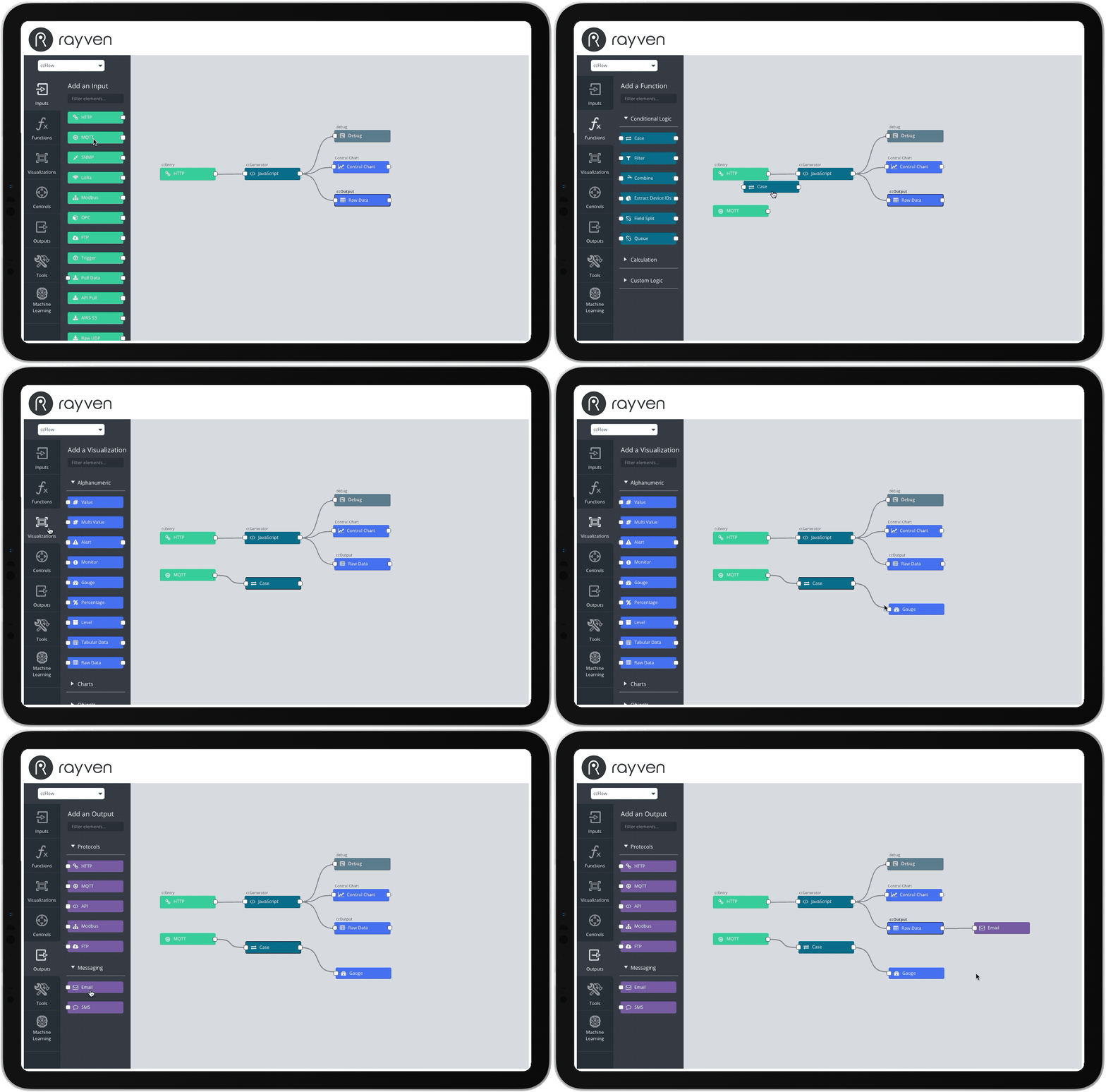
### Designed for Simplicity, Built for Scale.
Whether you’re a small business looking to streamline repetitive tasks or a global enterprise orchestrating automation across multiple departments, Rayven scales with your needs. Start small, automate key processes, and expand automation across your organisation - all from a single, easy-to-use platform.
Discover how Rayven’s AI-powered, real-time Business Automation Software can help you eliminate inefficiencies, optimise workflows, and drive better decision-making.
Trusted by 240+ teams across Australia + globally
- 
- 
- 
- 
- 
- 
- 
- 
- 
- 
- 
- 
- 
- 
- 
- 
- 
- 
- 
- 
- 
- 
- 
- 
- 
- 
- 
- 
- 
- 
- 
- 
- 
- 
- 
- 
- 
- 
- 
- 
- 
- 
Join the Shift
## Discover the easy way to do something new.
Book a free 30 minute assessment with our team and we'll scope your project, needs + what a solution might look like.
[Book a free assessment →
Book the free 30-minute call with one of our Australia-based team.
](https://www.rayven.io/book-demo) [Message us →
Not ready for an assessment? Send us a message and we'll get back to you with free, tailored advice.
](https://www.rayven.io/contact)
- Solutions
- [Custom Applications](https://www.rayven.io/solutions/custom-software)
- [Custom AI + Agents](https://www.rayven.io/solutions/custom-ai-solutions)
- [IoT Solutions](https://www.rayven.io/iot-platform)
- [Unified Data Platforms](https://www.rayven.io/solutions/unified-data-platform)
- [Data Collection Tools](https://www.rayven.io/solutions/data-collection-software)
- [Automations](https://www.rayven.io/solutions/automation-software)
- [Integrations](https://www.rayven.io/solutions/data-integration-platform)
- [Platform](https://www.rayven.io/platform)
- [Platform Home](https://www.rayven.io/platform)
- [Integration Layer](https://www.rayven.io/platform/integration)
- [Data Layer](https://www.rayven.io/platform/data)
- [Execution Layer](https://www.rayven.io/platform/execution)
- [Presentation / UI Layer](https://www.rayven.io/platform/presentation)
- [Security, Governance + Hosting](https://www.rayven.io/platform/security)
- [Use Cases](https://www.rayven.io/industries-and-roles)
- [Partner with Rayven](https://www.rayven.io/partners)
- [Partner Directory](https://www.rayven.io/partners/directory)
- [About Us](https://www.rayven.io/about)
- [Resources](https://www.rayven.io/blog)
- [Privacy Policy](https://www.rayven.io/privacy-policy)
- [Contact Us](https://www.rayven.io/contact)
- [Management Login](https://workspace.rayven.io/login.aspx)
- [info@rayven.io](mailto:info@rayven.io)

```json
{
"@context" : "https://schema.org",
"@id" : "https://www.rayven.io/#organization",
"@type" : "Organization",
"address" : {
"@type" : "PostalAddress",
"addressCountry" : "AU",
"addressLocality" : "Darlinghurst",
"addressRegion" : "NSW",
"postalCode" : "2010",
"streetAddress" : "223 Liverpool Street"
},
"areaServed" : [ {
"@type" : "Country",
"name" : "Australia"
}, {
"@type" : "Country",
"name" : "New Zealand"
}, {
"@type" : "Country",
"name" : "United States"
}, {
"@type" : "Country",
"name" : "United Kingdom"
}, {
"@type" : "Place",
"name" : "Global"
} ],
"description" : "Rayven is the unified platform plus services company that builds custom operational software, automation and AI for businesses of every kind.",
"email" : "info@rayven.io",
"foundingDate" : "2017",
"logo" : {
"@id" : "https://www.rayven.io/#logo",
"@type" : "ImageObject",
"height" : 426,
"url" : "https://www.rayven.io/hubfs/000%20-%20Rayven/Rayven%20Brand%20Assets/Rayven%20Logos/Ravyen%20Transparent%201390x426-1.png",
"width" : 1390
},
"name" : "Rayven",
"sameAs" : [ "https://www.linkedin.com/company/RayvenIoT", "https://x.com/RayvenIOT", "https://www.facebook.com/RayvenIoT/" ],
"slogan" : "Operational software for an AI-powered world.",
"url" : "https://www.rayven.io"
}
```
```json
{
"@context" : "https://schema.org",
"@id" : "https://www.rayven.io/#website",
"@type" : "WebSite",
"inLanguage" : "en",
"name" : "Rayven",
"publisher" : {
"@id" : "https://www.rayven.io/#organization"
},
"url" : "https://www.rayven.io"
}
```
```json
{
"@context" : "https://schema.org",
"@id" : "https://www.rayven.io/solutions/automation-software/business-automation-software#breadcrumb",
"@type" : "BreadcrumbList",
"itemListElement" : [ {
"@type" : "ListItem",
"item" : "https://www.rayven.io",
"name" : "Home",
"position" : 1
}, {
"@type" : "ListItem",
"item" : "https://www.rayven.io/solutions/automation-software",
"name" : "Automation Software",
"position" : 2
}, {
"@type" : "ListItem",
"item" : "https://www.rayven.io/solutions/automation-software/business-automation-software",
"name" : "Business Automation Software",
"position" : 3
} ]
}
```
```json
{
"@context" : "https://schema.org",
"@id" : "https://www.rayven.io/solutions/automation-software/business-automation-software#webpage",
"@type" : "WebPage",
"about" : {
"@id" : "https://www.rayven.io/solutions/automation-software/business-automation-software#service"
},
"breadcrumb" : {
"@id" : "https://www.rayven.io/solutions/automation-software/business-automation-software#breadcrumb"
},
"dateModified" : "2026-05-29",
"datePublished" : "2025-02-24",
"inLanguage" : "en-AU",
"isPartOf" : {
"@id" : "https://www.rayven.io/#website"
},
"name" : "Business Automation Software",
"speakable" : {
"@type" : "SpeakableSpecification",
"cssSelector" : [ "h1", "h2" ]
},
"url" : "https://www.rayven.io/solutions/automation-software/business-automation-software"
}
```
```json
{
"@context" : "https://schema.org",
"@id" : "https://www.rayven.io/solutions/automation-software/business-automation-software#service",
"@type" : "Service",
"areaServed" : [ {
"@type" : "Country",
"name" : "Australia"
}, {
"@type" : "Country",
"name" : "New Zealand"
}, {
"@type" : "Country",
"name" : "United States"
}, {
"@type" : "Country",
"name" : "United Kingdom"
}, {
"@type" : "Place",
"name" : "Global"
} ],
"name" : "Business Automation Software",
"provider" : {
"@id" : "https://www.rayven.io/#organization"
},
"serviceType" : "Business Automation Software",
"url" : "https://www.rayven.io/solutions/automation-software/business-automation-software"
}
```