What is a Water Quality Monitoring IoT solution?
A Water Quality Monitoring IoT solution uses multi-parameter sensors and real-time data to continuously measure the chemical, physical and biological condition of water bodies, distribution networks or treatment systems. Rayven's IoT platform centralises all water quality data, enables real-time remote monitoring and automates regulatory compliance reporting.
What parameters can a Water Quality Monitoring solution measure?
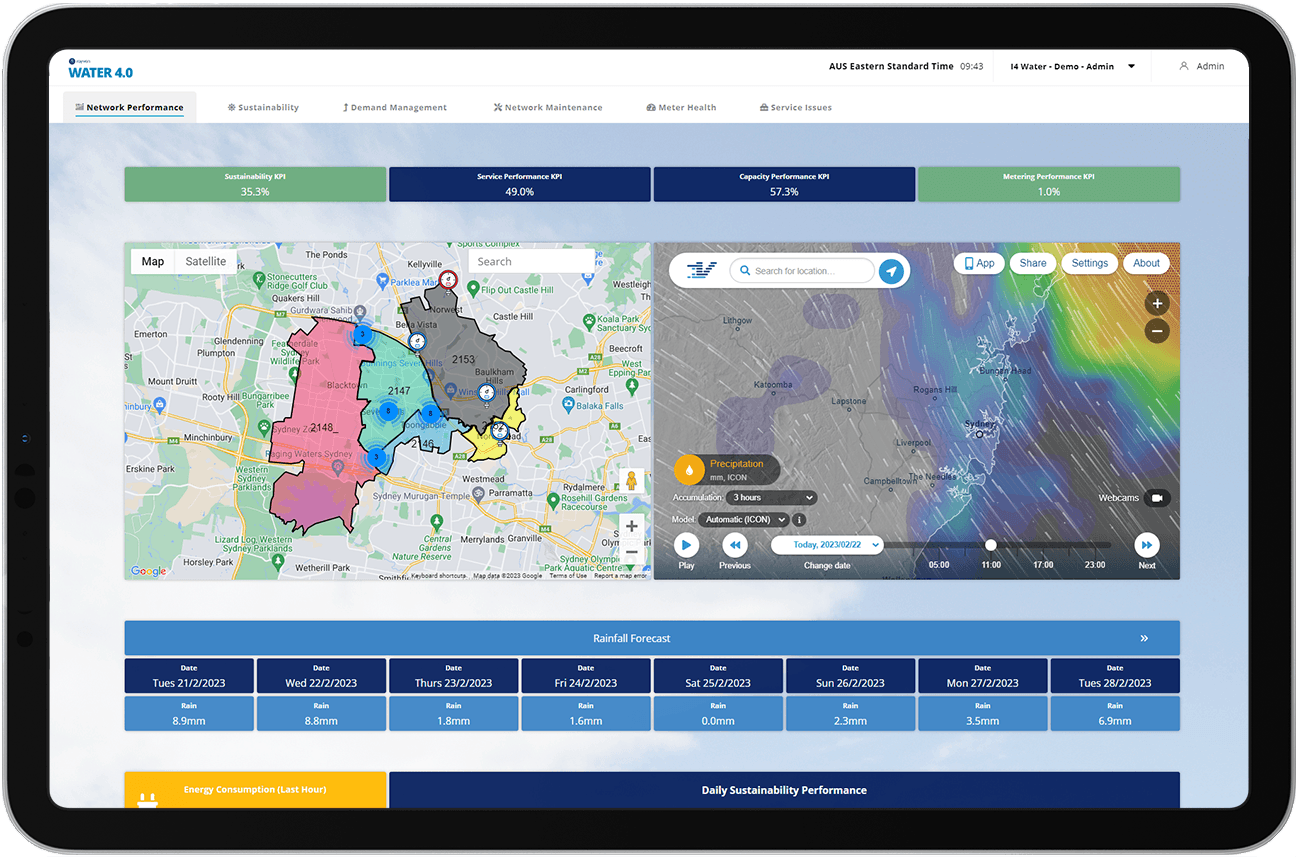
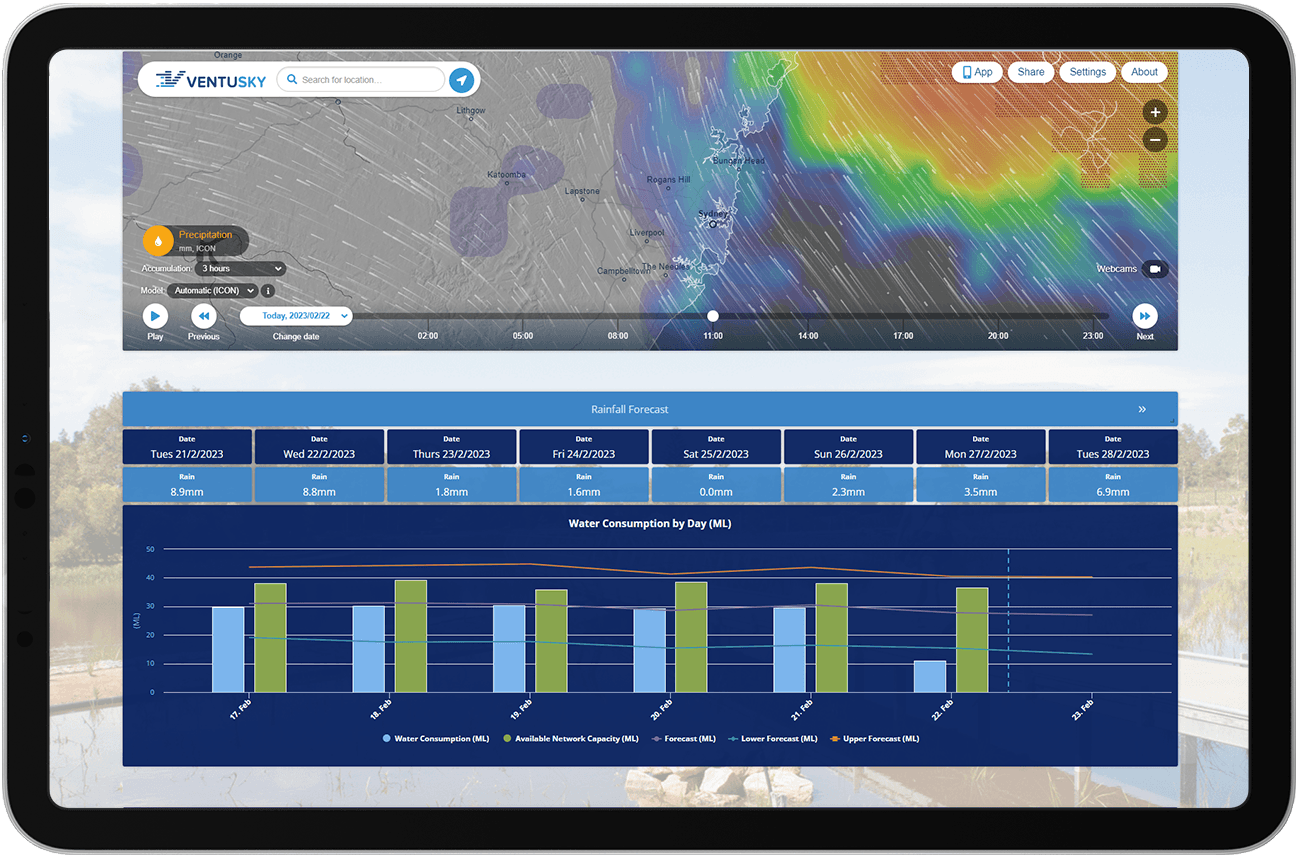
The solution measures pH, dissolved oxygen, turbidity, conductivity, temperature, total dissolved solids, chlorophyll, ammonia, nitrates, phosphates, heavy metals and salinity, depending on sensor configuration. All readings are consolidated into a real-time dashboard with configurable alert thresholds per parameter.
How does real-time water quality monitoring detect pollution events?
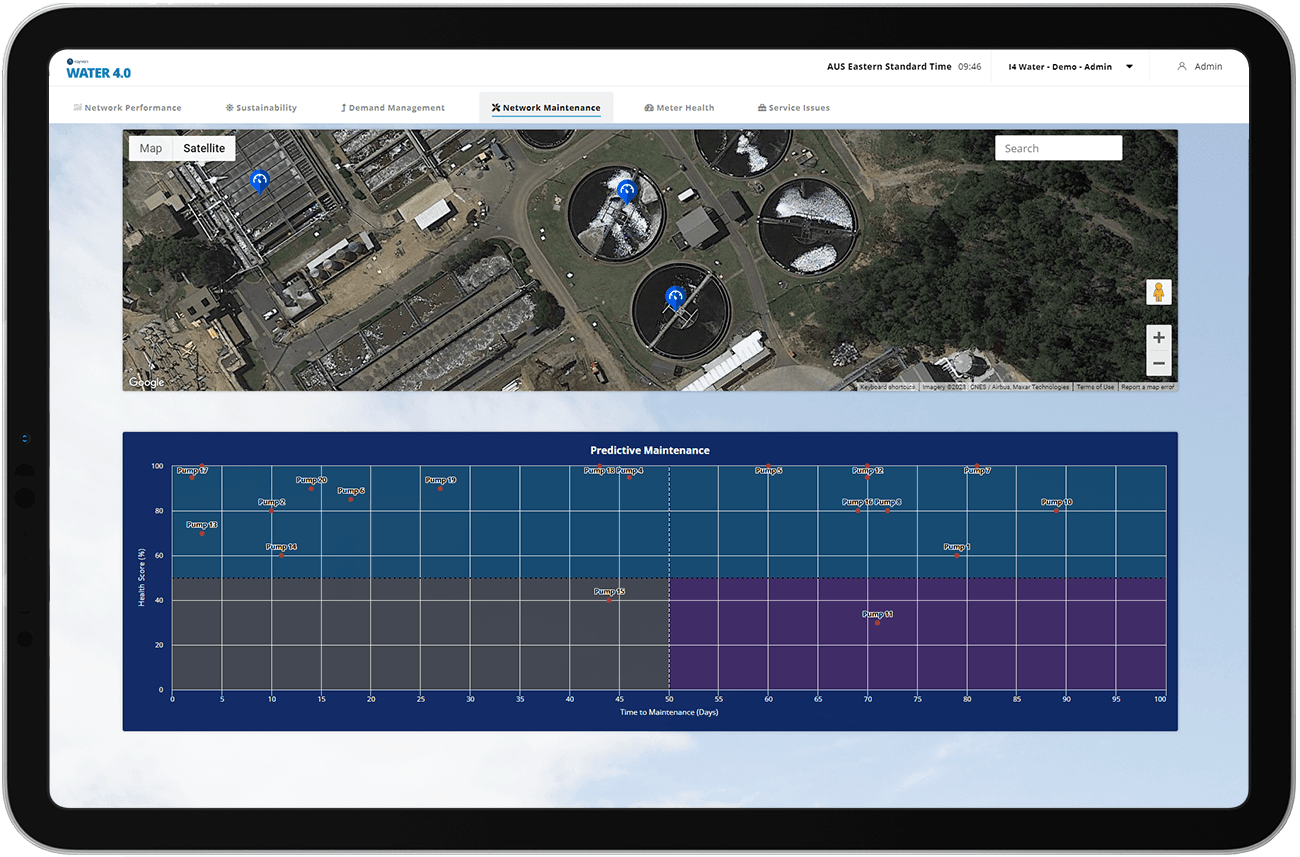
The platform monitors parameter trends and uses threshold-based alerts to identify sudden changes indicative of pollution, spills, treatment failures or environmental disturbances. Alerts are delivered within seconds of a threshold breach, enabling rapid investigation and response before downstream impacts escalate.
Can the solution integrate with existing water quality sensors and SCADA systems?
Yes. Rayven's Integration Layer connects to multi-parameter sondes, water quality analysers, LIMS, SCADA platforms and NPDES monitoring systems via Modbus, MQTT and REST APIs. Existing sensors can be retained and supplemented with new monitoring points.
How does the solution support regulatory compliance and reporting?
The platform creates a continuous, timestamped audit trail of all water quality readings, ready for submission to EPA, water authorities and environmental regulators. Automated compliance reports can be generated on demand or on schedule, eliminating labour-intensive manual data compilation.
Can the solution monitor water quality across multiple sites and networks?
Yes. Rayven's platform supports multi-site deployments across distribution networks, catchments, treatment plants and receiving environments. New monitoring points can be added without rebuilding the platform, and cellular or satellite connectivity enables monitoring of remote waterways.
How quickly can a Water Quality Monitoring solution be deployed?
Most clients go live in 2-12 weeks. Rayven's pre-built water quality monitoring components handle the majority of the build, with customisation for your specific parameters, monitoring locations, alert thresholds and reporting format requirements.
What industries use Water Quality Monitoring solutions?
Water quality monitoring is used by drinking water utilities, wastewater treatment operators, aquaculture producers, mining operations (AMD monitoring), local councils, environmental consultancies and catchment management authorities. Any organisation with water quality obligations or discharge licences benefits from continuous real-time monitoring.
How does real-time water quality data improve operational decisions?
Continuous data enables operators to adjust treatment dosing in real-time, respond to upstream pollution events before they reach offtake points, optimise energy use in treatment processes, and demonstrate environmental performance to regulators and communities with objective, high-resolution evidence.
How does Rayven's solution cost less than traditional water quality monitoring approaches?
Rayven charges a flat subscription with no per-sensor or per-parameter fees, uses pre-built water monitoring components to reduce implementation time, and automates reporting that previously required specialist environmental engineering. Clients achieve continuous monitoring at a fraction of laboratory sampling and consultancy costs. Book a demo to compare.




























/Website%202026/Partner%20+%20Tech%20Logos/Integration-mulesoft.webp) Integration
Integration/Website%202026/Partner%20+%20Tech%20Logos/storage-snowflake.webp) Storage
Storage/Website%202026/Partner%20+%20Tech%20Logos/Streaming-Confluent.webp) Streaming
Streaming/Website%202026/Partner%20+%20Tech%20Logos/workflow-zapier.webp) Workflow
Workflow/Website%202026/Other%20Pages/Bubble-alt.png) App Dev
App Dev/Website%202026/Partner%20+%20Tech%20Logos/Data-Lake-Databricks.webp) Data Lake
Data Lake/Website%202026/Partner%20+%20Tech%20Logos/Visualization-PowerBI.webp) Visualization
Visualization/Website%202026/Partner%20+%20Tech%20Logos/IoT-ML-AWS.webp) IoT / ML
IoT / ML/Website%202026/Partner%20+%20Tech%20Logos/Security-Crowdstrike.webp) Security
Security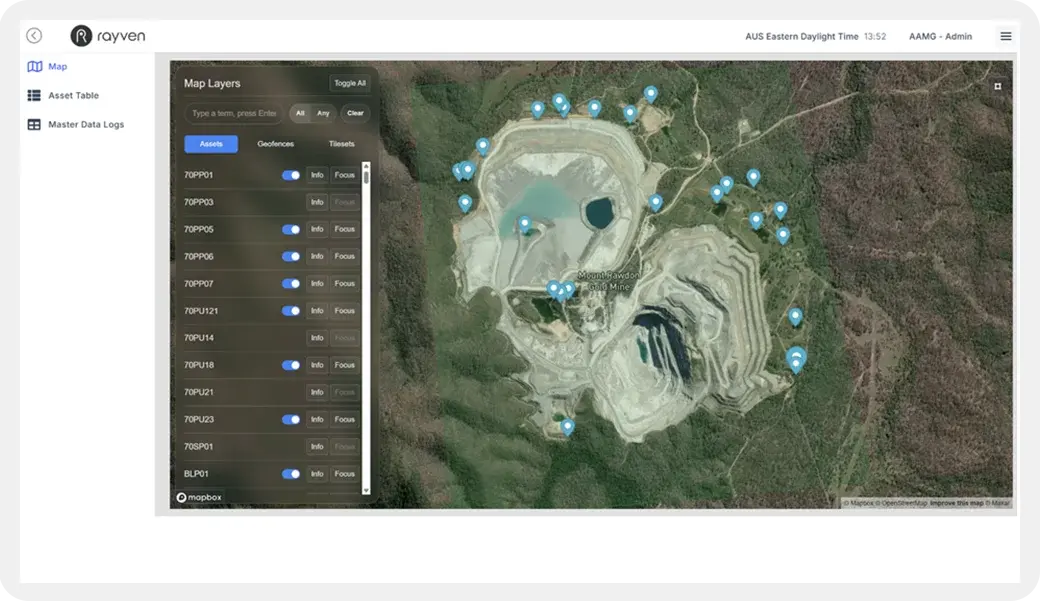


/Website%202026/Industries%202026/Construction%20+%20Infrastructure/Construction%20+%20Infrastructure%20Tech%20Logos/Siemens-logo-300.webp)
/Website%202026/Industries%202026/Energy,%20Utilities%20+%20Water/Energy,%20Utilities%20+%20Water%20Tech%20Logos/ABB-logo-300.webp)
/Website%202026/Industries%202026/Facility%20Management/Facility%20Management%20Tech%20Logos/Rockwell_Automation_logo-300.png)
/Website%202026/Industries%202026/Construction%20+%20Infrastructure/Construction%20+%20Infrastructure%20Tech%20Logos/Honeywell_logo-300.webp)
/Website%202026/Industries%202026/Energy,%20Utilities%20+%20Water/Energy,%20Utilities%20+%20Water%20Tech%20Logos/Schenider-electric.png)
/Website%202026/Industries%202026/Energy,%20Utilities%20+%20Water/Energy,%20Utilities%20+%20Water%20Tech%20Logos/ecostruxurelogo-300.png)
/Website%202026/Industries%202026/Energy,%20Utilities%20+%20Water/Energy,%20Utilities%20+%20Water%20Tech%20Logos/Aveva-logo-300.webp)
/Website%202026/Industries%202026/Energy,%20Utilities%20+%20Water/Energy,%20Utilities%20+%20Water%20Tech%20Logos/GE-logo-300.webp)

/Website%202026/Industries%202026/Mining/Mining%20Tech%20Logos/IBM-logo-300.webp)
/Website%202026/Industries%202026/Energy,%20Utilities%20+%20Water/Energy,%20Utilities%20+%20Water%20Tech%20Logos/OSIsoft-logo-300.png)
/Website%202026/Industries%202026/Energy,%20Utilities%20+%20Water/Energy,%20Utilities%20+%20Water%20Tech%20Logos/IgnitionLogo-300.png)
/Website%202026/Industries%202026/Energy,%20Utilities%20+%20Water/Energy,%20Utilities%20+%20Water%20Tech%20Logos/Hitachi-logo-300.png)
/Website%202026/Industries%202026/Construction%20+%20Infrastructure/Construction%20+%20Infrastructure%20Tech%20Logos/Samsara-logo-300.png)
/Website%202026/Industries%202026/Construction%20+%20Infrastructure/Construction%20+%20Infrastructure%20Tech%20Logos/CAT-VisionLink-logo-300.png)
/Website%202026/Industries%202026/Construction%20+%20Infrastructure/Construction%20+%20Infrastructure%20Tech%20Logos/Komtrax-logo-300.png)

/Website%202026/Industries%202026/Construction%20+%20Infrastructure/Construction%20+%20Infrastructure%20Tech%20Logos/Trimble_Logo-300.png)
/Website%202026/Industries%202026/Construction%20+%20Infrastructure/Construction%20+%20Infrastructure%20Tech%20Logos/Xylem_Logo-300.png)
/Website%202026/Industries%202026/Energy,%20Utilities%20+%20Water/Energy,%20Utilities%20+%20Water%20Tech%20Logos/Taggle-logo-300.png)
/Website%202026/Industries%202026/Energy,%20Utilities%20+%20Water/Energy,%20Utilities%20+%20Water%20Tech%20Logos/itron-logo-300.png)
/Website%202026/Industries%202026/Energy,%20Utilities%20+%20Water/Energy,%20Utilities%20+%20Water%20Tech%20Logos/landis-gy-logo-300.png)
/Website%202026/Industries%202026/Energy,%20Utilities%20+%20Water/Energy,%20Utilities%20+%20Water%20Tech%20Logos/Elster-logo-300.webp)
/Website%202026/Industries%202026/Manufacturing/Manufacturing%20Tech%20Logos/fiix-logo-300.webp)
/Website%202026/Industries%202026/Facility%20Management/Facility%20Management%20Tech%20Logos/MEXLogo-300.png)
/Website%202026/Industries%202026/Energy,%20Utilities%20+%20Water/Energy,%20Utilities%20+%20Water%20Tech%20Logos/Damastra-logo-300.png)
/Website%202026/Industries%202026/Energy,%20Utilities%20+%20Water/Energy,%20Utilities%20+%20Water%20Tech%20Logos/SAP-logo-300.webp)
/Website%202026/Industries%202026/Mining/Mining%20Tech%20Logos/Oracle-Logo-300.webp)








/Website%202026/Industries%202026/Facility%20Management/Facility%20Management%20Tech%20Logos/QuickBooks-300.png)





/Website%202026/Industries%202026/Manufacturing/Manufacturing%20Tech%20Logos/Outlook-Emblem-300.png)