What is a Smart Ventilation IoT solution?
A Smart Ventilation IoT solution uses air quality sensors and real-time data to continuously monitor indoor environmental conditions and automatically adjust ventilation system operation to maintain healthy air quality, thermal comfort and energy efficiency. Rayven's IoT platform connects to any ventilation or HVAC system, centralises all air quality and equipment data, and enables automated demand-controlled ventilation.
What parameters does a Smart Ventilation solution monitor?
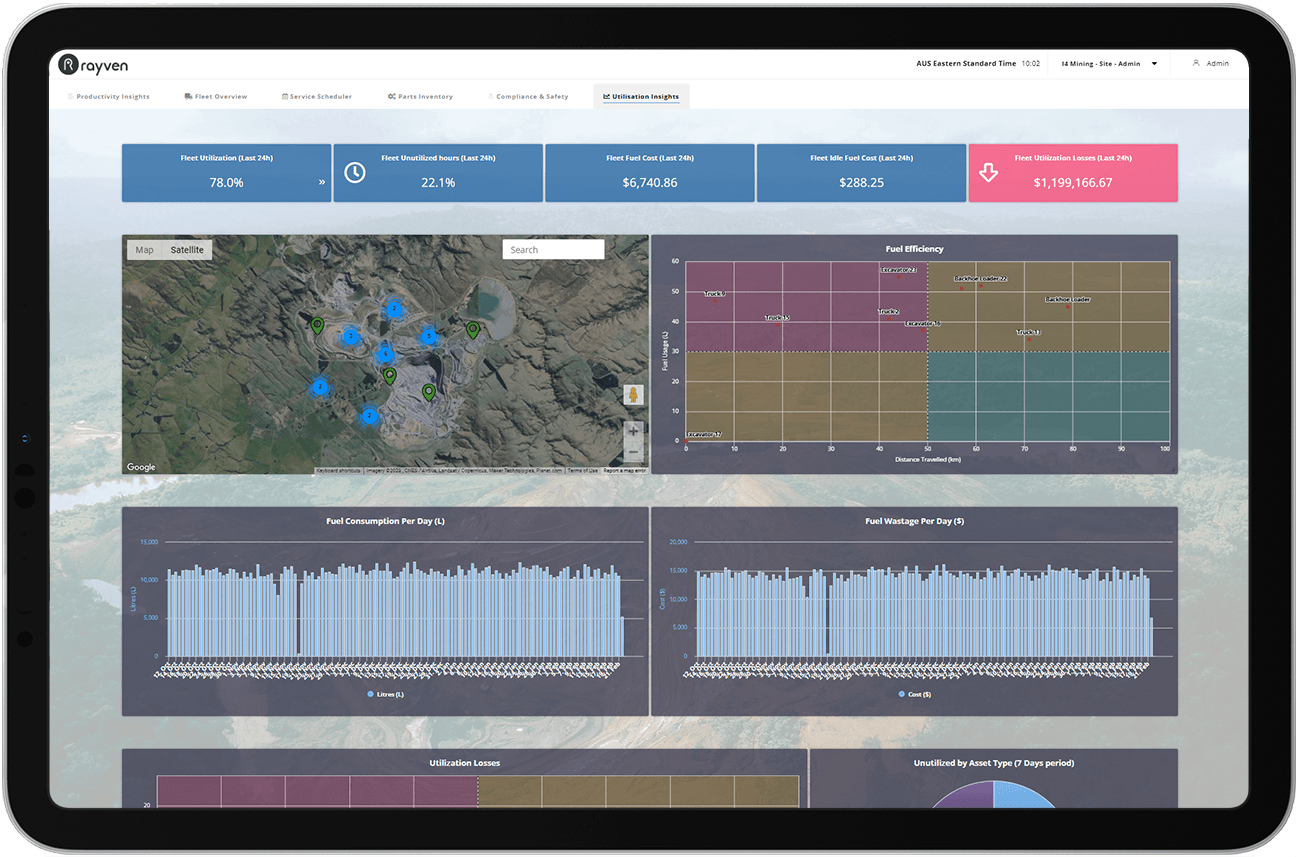
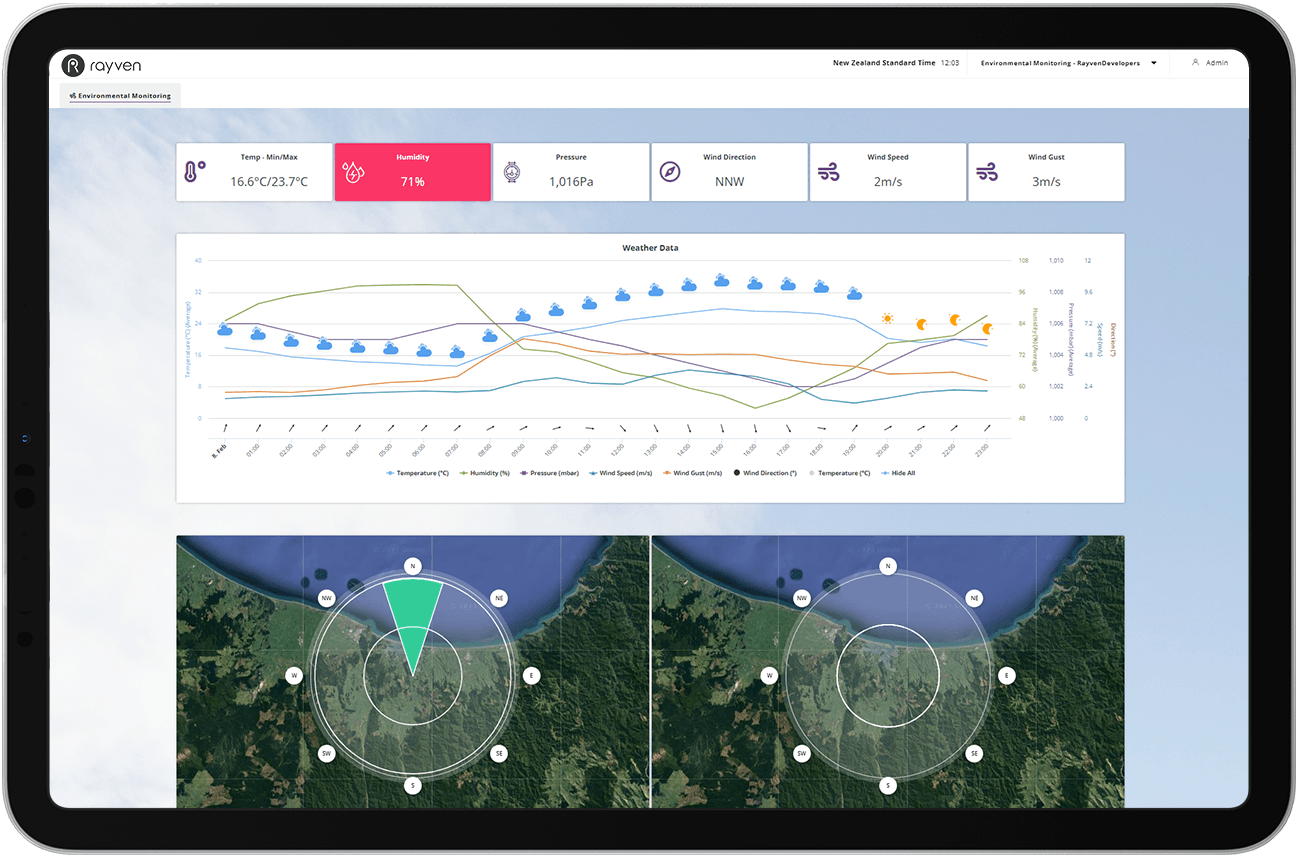
The solution monitors CO2, PM2.5, PM10, VOCs, temperature, humidity, airflow rate, fan speed, filter pressure drop and outdoor air quality. All parameters are consolidated into a real-time indoor environment dashboard with configurable alert thresholds per zone.
How does demand-controlled ventilation reduce energy costs?
Rather than running ventilation at fixed rates regardless of occupancy or air quality, the system modulates fan speed and fresh air intake based on actual CO2 and occupancy levels. Clients typically achieve 20-40% reductions in ventilation energy costs while maintaining or improving indoor air quality standards.
Can the solution integrate with existing HVAC and building management systems?
Yes. Rayven's Integration Layer connects to existing AHUs, FCUs, ERVs, BMS platforms and building automation systems via BACnet, Modbus, MQTT and REST APIs. Existing ventilation equipment can be upgraded with intelligent control without replacement.
How does the solution support workplace health and regulatory compliance?
The platform creates a continuous, timestamped record of indoor air quality readings, documenting compliance with WorkSafe guidelines, WELL Building Standards and indoor environment quality requirements. Automated reports reduce manual data collection and provide objective evidence for building certification and regulatory submissions.
What alerts can be configured for air quality or ventilation faults?
Threshold alerts can be configured for CO2 exceedances, high particulate events, filter saturation, fan failure, temperature deviations and outdoor air quality triggers. Alerts are delivered via SMS, email or push notification, and can trigger automated responses such as increasing fan speed or activating supplementary filtration.
Can the solution monitor ventilation across multiple buildings or sites?
Yes. Rayven's platform supports multi-building and multi-site monitoring from a single dashboard. Zone-level data is aggregated at building and portfolio level, enabling facilities teams to identify problem areas and benchmark performance across the building estate.
How quickly can a Smart Ventilation IoT solution be deployed?
Most clients go live in 2-12 weeks. Rayven's pre-built ventilation monitoring and control components cover the majority of the build, with sensor placement, control parameters and alert thresholds customised to your specific building types and occupancy patterns.
What industries use Smart Ventilation IoT solutions?
Smart ventilation is used in commercial office buildings, schools, healthcare facilities, data centres, food production facilities, aged care residences, retail and industrial manufacturing. Any building where indoor air quality affects health, productivity or regulatory compliance benefits from real-time ventilation intelligence.
How does Rayven's Smart Ventilation solution cost less than traditional building automation approaches?
Rayven charges a flat subscription with no per-zone or per-sensor fees, uses pre-built ventilation control components and avoids specialist building automation vendor mark-ups. Energy savings from demand-controlled ventilation typically return the investment within 1-2 years. Book a demo to model your building's savings.































/Website%202026/Partner%20+%20Tech%20Logos/Integration-mulesoft.webp) Integration
Integration/Website%202026/Partner%20+%20Tech%20Logos/storage-snowflake.webp) Storage
Storage/Website%202026/Partner%20+%20Tech%20Logos/Streaming-Confluent.webp) Streaming
Streaming/Website%202026/Partner%20+%20Tech%20Logos/workflow-zapier.webp) Workflow
Workflow/Website%202026/Other%20Pages/Bubble-alt.png) App Dev
App Dev/Website%202026/Partner%20+%20Tech%20Logos/Data-Lake-Databricks.webp) Data Lake
Data Lake/Website%202026/Partner%20+%20Tech%20Logos/Visualization-PowerBI.webp) Visualization
Visualization/Website%202026/Partner%20+%20Tech%20Logos/IoT-ML-AWS.webp) IoT / ML
IoT / ML/Website%202026/Partner%20+%20Tech%20Logos/Security-Crowdstrike.webp) Security
Security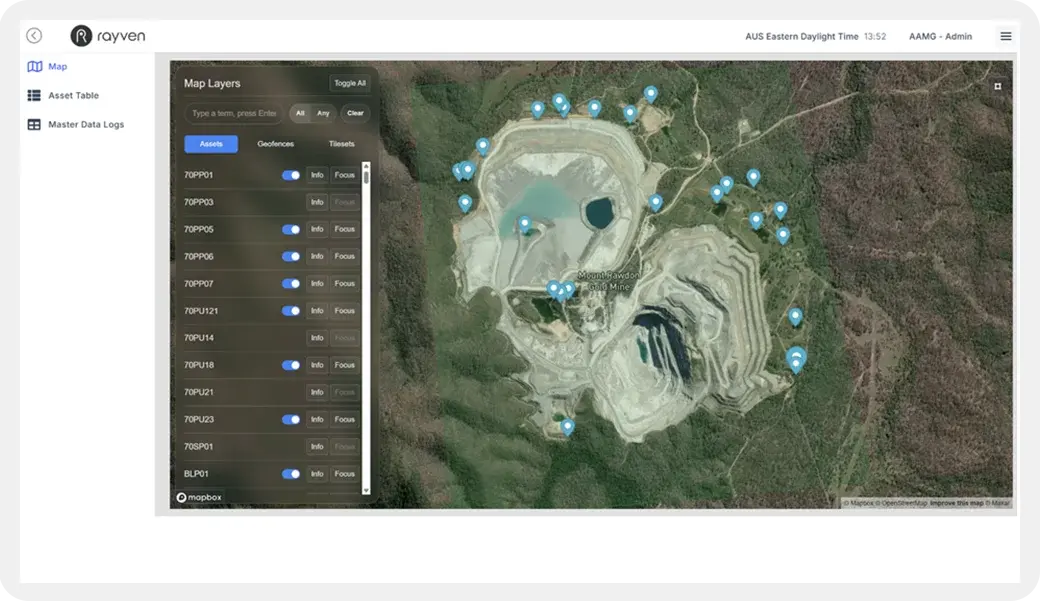


/Website%202026/Industries%202026/Construction%20+%20Infrastructure/Construction%20+%20Infrastructure%20Tech%20Logos/Siemens-logo-300.webp)
/Website%202026/Industries%202026/Energy,%20Utilities%20+%20Water/Energy,%20Utilities%20+%20Water%20Tech%20Logos/ABB-logo-300.webp)
/Website%202026/Industries%202026/Facility%20Management/Facility%20Management%20Tech%20Logos/Rockwell_Automation_logo-300.png)
/Website%202026/Industries%202026/Construction%20+%20Infrastructure/Construction%20+%20Infrastructure%20Tech%20Logos/Honeywell_logo-300.webp)
/Website%202026/Industries%202026/Energy,%20Utilities%20+%20Water/Energy,%20Utilities%20+%20Water%20Tech%20Logos/Schenider-electric.png)
/Website%202026/Industries%202026/Energy,%20Utilities%20+%20Water/Energy,%20Utilities%20+%20Water%20Tech%20Logos/ecostruxurelogo-300.png)
/Website%202026/Industries%202026/Energy,%20Utilities%20+%20Water/Energy,%20Utilities%20+%20Water%20Tech%20Logos/Aveva-logo-300.webp)
/Website%202026/Industries%202026/Energy,%20Utilities%20+%20Water/Energy,%20Utilities%20+%20Water%20Tech%20Logos/GE-logo-300.webp)

/Website%202026/Industries%202026/Mining/Mining%20Tech%20Logos/IBM-logo-300.webp)
/Website%202026/Industries%202026/Energy,%20Utilities%20+%20Water/Energy,%20Utilities%20+%20Water%20Tech%20Logos/OSIsoft-logo-300.png)
/Website%202026/Industries%202026/Energy,%20Utilities%20+%20Water/Energy,%20Utilities%20+%20Water%20Tech%20Logos/IgnitionLogo-300.png)
/Website%202026/Industries%202026/Energy,%20Utilities%20+%20Water/Energy,%20Utilities%20+%20Water%20Tech%20Logos/Hitachi-logo-300.png)
/Website%202026/Industries%202026/Construction%20+%20Infrastructure/Construction%20+%20Infrastructure%20Tech%20Logos/Samsara-logo-300.png)
/Website%202026/Industries%202026/Construction%20+%20Infrastructure/Construction%20+%20Infrastructure%20Tech%20Logos/CAT-VisionLink-logo-300.png)
/Website%202026/Industries%202026/Construction%20+%20Infrastructure/Construction%20+%20Infrastructure%20Tech%20Logos/Komtrax-logo-300.png)

/Website%202026/Industries%202026/Construction%20+%20Infrastructure/Construction%20+%20Infrastructure%20Tech%20Logos/Trimble_Logo-300.png)
/Website%202026/Industries%202026/Construction%20+%20Infrastructure/Construction%20+%20Infrastructure%20Tech%20Logos/Xylem_Logo-300.png)
/Website%202026/Industries%202026/Energy,%20Utilities%20+%20Water/Energy,%20Utilities%20+%20Water%20Tech%20Logos/Taggle-logo-300.png)
/Website%202026/Industries%202026/Energy,%20Utilities%20+%20Water/Energy,%20Utilities%20+%20Water%20Tech%20Logos/itron-logo-300.png)
/Website%202026/Industries%202026/Energy,%20Utilities%20+%20Water/Energy,%20Utilities%20+%20Water%20Tech%20Logos/landis-gy-logo-300.png)
/Website%202026/Industries%202026/Energy,%20Utilities%20+%20Water/Energy,%20Utilities%20+%20Water%20Tech%20Logos/Elster-logo-300.webp)
/Website%202026/Industries%202026/Manufacturing/Manufacturing%20Tech%20Logos/fiix-logo-300.webp)
/Website%202026/Industries%202026/Facility%20Management/Facility%20Management%20Tech%20Logos/MEXLogo-300.png)
/Website%202026/Industries%202026/Energy,%20Utilities%20+%20Water/Energy,%20Utilities%20+%20Water%20Tech%20Logos/Damastra-logo-300.png)
/Website%202026/Industries%202026/Energy,%20Utilities%20+%20Water/Energy,%20Utilities%20+%20Water%20Tech%20Logos/SAP-logo-300.webp)
/Website%202026/Industries%202026/Mining/Mining%20Tech%20Logos/Oracle-Logo-300.webp)








/Website%202026/Industries%202026/Facility%20Management/Facility%20Management%20Tech%20Logos/QuickBooks-300.png)






/Website%202026/Industries%202026/Manufacturing/Manufacturing%20Tech%20Logos/Outlook-Emblem-300.png)