























Platform > Data Layer > AI Models + Training
AI models + training.
Build, train + deploy machine learning models on your real-time operational data - directly within the platform, without a separate ML infrastructure.



CAPABILITY OVERVIEW
Deploy predictive AI on your own data, in real-time.
Rayven includes a full Python-based machine learning modeller built into the platform.
Create or upload any Python algorithm, train + compare multiple models against your real-time Cassandra datasets, then deploy directly into workflow logic.
Model predictions trigger threshold alerts, feed dashboard visualisations, route workflow decisions + push outputs to connected systems - all within the same platform used for ingestion, storage + automation.
Inbound triggers include:
-
Cassandra time-series data (training datasets)
-
Primary + Secondary Table records
-
Real-time incoming workflow data (for live inference)
-
Historical data over configurable time ranges
Outbound triggers include:
-
Prediction outputs for Conditional Filter + Rule Builder (threshold alerts)
-
ML Chart widget values for dashboards
-
Prediction data for external API endpoints
-
Anomaly detection scores for automated actions
KEY CAPABILITIES
What AI Models + Training gives you.
Python ML modeller
Create ML models directly within Rayven using Python, or upload existing algorithms from your team or data science tools. Full Python environment - no restrictions on libraries, model types or algorithm complexity.
Multi-model training + comparison
Train multiple models simultaneously against the same dataset and compare performance metrics side by side. Select the best-performing model for deployment based on accuracy, precision, recall + configurable evaluation criteria.
Real-time model deployment
Deploy trained models against live, continuously updating Cassandra data feeds. Models score incoming data as it arrives - enabling real-time inference for anomaly detection, predictive maintenance, demand forecasting + operational optimisation.
Workflow-integrated predictions
Model prediction outputs feed directly into workflow logic as a node output. A Conditional Filter or Rule Builder evaluates predicted values against thresholds - triggering alerts, control commands, API calls or database writes based on what the model predicts.
ML Chart widget
Visualise model predictions, confidence intervals + historical actuals in a dedicated ML Chart widget. Display forecasts alongside real-time operational data on any dashboard - giving operators a combined view of current performance and predicted outcomes.
GenAI + conversational analytics
Combine ML predictions with Rayven's GenAI capabilities. Build conversational interfaces that allow users to ask questions about model outputs, query predictions against historical data + receive AI-generated explanations of forecast results.
HOW IT CONNECTS: EXPLAINER
Where AI Models + Training fits in the Rayven Platform stack.
AI Models + Training sits in the Data Layer as the platform's predictive intelligence capability.
-
Training data comes from the Data Layer - Cassandra time-series records + Primary Table datasets.
-
Trained models deploy into the Execution Layer as workflow nodes, scoring incoming data in real-time.
-
Prediction outputs pass to the Presentation Layer for dashboard visualization via the ML Chart widget.
-
Threshold-based model outputs trigger actions in the Execution Layer - alerts, control commands + API writes.
-
External systems receive prediction outputs via API endpoints or output nodes.
USE CASES
How AI Models + Training gets used.
Predictive maintenance for an industrial operator
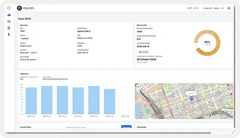
A mining operator trains a Python anomaly detection model on 18 months of vibration sensor data from 200 pumps. The model deploys against live sensor streams. When predicted failure probability exceeds threshold, a workflow fires a maintenance work order + notifies the site team - before the asset fails.
Demand forecasting for a retail chain
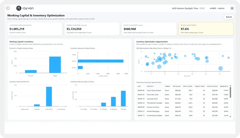
A retailer trains a time-series forecasting model on 24 months of store sales data. The model deploys against live sales feeds and generates daily demand forecasts per product + store. Forecast outputs feed a planning dashboard - enabling proactive stock replenishment without manual analysis.
Partner delivering an AI-powered monitoring product
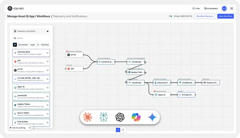
An MSP trains client-specific anomaly detection models within Rayven using each client's historical operational data. Deployed models score live data streams per client and surface predictions in branded dashboards. Clients receive AI-powered operational insights as the partner's own product.
Rayven AI Models + Training FAQs:
What ML approaches does Rayven support for model training?
Supervised learning (classification, regression), unsupervised learning (clustering, anomaly detection) and time-series forecasting - all via Python within the platform ML modeller. Standard libraries (scikit-learn, XGBoost, statsmodels) are available. See the Data Layer.
Do I need to export data to train a model?
No. Training data is pulled directly from Rayven's Cassandra and MySQL storage within the workflow. No data export, ETL pipeline or external ML environment is required. See SQL + Cassandra Storage.
How often can models be retrained?
Models can be retrained on any schedule or triggered by a data event - daily, weekly, or whenever a new batch of labelled data arrives. Retraining runs as a standard workflow. See Workflows + Triggers.
How are trained models deployed into production?
Once trained, a model is published as a workflow node. It can be inserted into any workflow to score incoming data in real-time or batch. No separate infrastructure or DevOps work is required. Explore the Execution Layer.
Can AI models trigger automated actions?
Yes. A deployed model node outputs a score or class label. Downstream Conditional Filter nodes evaluate the output and trigger actions - alerts, control commands, API calls - based on model predictions. Explore Control + Automation.
Can I use external models (e.g. OpenAI, Gemini) alongside Rayven built-in models?
Yes. Native AI Connectors for OpenAI, Claude, Gemini, Cohere, Mistral, Llama and others are available as workflow nodes. These can be combined with custom Python models in the same workflow chain. See AI Connectors.
What feature engineering capabilities are available?
Aggregation nodes, time-window calculations, formula builders and JavaScript nodes all contribute to feature engineering within the workflow. Historical data from Cassandra and tables is available as input for feature construction. See Calculation + Aggregation.
Can models be versioned and rolled back?
Model versions are managed within the workflow builder. Previous model versions can be restored or run in parallel for A/B evaluation. Rollback does not require platform downtime. Explore the Execution Layer.
How are model predictions stored?
Predictions can be written to a Secondary Table, stored as a Cassandra time-series metric, or surfaced directly on a dashboard widget. This allows historical review of model performance and prediction drift. See Unified Data Tables.
Does Rayven manage model infrastructure?
Yes. All model training, serving and retraining infrastructure is managed by Rayven. You write Python, configure training parameters and schedule retraining - the platform handles compute, storage and deployment. Contact us for capability details.
Also in the Data Layer:
Unified Data Tables
Structured Primary + Secondary Tables for entity records, metadata + relational data alongside Cassandra time-series.
Data Management
Configure retention policies, inspect workflow payloads, export raw data + manage data lifecycle across the platform.
Data Transformation
JavaScript, Advanced Function + Combine Data nodes for schema mapping, enrichment + normalisation within workflow processing chains.
File Parsing
Ingest + parse files from FTP, S3 + manual uploads into structured, real-time data available to workflows and AI models.
Calculation + Aggregation
Sum, average, count + aggregate across UID or Label over any defined time window - at the point of processing.
Real-time Data Processing
Sub-second ingestion + processing of live sensor, device + event data with built-in deduplication + schema validation.
SQL + Cassandra Data Storage
Hybrid storage architecture - MySQL for relational records, Cassandra for time-series + event data.
Join the Shift
Discover the easy way to do something new.
Book a free 30 minute assessment with our team and we'll scope your project, needs + what a solution might look like.