
























Platform > Execution Layer > Rayven MCP
Rayven MCP (Model Context Protocol).
Rayven MCP isn't just a connector, it's a full data architecture - ingesting, storing in Cassandra and MySQL, contextualising for AI readiness, then exposing a governed MCP layer to Claude, ChatGPT + Gemini.


CAPABILITY OVERVIEW
Five stages from raw data to a governed AI query.
Every stage of the Rayven MCP pipeline has a specific job. Most platforms stop at 2 (ingestion and storage) - the reason Rayven answers are accurate and actionable is everything that comes after.
STAGE 01
Connectors & Ingestion
1,228+ fast-track connectors pull data from any IT, OT, IoT, SaaS, or file source - in real time or on schedule. Custom connectors via REST, MQTT, and JDBC for anything else.
STAGE 02
Hybrid Storage
MySQL stores relational entity data via Primary and Secondary Tables, linked by UID. Cassandra stores high-frequency time-series data indexed by UID and timestamp.
STAGE 03 - The critical step
Contextualization
Raw values become AI-ready facts. Rayven applies UID linking, schema normalisation, label enrichment, threshold computation, temporal history, and pre-composed semantic summaries.
★ Most important stepSTAGE 04
MCP Server
The Rayven MCP server exposes governed tools to any MCP-compatible AI client. Query data, trigger workflows, and write records - all with role-based access and a full audit trail.
STAGE 05
AI Assistants
Claude (Anthropic), ChatGPT (OpenAI), and Gemini (Google) connect through standard MCP. Users interact in natural language; the AI queries Rayven's contextualized data store.
A deeper look at the Rayven MCP layers.
|
Stage 01 Connectors & IngestionConnects to IT, OT, IoT, SaaS, files + custom APIs. Data flows in continuously with built-in deduplication and schema validation before a single record touches storage. |
Deduplication and schema validation run on every record before it reaches storage. |
|
Stage 02 Hybrid StorageNo single database handles both structured entity data and high-frequency time-series data well. MySQL and Cassandra each do one thing perfectly - together they give your AI the complete picture. |
|
|
Stage 03 - Critical ContextualizationA sensor reading of 87.3 means nothing without knowing the asset, its normal range, its history + what 87.3 has meant before. Rayven applies all of that context automatically, so your AI answers from structured truth, not bare numbers. |
|
|
Stage 04 MCP ServerSits in front of your contextualized data store and exposes typed, governed tools to any MCP-compatible AI client. Claude, ChatGPT + Gemini call these tools in conversation - without ever accessing your raw systems. |
All tool calls are role-gated by Label and logged to the audit trail with user identity and timestamp. |
|
Stage 05 AI AssistantsUsers interact in natural language. The AI calls Rayven MCP tools, receives structured contextualized data + composes its response - without ever accessing your source systems directly. |
|
KEY CAPABILITIES
What Rayven MCP gives you.
Full-stack data pipeline
Not just an API wrapper. Rayven MCP ingests, stores, contextualises + exposes data in one continuous architecture - so your AI answers from structured truth, not guesswork.
Data contextualization
Raw sensor values and records are enriched with UID linking, threshold status, temporal history + pre-composed ai_summary fields before an AI assistant ever sees them.
1,228+ source connectors
IT, OT, IoT, SaaS, files + custom APIs - Rayven handles the full ingestion layer. Most MCP tools assume your data is already clean and centralised. Rayven starts from the source.
Governed MCP tools
Typed tools with Label-based RBAC - AI assistants only access data they're authorised to see. Every query and write-back action is logged to the full audit trail.
Write-back + workflow triggers
AI assistants can create records, log work orders + invoke Rayven workflows directly from the conversation - no dashboard login or manual data entry required.
Deploy anywhere
Cloud-hosted SaaS, on-premise, or private cloud. The MCP server runs in your environment - your data never leaves your infrastructure unless you choose it to.
HOW IT CONNECTS: EXPLAINER
Where Rayven MCP fit in the Rayven Platform stack.
Rayven MCP sits in the Execution Layer as the governed AI query interface - but its reach spans every layer of the platform simultaneously.
-
The Integration Layer feeds MCP with live data from 1,228+ sources. Every connector - IoT, OT, SaaS, streaming, file - flows through the same ingestion pipeline that populates the MCP data store.
-
The Data Layer provides the structured, contextualised records MCP exposes. MySQL and Cassandra are the authoritative stores; the MCP server queries both simultaneously and returns a unified, AI-ready response.
-
The Execution Layer houses the MCP server and the workflow triggers it can invoke. AI assistants querying MCP can kick off approval workflows, send alerts, or escalate exceptions without leaving the conversation.
-
The Security + Governance Layer controls everything. Label-based RBAC on every record, TLS on every connection, SSO integration, and a full audit trail of every AI query and write-back action.
USE CASES
How Rayven MCP gets used.
Operations manager querying live asset health in natural language
An operations manager asks Claude: 'What motor pumps on Line 4 need attention today?' Claude calls Rayven MCP, queries the MySQL Primary Table for pump entities tagged with the Label 'line-4,' retrieves Cassandra time-series readings, and returns contextualised data including threshold status, maintenance history, and ai_summary fields. The manager gets a specific, actionable answer - not a spreadsheet to interpret.
Engineer logging a work order directly from an AI conversation
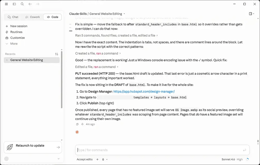
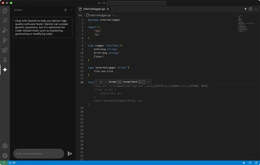
A maintenance engineer asks Claude: 'P-103 is running hot - log an urgent inspection for tomorrow.' Claude calls Rayven MCP's create_record tool, writes a new Secondary Table record (work order) linked to the P-103 entity UID, and triggers a notification workflow to the maintenance team. The whole interaction takes 30 seconds and requires no dashboard login.
Executive getting a cross-site KPI summary without opening a dashboard
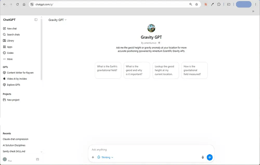
An executive asks Claude: 'How is OEE tracking across all sites this week versus target?' Claude calls get_dashboard_kpis, retrieving aggregated OEE calculations from the Data Layer, scoped to the executive's Label permissions. It returns site-by-site performance, highlights underperforming lines, and surfaces ai_summary context - making the weekly review a conversation, not a report-pulling exercise.
Rayven MCP FAQs:
What is the Model Context Protocol (MCP)?
MCP is an open standard developed by Anthropic that defines how AI assistants connect to external data sources and tools. Instead of an AI relying solely on its training data, MCP lets it call typed, governed tools at query time to retrieve live, structured information. Any AI client that implements the standard can connect to any MCP server, regardless of who built either side.
What is Rayven MCP?
Rayven MCP is a Model Context Protocol server built into the Rayven platform. It exposes your operational data, ingested from 1,228+ sources, stored in MySQL and Cassandra, and contextualised for AI readiness, as a set of governed, typed tools that Claude, ChatGPT, Gemini, and other MCP-compatible AI assistants can query in natural language.
How is Rayven MCP different from just connecting an AI to a database?
A direct database connection gives an AI raw, unstructured data. It has to infer meaning, units, and context from field names and values. Rayven MCP sits in front of a contextualised data layer. Every record has already been enriched with UID linking, threshold status, temporal history, and a pre-composed ai_summary field. The AI gets structured, meaningful truth, not raw numbers to guess from.
What data sources can Rayven MCP connect to?
Any source that Rayven can ingest from, which is 1,228+ fast-track connectors covering IT systems (SAP, Oracle, Salesforce, Maximo), OT and IoT devices (OPC-UA, Modbus, BACnet, MQTT), SaaS platforms, REST APIs, file uploads (CSV, Excel, JSON, XML), FTP feeds, and custom integrations built with JavaScript or Python nodes. If Rayven can ingest it, the MCP layer can expose it.
Which AI assistants does Rayven MCP support?
Rayven MCP uses the standard Model Context Protocol, which means it works with any MCP-compatible client. This currently includes Claude (Anthropic), ChatGPT (OpenAI), and Gemini (Google). Because MCP is an open standard, any AI client that supports it, now or in the future, can connect to Rayven without any platform changes.
What is the ai_summary field and how is it generated?
The ai_summary is a pre-composed plain-language field attached to every record in Rayven's data layer. It is generated by Rayven's workflow logic at the point of data processing, combining live readings, threshold status, maintenance history, and operational context into a human-readable narrative. When an AI assistant queries an asset, it receives this field directly and can cite it with confidence rather than interpreting raw values.
Can the AI write data back through MCP, or is it read-only?
Both. Rayven MCP exposes read tools (query_assets, get_timeseries, query_records, get_dashboard_kpis) and write tools (create_record, trigger_workflow). AI assistants can create Secondary Table records such as work orders, inspection logs, and exception flags, and invoke Rayven workflows directly from the conversation. All write actions are logged to the audit trail.
How is data access controlled through MCP?
The same Label-based RBAC that governs dashboards, workflows, and user access also governs MCP tool calls. An AI assistant operating on behalf of a user can only return data that user is authorised to see. A site manager's AI sees only their site. An executive sees across all. Access is enforced at the data layer, not the prompt layer.
Does my data leave my infrastructure to reach the AI?
Your data does not leave your infrastructure to reach the MCP server. The Rayven MCP server runs in your environment (cloud, private cloud, or on-premise). The AI assistant sends a query to the MCP server, the server queries your data and returns a structured response. Your raw data is never transmitted to the AI provider, only the scoped, typed response the tool returns.
Is Rayven MCP a replacement for dashboards and reporting tools?
No. Dashboards and reports work well for monitoring known KPIs on a fixed schedule. Rayven MCP is designed for queries you did not anticipate, follow-up questions, cross-source comparisons, and situations where a user needs an answer now rather than waiting for a report to be built. The two are complementary. Most deployments use both.
How does Rayven MCP handle real-time vs historical data?
Both are available simultaneously through the same MCP interface. Live readings and entity state come from MySQL, with Cassandra providing the time-series history indexed by UID and timestamp. A query about an asset can return its current status alongside trend data from the past day, week, or year in a single tool call. The AI does not need to make separate requests or join the two sources itself.
Also in the Execution Layer:
Control + Automation
Write control commands to connected devices, systems + machinery - closing the automation loop from data to action.
Predictive AI / Machine Learning
Deploy Python ML models as workflow nodes - scoring live data and triggering threshold-based actions in real-time.
Workflows + Triggers
Schedule, event, threshold + API triggers that initiate any workflow automatically or on demand across the platform.
Approvals + Exceptions
Build human-in-the-loop approval steps, exception routing + escalation logic into any workflow chain.
Gen AI + AI Agents
Chain LLM connector nodes within workflows for document extraction, classification, summarisation + agent-style automation.
Ready to give your AI real data?
Show us your data sources and we will walk you through exactly how Rayven MCP ingests, contextualises, and exposes them to your AI assistant of choice.
Join the Shift
Discover the easy way to do something new.
Book a free 30 minute assessment with our team and we'll scope your project, needs + what a solution might look like.