





























Platform > Integration Layer > API Endpoints
API endpoints.
Expose processed Rayven data to external systems via authenticated GET endpoints, or receive inbound data via POST - secured, bidirectional, no middleware required.


CAPABILITY OVERVIEW
Open Rayven data to the systems that need it.
Rayven's API endpoint capability enables two-way data exchange between the platform and external systems.
Expose any processed dataset as an authenticated GET endpoint that external systems can query on-demand. Receive inbound data from any system via HTTP POST.
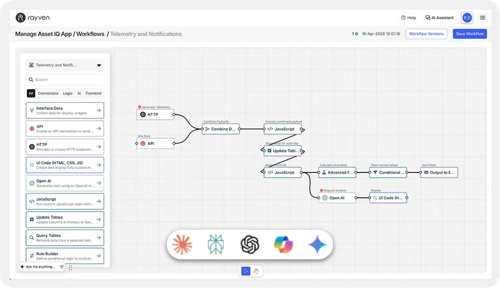
Both directions operate as workflow nodes - no API development environment, no versioning overhead, no separate gateway required.
Inbound connections include:
-
HTTP POST (inbound webhook or event)
-
REST API polling (GET, POST, PATCH)
-
Bearer token authentication
-
JSON + XML payload formats
-
Custom request headers
Outbound connections include:
-
Authenticated GET endpoint (expose Rayven data externally)
-
Output to HTTP webhook (push to external system)
-
API write (POST/PATCH to external API)
-
JSON + CSV output formats
KEY CAPABILITIES
What API Endpoints give you.
Expose data as a GET endpoint
Any Rayven dataset can be published as an authenticated GET endpoint. External systems query on demand and receive current data in JSON or CSV format - no direct database access required.
Inbound POST from any system
Accept data from any external system via HTTP POST to a Rayven-hosted endpoint. Triggers the connected workflow immediately. Supports JSON + XML payloads with configurable header validation.
Bearer token authentication
All API endpoints are secured with bearer token authentication. Tokens are managed within the platform. Custom request headers provide additional validation for inbound connections.
Outbound API writes
Push processed Rayven data to external APIs via POST or PATCH. Configure payload structure, authentication + endpoint URL within the workflow node. Supports JSON + XML output formats.
Bidirectional workflow integration
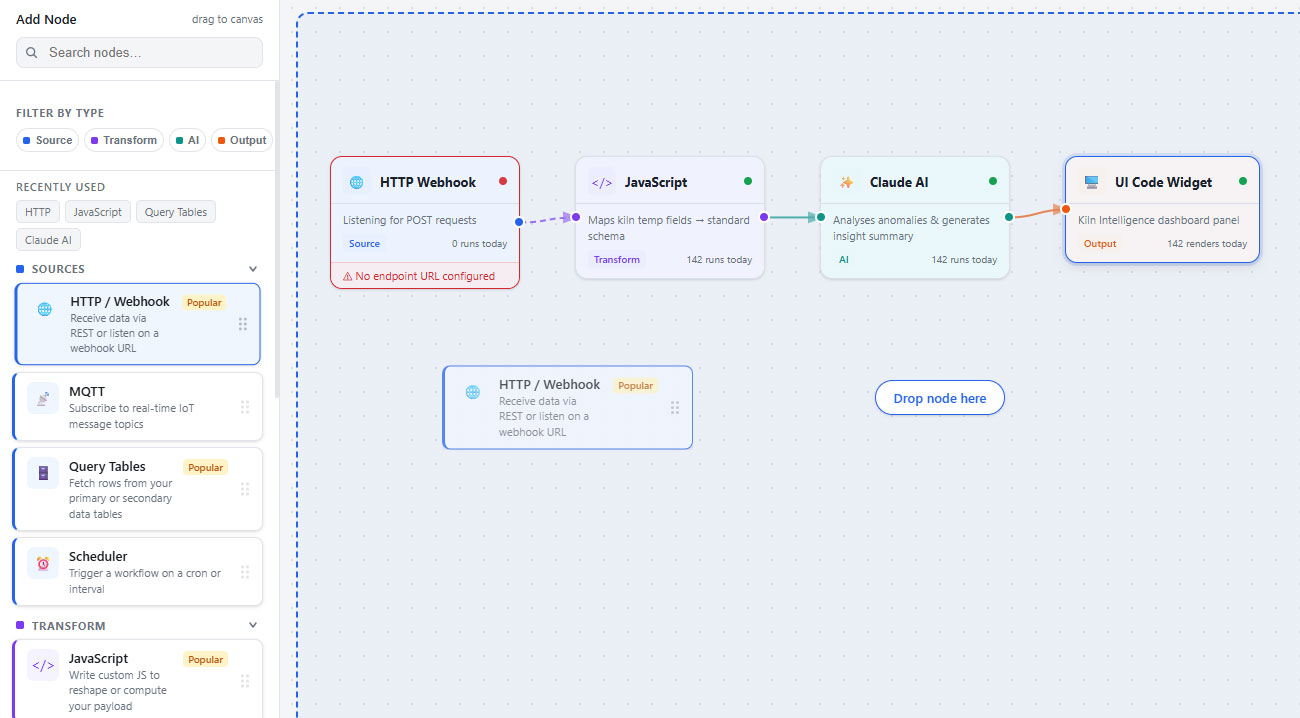
Combine inbound + outbound API nodes in the same workflow. Receive data, transform it, evaluate against rules + write results back to the source system - all within a single workflow chain.
Management APIs
Rayven exposes management APIs for workspace-level operations - programmatically manage platform configuration, trigger workflows + query platform status from external orchestration systems.
HOW IT CONNECTS: EXPLAINER
Where API Endpoints fit in the Rayven Platform stack.
API endpoint nodes span both the Integration Layer (inbound data ingestion) and the output stage of the Execution Layer (exposing processed data externally).
-
Inbound POST nodes receive data from external systems + trigger workflows immediately.
-
Outbound GET endpoints expose processed data from the Data Layer to any authorised external system on demand.
This bidirectional capability means Rayven acts as a processing layer between systems - ingesting raw data, enriching it + making clean outputs available via API - without requiring direct database access from consuming systems.
USE CASES
How API Endpoints get used.
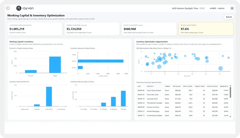
Exposing processed data to BI tools
An energy company's Power BI environment queries a Rayven GET endpoint for processed asset performance data. Rayven handles ingestion, normalisation + aggregation from 12 source systems - Power BI queries one clean endpoint instead of 12 raw databases.
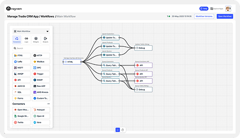
CRM events triggering operational workflows
A Salesforce workflow sends a POST to Rayven when a deal is won. Rayven's workflow creates an onboarding record, assigns tasks + sends confirmation notifications - triggered automatically from the CRM event.
Partner exposing data via white-label API
An MSP processes client operational data in Rayven + exposes it via a branded API endpoint. Client systems query the endpoint for their own data on demand - delivered as the partner's own data service.

API Endpoints FAQs:
How are API endpoints secured?
All inbound + outbound API endpoints use bearer token authentication. Tokens are managed within the platform. Custom request headers provide additional validation for inbound connections. Learn more about platform security + governance.
What data formats are supported?
GET endpoints return JSON or CSV. Inbound POST endpoints accept JSON + XML. Format is configurable per endpoint. All ingested data feeds directly into the Rayven Data Layer for storage and processing.
Can I expose any Rayven dataset as an endpoint?
Yes. Any dataset stored in the platform - Primary Tables, Secondary Tables, Cassandra time-series, calculated aggregations - can be published as an authenticated GET endpoint. Read more about how the Data Layer stores and structures your data.
Can an inbound POST trigger a complex multi-step workflow?
Yes. An inbound POST is a workflow trigger. The connected workflow can include any number of transformation, AI, decision + output nodes - the inbound data flows through all of them. Explore the Execution Layer to see what is possible.
Can Rayven receive webhooks from third-party platforms?
Yes. The HTTP POST inbound node accepts webhooks from any system - Stripe payment events, HubSpot deal updates, GitHub repository events + more. Each webhook fires the connected workflow immediately. See all capabilities in the Integration Layer.
What is the difference between an API Endpoint and a Custom Integration?
API Endpoints expose Rayven data externally (GET) + receive data from other systems (POST). Custom Integrations extract data from source systems via SQL, FTP, Kinesis + other protocols. Both work as workflow nodes and can be combined. See all Integration Layer capabilities.
Can multiple external systems query the same endpoint?
Yes. A single Rayven GET endpoint can serve multiple consuming systems simultaneously. Each query returns the current state of the configured dataset. Learn how the Data Layer manages unified data tables.
Is there versioning for API endpoints?
Endpoints are managed within the workflow builder. When the underlying workflow or data schema changes, the endpoint reflects those changes. Versioning strategy is managed at the workflow configuration level. See how the Integration Layer handles endpoint management.
Can endpoint responses be filtered or parameterised?
Yes. GET endpoints can return filtered datasets based on UID, label or time range parameters passed in the request. This allows external systems to query specific subsets from a single endpoint. Read more about the Data Layer querying capabilities.
Is there rate limiting on API endpoints?
Endpoint performance scales with platform infrastructure. For high-frequency external queries, contact us to confirm the appropriate configuration for your throughput requirements.
Also in the Integration Layer:
Pre-Built IT/OT Connectors
150+ ready-to-use connectors across CRM, ERP, BI, AI/LLM services + industrial systems.
File Uploads
Ingest files directly via FTP, FTPS, SFTP + AWS S3, or through manual uploads within the platform.
Forms + Manual Input
Capture structured data from human input via configurable form widgets, feeding directly into workflows.
IoT Devices + Protocols
Native support for MQTT, Modbus, LoRaWAN, SNMP + Raw UDP for edge and industrial device connectivity.
Custom Integrations
Build bespoke two-way integrations via HTTP request nodes, REST API adapters + custom webhook endpoints.
AI Connectors
Connect to OpenAI, Claude, Gemini, Cohere + more as workflow nodes for LLM-powered integration + processing.
Streaming Data Connectors
High-frequency ingestion via AWS Kinesis, MQTT + AMQP into Cassandra time-series storage.
Join the Shift
Discover the easy way to do something new.
Book a free 30 minute assessment with our team and we'll scope your project, needs + what a solution might look like.